Let there be more districts?
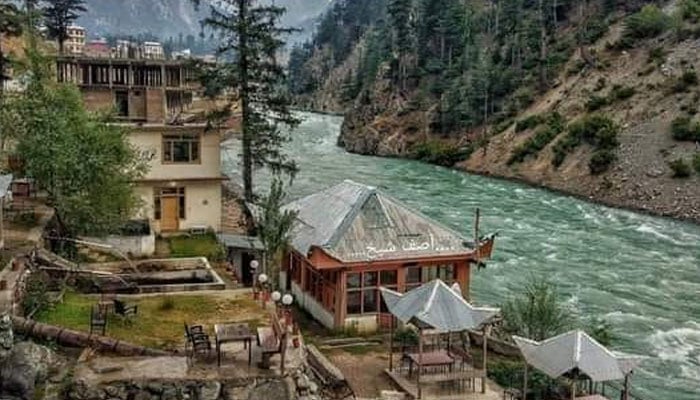
The Swat Valley, nestled in the mountains of northern Pakistan, has long carried multiple identities. To some it is the ‘Switzerland of Asia’, a tourist’s paradise of snow-capped peaks and emerald rivers. To others, especially its people, it is a homeland deeply woven with history, culture and sacrifice. A friend who once visited Swat put it more poignantly: “Switzerland is the Swat of Europe”.
For centuries, outsiders – from Buddhist pilgrims and Chinese monks to colonial explorers and Pakistani urban elites – have been drawn to Swat’s beauty and mystique. Locals, too, have embraced a near-romantic vision of their valley, often comparing it to paradise. In a poem I wrote in 2012, I described Swat as:
“Home to ancient Darada, Buddhist and Gandhara;/ Where pilgrims from China,/ And from Central Asia,/ Came for eternal solace;/ As it was such a place”
Yet despite this reverence, love has not been enough to protect Swat. In fact, it may have blinded us. Excessive love, when it silences critique, can turn into narcissism. When communities refuse to confront their own shortcomings, they stagnate, repeating cycles of neglect, decline and suffering.
Swat’s recent history is scarred by insurgency. The Pakistani Taliban’s rise in the mid-2000s is often blamed on the ‘strategic policies’ of the state, and there is truth in that. But few within Swat reflect on our own complicity. Did we question the growing militancy in its early stages? Did we convene grand jirgas to resist it? Did our leaders speak clearly and collectively against it? The painful answer is no.
Instead, many of us were used as foot soldiers in a war we did not own. The valley paid dearly in the form of mass displacement – the largest internal exodus in Pakistan’s history – thousands of deaths and the trauma of a paradise turned into a battlefield.
This unwillingness to self-reflect continues in other domains, too. My friend, on a visit to the forests of Kalam, was shocked by the litter scattered across hiking trails and wrappers floating on the emerald surface of Mahudand Lake. Like many locals, I instinctively blamed ‘outsider tourists’. But he pointed out what I wished to avoid; locals, too, were dumping trash into rivers and forests.
From the bustling, chaotic city of Mingora – now a symbol of unplanned urbanization – to the stony banks of the Swat River at Bahrain, Kalam and Madyan, pollution and disorder have become part of our landscape. Love alone did not and could not save Swat. Mismanagement, denial, and negligence ruined much of its charm.
The ecological decline is only part of the story. Swat today is under immense administrative pressure. With a population exceeding 2.6 million spread across 5,337 square kilometers, it is one of the most densely populated districts in Khyber Pakhtunkhwa. Its annual growth rate of 3.24 per cent is among the highest in the country, further straining resources.
Compare this with Kohistan region in the Hazara division, which was recently split into three districts despite having just one-third the population of Swat. By that yardstick, Swat could justifiably be seven districts instead of its current seven tehsils.
The demand today, however, is modest: an administrative division into two districts – Upper Swat and Lower Swat. This idea once again has gained momentum and spurred a debate following Chief Minister of Khyber Pakhtunkhwa Ali Amin Gandapur’s notification of bifurcating Swat and his native district Dera Ismail Khan.
The proposal has sparked a heated debate. Supporters, largely from Upper Swat’s hilly tehsils like Bahrain, Madyan and Kalam; Matta and Khwazakhela tehsil argue that division will bring government services closer to neglected areas. They hope that funds, infrastructure and tourism management will finally reach these underserved communities.
Opposition has emerged from certain political figures and activists in Mingora, the valley’s administrative hub, and from segments of the urban elite who see the move as a ‘division of Swat’s identity’. For them, the very idea of splitting the district feels like an affront to unity.
But is administrative division truly a threat to identity? Or is it an opportunity to bring governance closer to the people?
It is crucial to clarify that the proposed division is not ethnic or linguistic. In both Upper and Lower Swat, Pashto speakers will remain the majority. The rationale is entirely administrative: better service delivery, improved governance and political representation that matches the valley’s size and population.
This is not about fragmenting Swat’s cultural identity but about recognising the practical limits of governance. In fact, division could strengthen Swat by ensuring equitable development across its diverse geography.
Anyone familiar with the valley knows that Upper Swat is both its crown jewel and its most neglected region. From Kalam’s alpine forests and Mahudand’s lakes to Bahrain’s riverfronts and Madyan’s bazaars, Upper Swat holds immense tourism potential. Yet it is plagued by poor infrastructure, weak governance and lack of investment; and has been facing immense challenges to its climate especially the alpine pasturelands and glaciers, glacial lakes causing deadly floods like the ones in 2010 and 2022. To contain the climate change challenges in the upper mountainous regions it becomes necessary that a more efficient and easy to be provoked administration is needed.
The main district headquarters in Saidu Sharif and Mingora are geographically distant from these highland areas, making governance slow and ineffective. Roads are often blocked in winter, schools and hospitals remain underfunded, and development projects rarely reach beyond Mingora’s orbit.
Dividing Swat would not only bring administrative offices closer but also force policymakers to prioritise Upper Swat’s unique challenges: fragile ecosystems, tourism management, disaster preparedness and sustainable livelihoods.
Administrative division is not unprecedented. Many regions in Pakistan and beyond have been split for more effective governance. Switzerland, often compared to Swat, is divided into 26 cantons despite being smaller in size and it is 27 times less than Pakistan in terms of population. India has repeatedly redrawn its states to improve administration and representation. Even within Khyber Pakhtunkhwa, Hazara, Chitral and Kohistan provide examples of how smaller units can be formed.
Why should Swat be any different? Why must we cling to the illusion that being one large district is somehow holier, even if it means ineffective governance?
The fear that creating Upper and Lower Swat would “divide” the valley is rooted in sentiment, not fact. Swat’s cultural identity is robust – it has survived invasions, migrations, militancy, and modernization. It will not disappear with an administrative line.
What risks disappearing, however, is the possibility of good governance. By insisting on preserving administrative “unity,” we may be sacrificing the wellbeing of communities in Upper Swat who remain cut off from resources and services. Sentiment should not be allowed to override responsibility.
Dividing Swat into upper and lower districts is not a panacea. It will not magically erase corruption, end mismanagement, or stop ecological decline. But it is a necessary first step to make governance responsive and accessible. It will redistribute political power, give Upper Swat a stronger voice and bring administrative machinery closer to the people.
In the longer run, this move could also open the door to more specialised policies: eco-tourism management, cultural preservation, climate resilience and education tailored to mountain communities like Torwalis, Gawris, Gujjars and others.
The debate over a new district in Swat is more than a question of maps and boundaries. It is about whether we are willing to confront hard truths: that Swat is too big, too populated and too diverse to be governed as a single unit. It is about whether we care enough for the marginalized in Upper Swat to give them equal access to governance.
Unity should not mean centralisation in Mingora; it should mean shared responsibility across the valley. If Switzerland can thrive as 26 cantons, surely Swat can function as two districts without losing its soul.
To cling to the illusion of wholeness while half the valley remains underserved is not love. It is denial. True love for Swat means making hard choices for its future. Creating Upper Swat as a district is one such choice: pragmatic, just and long overdue.
The writer heads an independent organisation dealing with education and development in Swat. He can be reached at: ztorwali@gmail.com