Palestine muted
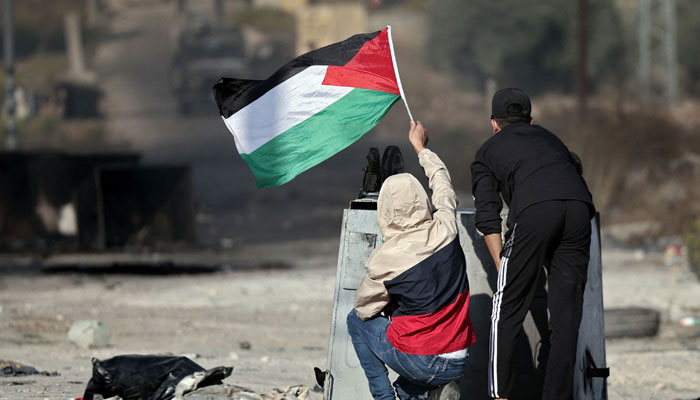
As world leaders are preparing to gather in New York for the 80th session of the United Nations General Assembly (UNGA) in September, one nation will not have any representatives: the Palestinian people. That is because the United States Department of State has decided to deny visas to Palestinian officials seeking to attend the UNGA session.
Since 1947, the US has mostly honoured its “headquarters agreement” with the UN, granting visas – albeit limited in scope – to officials from around the world invited to attend UN meetings. There have been occasions, however, where the US has used its position as a UNGA host to deny visas to foreign diplomats from countries it wished to isolate, such as Russia, Iran, Venezuela and others.
In the case of Palestine, this is not the first time Palestinian leaders have faced a visa denial. In 1988, Yasser Arafat, the leader of the Palestine Liberation Organization (PLO), was also not allowed to come to the UN to participate in the UNGA, with the US government justifying its decision with “security threats”.
Today, the Trump administration is offering a similar justification, claiming the decision reflects US “national security interests” and accusing the Palestinian Authority (PA) of “not complying with their commitments, and … undermining the prospects for peace”.
The official US rationale that the PA has failed to repudiate “terrorism”, including the October 7, 2023 attacks, is flimsy. Under President Mahmoud Abbas, the Palestinian leadership has consistently condemned “terrorism”, including the attacks, and has gone even further by supporting the French-Saudi statement that called for Hamas’s disarmament.
It is important to remember that the PA was created by the 1993 Oslo Accords, which were signed at the White House by Arafat and Israeli Prime Minister Yitzhak Rabin, with US President Bill Clinton hosting the ceremony. In the following years, the PA received substantial support from Washington, including a significant amount of funds, and went along with any US-led peace initiative.
In this regard, to accuse the PA of “undermining the prospects for peace” is simply absurd. The reason for the visa denials clearly lies elsewhere.
The Trump administration’s decision coincides with a global moment where leaders of several Western countries have expressed their intention to recognise Palestine at the UNGA this month. It is expected that by the end of September, France, Canada, the United Kingdom, Australia, Portugal, and Malta may join the 147 UN member states that already recognise Palestinian statehood.
The Trump administration has been pressuring these countries not to go forward with their plan. Since that may not work, Washington is likely trying to deny the Palestinians an opportunity to celebrate this moment and a platform to speak out about the continuing Israeli atrocities in Gaza and the occupied West Bank.
Excerpted: ‘The US government does not want any Palestinian to speak’. Courtesy: Aljazeera.com