Three nations, three destinies
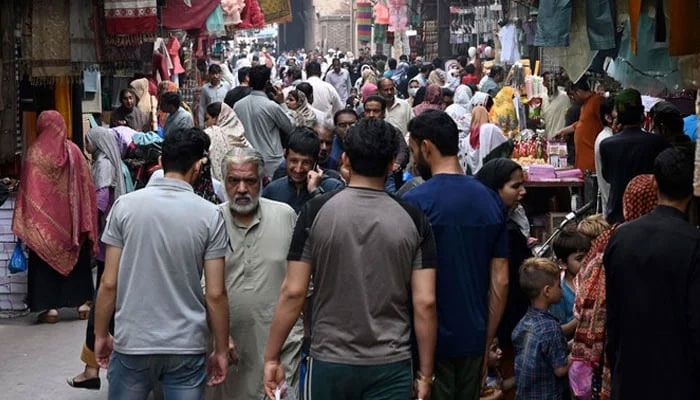
History moves in cycles – rising, pausing, reinventing. It rewards those who adapt and punishes those who wait. And in the story of nations, 30 years is more than enough to rewrite destinies. In 1990, the world witnessed three nations at three very different crossroads. Germany stood prosperous, with a GDP worth $1.7 trillion and citizens earning nearly $27,000 per head. China was still poor, worth only $360 billion, with its people surviving on a mere $318. Pakistan stood in between – GDP $40 billion in size, $520 per capita, modest, but hopeful.
Now at the crossroads of 2025, the world canvas has been reshaped significantly. Germany has advanced to nearly $4.9 trillion, its people now among the richest in the world, lifting its per capita wealth to $57,000. China has risen from depth of poverty to an $18 trillion giant, lifting its citizens GDP per head to $12,800 – a civilisational comeback, unlike anything seen in modern history. And our homeland Pakistan, after 35 long years, we linger at just $375 billion, barely reaching $1,500 GDP per capita. Three nations, three destinies: one sustained, another transformed and third stagnated. Very simple question: why?
Germany’s story is the story of discipline. The model was clear and elegant: produce the finest quality goods, export them to the world and harness the wave of globalisation. Globally, people admired German engineering and their attention to details. After the Second World War, it healed itself and moved forward not by slogans but with adherence to order. They realised the need that their institutions must be built stronger than the individuals. They demonstrated to the world that resilience is the silent force that carries the nation.
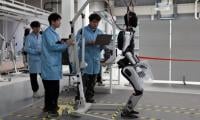
China’s story is the story of audacity. It was lagging behind Pakistan in the 90s, but today, it is the economic engine of the industrial and manufacturing world. It demanded technology transfers, bet billions on electric vehicles and weaponised one billion of its citizens with skills into the most powerful workforce in the history of the modern world. The real miracle was maintaining growth at 10 per cent for more than three decades. The outcome: one billion people lifted out of poverty in one generation.
Now we analyse Pakistan – blessed with a fertile soil, a young nation, a geography that connects continents. Yet the nation and the state is trapped in short-term measures, polarisation, weak governance and political rhetoric. When the Chinese were planning their prosperity, we were engaged in experiments. It is evident too that nations do not vanish at the stroke of despair. If we can learn from Germany the power of order and discipline and from China what the strengths of transformation can achieve, then surely we too can fulfill our unfinished destiny.
The truth is simple: progress does not come from aid, it comes from productivity and nations are not built by promises but by patience, planning and perseverance. Germany followed the plan for stability. China moved towards transformation. And Pakistan, as usual, stuck with its policy of survival and firefighting. That must change. We can remain live in the state of denial as prisoners of crisis, or perhaps with courage we can reinvent ourselves and reform.
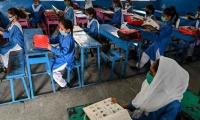
There is a clear way forward. Pakistan’s path must be one of proportionality. We cannot replicate China’s scale, nor Germany’s engineering depth. We need to devise our own path of proportionality. Our geography is our asset, but only if we use it for trade, not conflict. Our focus must be to Invest in clean affordable energy, reform governance and prioritise on industries where we hold comparative and natural advantage: textiles, agriculture technology, renewable energy and ICT. Our youth can definitely play their role in our story of audacity. But it will only be possible if we educate them with skills in artificial intelligence, technology and manufacturing.
Even companies hold lessons and offer inspiration. Lego, once a stumbling toy company drowning in debt, rose again by cutting distractions, rediscovering its core and rebuilding trust with its customers. Once it followed the financial discipline and its core values of simplicity and creativity, Lego re-emerged as one of the most beloved and successful brand of the world. The lesson is clear: it is never too late to reinvent yourself.
Looking ahead to 2050, China and India are forecast to surpass the US in GDP size. But the US will retain unmatched power in finance, banking and technology. Feeling its supremacy challenged, the US has sought to reset the chessboard through tariffs, export controls and military power. For all its internal polarisation, it retains unmatched financial and technological superiority over other nations. Its financial institutions directing global capital flows, Silicon Valley continually manoeuvring technological innovation, and its US dollar remains the world’s reserve currency. The display of aerial superiority B-2 spirit and F35 over Alaska during talks with President Putin, was a demonstration by the US that it still knows how to project power, even when diplomacy produces no breakthrough.
The European Union, once the centre of gravity, now stands in danger of fading into geopolitical irrelevance unless it reclaims its essence. This argument is further supported by the evidence of the two photographs: first, Angela Merkel at the 2018 G7 summit; and second, European leaders sitting quietly in front of the US president at the White House in 2025. In the first image, Angela Merkel is leaning across the table confronting US President Trump; and in the second image the European leaders are gathered around the table in the White House listening to US President Trump.
The first image symbolised a confident Europe that could challenge Washington and the second image reflects European centrality is eroding. Europe is risking becoming an audience while the US and Russia are not only setting the stage but writing the script as well. After Brexit and the Ukrainian war, European economic clout is not sufficient to influence geopolitics. The question is: where do we see ourselves in 2050 and in this reshuffling of the geopolitical global relevance?
Yet, amidst these power struggles, smaller states can learn. Switzerland, a country without the scale of China or Germany, remains one of the world’s most prosperous economies. We can learn from this small state without scale, yet with a per capita income above $90,000, a currency stronger than the US dollar, not because Switzerland commands armies, but because it commands trust. Even their healthcare costs nearly half those of the US – because of efficiency, financial stability, transparency and strong institutions. Trust and transparency, after all, is the true foundation of modern economics.
Our export oriented growth model must be aligned with the modern realities of artificial intelligence, e-commerce, digital trade and sustainability. Pakistan too can writes its story of resurgence if it builds trust, foster its human capital, and engaged regionals partnerships wisely. Like Lego, it can rediscover its core strengths and rise again.
Pakistan can no longer live from crisis to crisis, from bailout to bailout. It must be built for sustainable future, not for just elections. History is not kind to nations that refuse to adapt. Rome was not conquered, it collapsed. The British Empire was not defeated, it exhausted itself. Nations do not fall from enemies outside, they fall from weaknesses within. Pakistan still has time. The challenge is not just about aspirations but about proper preparation. The soil is rich, the youth are restless, and the geography is unmatched. The question is not whether we can rise but will we choose to.
The writer is a political economist, public policy commentator and advocate for principled leadership and regional cooperation across the Muslim world.