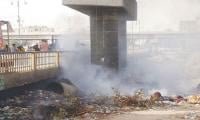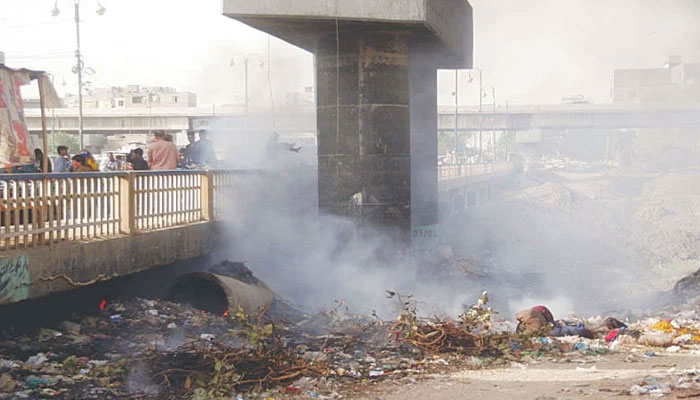
When you walk through the streets of Islamabad, you can immediately sense the contradictions of a rapidly growing city. Gleaming new sectors, high-rise apartments and buzzing marketplaces present an image of progress, yet just beneath the surface lies an issue that undermines this modern vision: waste.
Overflowing bins, unsegregated trash, plastic bags clogging drains and informal dumping grounds paint a picture that many would rather ignore. But waste is not just an aesthetic concern; it is a mirror of governance, policy innovation, and our collective attitude towards sustainability. For Pakistan, and particularly its capital, tackling waste management is about rethinking systems, behaviours and economic models to align with the demands of the 21st century.
Islamabad’s new waste collection reforms mark a significant shift in this direction. The Capital Development Authority’s decision to introduce bin segregation models, stricter enforcement, and international-standard service providers suggests that waste is finally being recognised as a policy priority. Dividing the city into operational zones, rolling out two-bin and three-bin systems for households and commercial areas and setting up real-time monitoring reflect a welcome move towards modern governance. Fines for littering signal that enforcement will accompany awareness, a step long overdue in Pakistan’s urban management practices.
At the same time, the introduction of Material Recovery Facilities and the segregation of green waste from markets can create a backbone for recycling and circular economy models. These reforms represent progress, but if we are truly committed to sustainable transformation, they must be embedded in broader systemic changes.
Plastics, for instance, remain a monumental challenge. Pakistan generates over 3.9 million tons of plastic waste annually, of which 65 per cent is mismanaged. Much of this ends up in rivers, canals and ultimately the Arabian Sea, turning water bodies into conveyor belts of pollution. Plastic bag bans, attempted repeatedly in Islamabad, have largely failed due to weak enforcement, lack of affordable alternatives, and absence of industry cooperation.
The truth is that policies that do not integrate market incentives or behavioural insights are unlikely to succeed. If Islamabad is now embracing international-standard waste collection, it must also think beyond traditional bans and instead promote scalable alternatives- biodegradable packaging, compostable materials and localised recycling enterprises supported by both policy and capital investment.
Yet the conversation on waste cannot be limited to plastics alone. One of the greatest flaws in our system is the lack of segregation at source. No matter how advanced a recovery facility is, if waste arrives mixed and contaminated, its recycling potential collapses. Citizens often view segregation as an inconvenience, but when backed by incentives, such as discounts on utility bills for households that comply or community recognition models, the practice can become normalised. Technology can also play a pivotal role. Smart bins equipped with sensors, digital apps that track waste collection schedules and AI-enabled monitoring centres are no longer futuristic ideas but tested solutions in cities like Seoul and Singapore. Islamabad, with its relatively smaller population compared to megacities, is well-placed to pilot such innovations.
Waste management should also not be seen as the sole responsibility of municipalities. Extended Producer Responsibility (EPR) must be institutionalised, compelling companies to take back and recycle the packaging they release into markets. Beverage companies, fast food chains and retailers could be mandated to install reverse vending machines, offering small rewards for consumers who return used bottles or wrappers. Such initiatives, if piloted in Islamabad, could create ripple effects across the country, signalling that sustainability is a shared responsibility.
Of course, regulation without social buy-in risks alienation. Awareness campaigns must shift from generic slogans to relatable storytelling that makes citizens see waste as part of their own lives, not just a municipal issue. Schools, universities, and community centres should embed waste literacy into curricula and social activities. Imagine an Islamabad where schoolchildren compete in recycling challenges, neighbourhoods track their waste reduction scores on digital dashboards and waste pickers are formalised into cooperatives with proper safety gear and health coverage. These are not utopian visions. They are working realities in many developing nations that Pakistan can adapt to its own context.
The economic dimension is equally compelling. Waste is not merely refuse; it is a resource. Composting organic matter can fuel urban agriculture projects, biogas plants can reduce dependence on fossil fuels, and recycling industries can generate green jobs. Islamabad’s Material Recovery Facilities must therefore be designed not just as disposal centres but as hubs of economic innovation. Pakistan’s youthful population could be mobilised into green entrepreneurship, where startups focus on recycling, upcycling and waste-to-energy ventures. With international climate finance increasingly accessible, there is scope to fund such projects under the umbrella of climate resilience and the circular economy.
At the same time, governance must remain vigilant against the pitfalls of ‘window dressing’. Too often, ambitious waste policies are launched with great fanfare but fade into bureaucratic inertia. Transparency in contracting, accountability of service providers, and participatory monitoring involving citizens are crucial to ensure this new waste system does not become another short-lived experiment. The chairman’s emphasis on merit-based bidding is important, but equally necessary is a culture of open data, where citizens can track the city’s waste flows, service gaps and compliance rates in real-time.
Ultimately, the challenge before Islamabad is not just technical but cultural. We cannot build a clean, modern capital without reshaping the way society views consumption, disposal, and responsibility. Waste is not just a matter of bins; it is a story of how we govern, innovate and imagine our collective future. If Islamabad succeeds in turning waste from a liability into an opportunity, it can set a precedent for cities across Pakistan.
The way forward is clear: combine institutional reforms with citizen engagement, pair enforcement with incentives and invest in sustainable alternatives while fostering innovation. Waste, after all, is not just a municipal problem; it is a societal one. By rethinking waste as a resource, aligning policies with climate resilience and empowering youth as changemakers, Islamabad can move beyond cosmetic reforms toward a cleaner, more sustainable and future-ready city. If we succeed, Islamabad could become more than just a capital city striving for cleanliness; it could be a model for how developing countries can transform waste into opportunity. But if we fail, we risk drowning, quite literally, in the piles of plastic and negligence that surround us today.
The question, then, is simple yet profound: will we continue to treat waste as an afterthought, or will we finally recognise it as the front line of building a resilient, sustainable Pakistan?
The writer is a policy analyst and researcher with a Master’s degree in public policy from King’s College London.