
PHC returns SIC pleas against disqualifications
Two-member bench comprising Justice Waqar Ahmad and Justice Muhammad Ijaz Khan heard the case
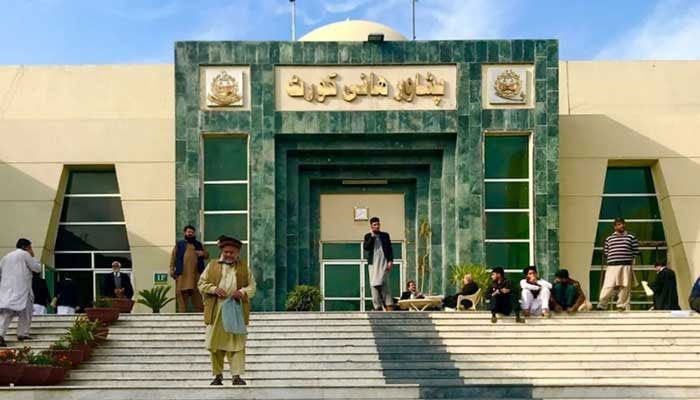
PESHAWAR: The Peshawar High Court (PHC) on Friday returned the petitions filed by Chairman of the Sunni Ittehad Council (SIC) Hamid Raza, Rai Hasan Khan, Rai Murtaza Iqbal, Rai Haider Ali, and Rai Ansar Iqbal against their disqualification by the Election Commission of Pakistan (ECP), directing them to approach the relevant high courts.
A two-member bench comprising Justice Waqar Ahmad and Justice Muhammad Ijaz Khan heard the case.
During the hearing, the petitioners’ counsel, Additional Attorney General (AAG) Sanaullah, Additional Secretary Law of the ECP, and other officials appeared before the court.
The petitioners’ lawyers informed the court that their clients, who were members of the assemblies, had been convicted by the Anti-Terrorism Court Faisalabad. Following the conviction, they added, the ECP disqualified them on August 5, a step that the lawyers argued was beyond its powers. Justice Waqar Ahmad inquired whether the petitioners had approached any other high court, to which the lawyers replied in the negative. The AAG objected to the maintainability of the petitions in the PHC.
The ECP’s law secretary told the court that under Article 224, the ECP must hold elections within 60 days after a seat falls vacant.
He argued that four of the contested seats were National Assembly constituencies and one belonged to the Punjab Assembly, which fell under the jurisdiction of the Lahore High Court (LHC) or the Islamabad High Court, while two similar petitions had already been dismissed there.
The AAG contended that the petitioners were convicted by an Anti-Terrorism Court and that similar petitions had already been rejected.
Justice Waqar Ahmad remarked that when thousands of voters elect a representative, their rights must also be considered, adding that the LHC and later the Supreme Court had already clarified the matter, and that not every conviction results in disqualification. The petitioners’ counsel cited precedents, including a 1968 case where the Supreme Court had held a petition maintainable despite jurisdictional objections, and other cases such as Ayyan Ali’s, arguing that the PHC had also previously entertained similar matters, including cases related to election symbols and reserved seats, which were later upheld by the Supreme Court.
The petitioners’ lawyers argued that the ATC convictions had been handed down in their clients’ absence, while the ECP acted hastily without waiting for appeals, disqualifying them overnight. They contended that the petitioners should be treated the same way as in the case of Zartaj Gul, where the ECP had suspended the election schedule.






-
 State institutions ‘fail’ to perform constitutional duties: KP CM
 -
 CTD orders psychological testing of police on VVIP security duty
 -
 Navy busts drug consignment valued at $130m
 -
 Three ex-secretaries in race for ETPB chief post
 -
 Punjab govt forms 71 JITs to probe cases against banned TLP
 -
 Some UNSC members ignoring broader reforms, seeking privilege: Pakistan
 -
 PAC body discusses non-recovery of Rs15bn gas cess
 -
 Pakistan received $2.29bn foreign loans in first 4 months of 2025