Disaster foresight
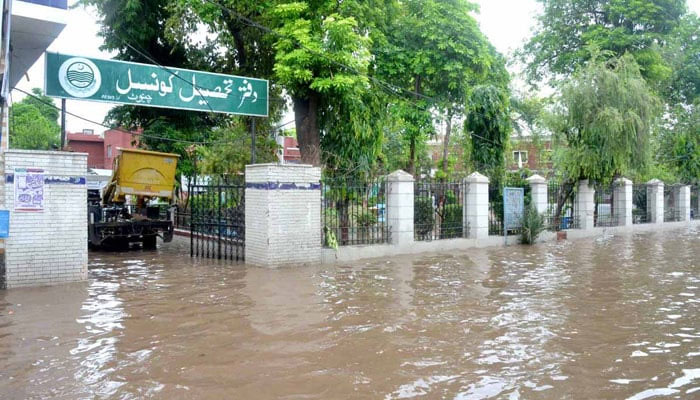
The recent floods in Khyber Pakhtunkhwa, generally attributed to cloudbursts, caught both the government and local communities off guard.
These events highlighted a significant gap in climate change adaptation policies and action plans, as disaster preparedness measures and early warning systems were either lacking or insufficient. The lack of proactive, anticipatory planning not only intensified the immediate damage but also highlighted the urgent need to integrate foresight planning and anticipatory adaptation approaches into climate policies and disaster risk management at the provincial and local levels.
Climate change–related extreme events are among the most serious challenges facing humanity in the twenty-first century. The phenomenon of climate change is leading to higher temperatures, erratic rainfall patterns, and an increased frequency of extreme events, such as flash floods, heatwaves and droughts. These, in turn, are causing loss of life, land degradation, livelihood insecurity, disruption of food systems and displacement of people. Scientists and experts agree that the impacts of climate change are evident in recurring natural disasters, and the recent surge in such events has caused widespread destruction across the globe.
Pakistan is one of the most climate change vulnerable countries, and according to Germanwatch, it is among the top-most affected countries by the impacts of extreme weather events. According to the Global Climate Risk Index, Pakistan was ranked the fifth most vulnerable country in 2023-24, affected severely by climate change-related extreme events.
Flooding in Pakistan is a continuous and devastating natural disaster, particularly during the monsoon season (June to September). The country has faced severe floods over the years; however, the frequency and severity of floods have increased since 2010, resulting in significant loss of lives, displacement and economic damage. The recent heavy rains and flash floods have caused more than 700 deaths and about 1000 injuries in Khyber Pakhtunkhwa and Karachi. [And now Punjab is going through a flood devastation].
The series of catastrophic floods since 2010 has led to the destruction of infrastructure and the displacement of millions of people. Compounding the crisis, the melting of the glaciers in the mountainous Hindukush-Himalayan region has increased the risk of glacial lake outburst floods and landslides. KP and Gilgit-Baltistan are among the regions most severely affected by long-term shifts in temperature and weather patterns. These mountainous regions have experienced increasingly frequent and intense climate change-related challenges, including riverine floods, heatwaves, glacial lake bursts, droughts, and cloud bursts, which have had profound effects on local ecosystems, livelihoods and overall environmental resilience.
In response to the climate challenges, Pakistan has pursued mitigation and adaptation through consistent policy measures and regulatory frameworks. The Pakistan Environmental Protection Ordinance (1983) was the first major step in establishing key institutions, such as the Pakistan Environmental Protection Council and the Federal Environmental Protection Agency. This was followed by the Pakistan Environmental Protection Act (1997), the country’s first comprehensive legislation focused on environmental protection, sustainable development and mainstreaming environmental concerns into national policies. Building on this foundation, the Pakistan Climate Change Act (2017) and the National Climate Change Policy, first introduced in 2012 and revised in 2021, reflect Pakistan’s commitment to climate-resilient development and adaptation.
The National Adaptation Plan (NAP) was released in 2023 after the devastating floods of 2022. Similarly, in KP, a significant step towards environmental governance was taken in 2014 when the KP Environmental Protection Agency (EPA) Act was enacted and a Climate Change Cell was established within the EPA to assess the effects of climate change across various sectors in the province and to develop action plans and coping strategies. Consequently, KP became the first province in Pakistan to draft and approve a Provincial Climate Change Policy in 2017; similarly, the Climate Change Action Plans for various districts of KP have also been developed. Similarly, the first-ever Urban Policy of the province was also created, in which climate change adaptation and mitigation have been emphasised exclusively.
A deep dive into the national and provincial climate change adaptation policies and action plans reveals that most of these policies are reactive and built around a singular vision of a predictable future. Consequently, these plans lack flexibility to adapt to future trends and shocks, such as unexpected weather events or shifting socio-economic conditions. This highlights the importance of anticipatory adaptation, which emphasises the proactive approach to prepare for possible multiple futures. Anticipatory adaptation refers to planned actions aimed at reducing vulnerability to climate change impacts before they occur. This contrasts with reactive adaptation, which addresses climate impacts only after they have already taken place.
While Pakistan’s climate change policies and adaptation plans present a holistic, multi-sectoral framework to address climate impacts and disasters, they largely overlook anticipatory adaptation and community perspectives, instead relying on a top-down approach. The unprecedented damage to lives and infrastructure caused by recent floods and other disasters over the past few years has further highlighted this gap. Despite commitments outlined in national and provincial adaptation policies regarding community engagement, genuine efforts to meaningfully engage local communities, especially women and smallholder farmers, remain limited in practice.
Integrating a foresight approach into climate change planning enables policymakers to think beyond linear projections and consider multiple futures, taking into account critical uncertainties, megatrends and potential disruptive events that are often overlooked in current policy frameworks.
Foresight and anticipatory adaptation help identify risks as well as opportunities that otherwise remain hidden. Climate change adaptation policy frameworks should integrate foresight-based scenario planning, strengthen community participation, and prioritise anticipatory adaptation measures to ensure resilience against future climate uncertainties.
The writer is a professor at the University of Agriculture Faisalabad, and a consultant at the Sustainable Development Policy Institute (SDPI), Islamabad.