Returning refugees
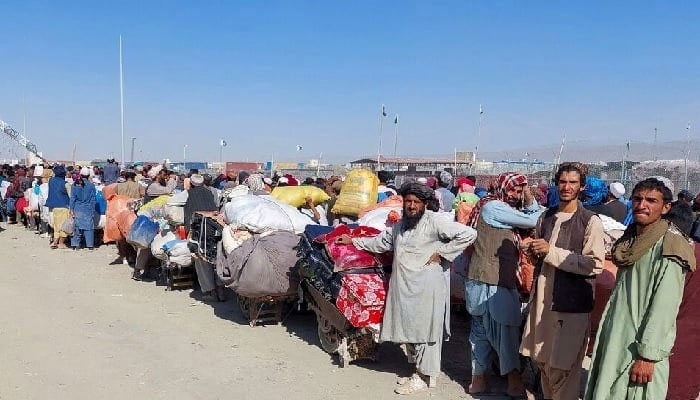
On June 30, 2025, the Proof of Registration (PoR) cards held by registered Afghan refugees in Pakistan expired. This technical deadline masks a deeper and more urgent crisis – one that affects over 1.4 million documented Afghan refugees in Pakistan, many of whom have known no home but Pakistan.
These individuals are not ‘illegal immigrants’. Their presence was authorised by the state, validated through years of cooperation with the United Nations High Commissioner for Refugees (UNHCR), and reaffirmed countless times by POR card extensions delivered by the government of Pakistan. Mere expiration of a document does not amount to illegality. If one’s Pakistani CNIC expires, does one become any less Pakistani?
Yet, once the one-month grace period for voluntary return expires on August 31, 2025, they will be rounded up, detained, and deported under the provisions of the Illegal Foreigners Repatriation Plan (IFRP).
This is not only legally precarious but also morally questionable. Pakistan has long been lauded as one of the most generous refugee-hosting countries in the world. For over four decades, it has offered safety and shared its resources with Afghans fleeing conflict, regime change,and instability. In doing so, it upheld not only the exemplary values of hospitality and compassion that Pakistan is famous for, but also international humanitarian principles.
Many of the Afghans at risk of deportation were born and raised in Pakistan. They speak its languages, attend its schools and contribute meaningfully to its economy. To forcibly return them to an Afghanistan they no longer recognise – particularly under current conditions of extensive humanitarian needs, not to mention Taliban edicts abolishing basic rights of women and girls – is to strip them of dignity, safety and belonging.
UNHCR, civil society and Pakistan’s own judiciary have all underscored the importance of dignity, due process and voluntary return. Any move to deprive PoR card holders of these protections must be approached with care, transparency and respect for international norms.
Pakistan has legitimate concerns, in particular national security, and these must be addressed. But they cannot justify the erosion of rights for an entire population that has, for decades, lived under state protection.
What is needed now is a clear and lawful transition plan that includes: one, renewed coordination to facilitate safe, voluntary and dignified return for those wishing to go back, with a reasonable timeframe to do so. Second, exemption from forced return for Afghans at risk, regardless of documentation status – those with international protection needs, including women and girls, ethnic and religious minority groups, human rights activists and journalists.
Third, activation of a visa regime / regularisation process for PoR holders, as already provided for in theory (though not activated) on Pakistan’s Ministry of Interior website, especially for those with long-standing ties to the country. And, fourth, targeted enforcement of deportations for those involved in criminal activity, rather than broad deportation campaigns, in line with domestic legislation.
The test of a country’s commitment to human rights is not how it treats its citizens, but how it treats those without a voice – those at the margins of legal and political life. In this moment, Pakistan has a rare opportunity not only to reaffirm its historic leadership on refugee protection, but also to set an example of principled governance amid complexity. To deport or detain those once formally recognised by the state is a moral failure. Pakistan need not choose between sovereignty and compassion. It can continue to uphold both.
The writer is the Pakistan representative for UNHCR.