
Economy steadies for growth, but fiscal stability remains fragile
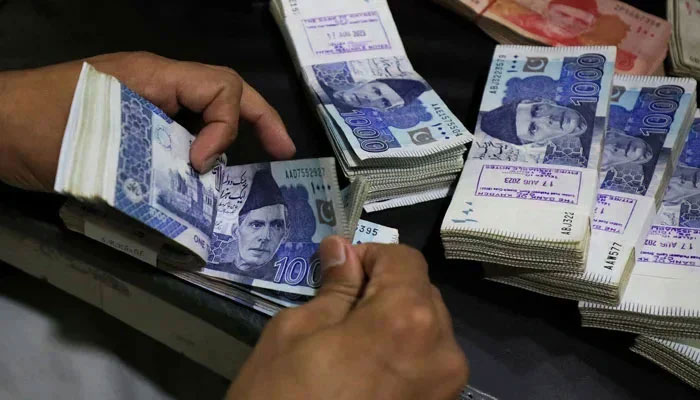
ISLAMABAD: Pakistan’s economy assumes stable growth over the medium term, but several macroeconomic risks could disrupt fiscal stability, including lower-than-expected GDP growth, a higher debt-to-GDP ratio, lower taxation, and hike in circular debt, natural disasters, and many others.
A fiscal risk report, prepared by the Ministry of Finance under the IMF programme, states that a key concern is lower-than-expected real GDP growth, which could fall 1.5 percentage points below the projected 5.1 per cent average growth rate, potentially aligning closer to the lower 3.5 per cent growth rates observed over the past decade.
Reduced GDP growth would limit tax revenues and increase fiscal deficits, with a projected increase in the overall fiscal deficit by Rs42.1 billion in FY2026 and Rs312.4 billion cumulatively from FY2026-28.
If all government expenditure categories remain delinked from GDP, the fiscal deficit would rise by Rs92.8 billion in FY2026 and Rs713.4 billion over FY2026-28.
This scenario would also cause the public debt-to-GDP ratio to rise, further worsening fiscal indicators. For risk management, the report says the government’s strategy for managing macroeconomic fiscal risks involves sector-specific taxation, such as temporary surcharges on sectors that perform well during downturns. It plans to formalise this by developing a sector-specific, state-dependent marginal tax framework. In the medium term, the government aims to establish an expenditure framework emphasizing restraint during periods of low growth, scaling back non-essential projects, and enhancing fiscal reserves through better management of contingency funds.
In the long term, the government will focus on structural reforms, including economic diversification and investment in human capital, to reduce reliance on vulnerable sectors.
For revenue related risks, the report states that revenue risks are a significant concern for Pakistan’s fiscal stability, as several scenarios could result in revenue performance falling short of projections. The baseline growth is expected to be driven by administrative measures and tax rate increases rather than by broadening the tax base.
Risks to revenue performance include non-tax revenue shortfalls and challenges in closing the tax gap. In an alternative scenario, tax revenue growth aligns with economic activity, assuming constant tax buoyancy, leading to a shortfall of Rs1,170 billion in FY2026 and a cumulative Rs5,254 billion by FY2026-28 from the baseline.
This would result in a fiscal deficit higher than the baseline, with an increase of Rs516 billion in FY2026 and a cumulative Rs2,539 billion by FY2026-28. Another scenario assumes a 30 per cent reduction in the State Bank of Pakistan’s (SBP) surplus profit, leading to an increased fiscal deficit of Rs412 billion in FY2026 and Rs1,522 billion over FY2026-28.
In a scenario where petroleum levy collections fall 20 per cent below the baseline projections, the fiscal deficit would increase by Rs248 billion in FY2026 and Rs895 billion in FY2026-28, compared to the baseline, further exacerbating fiscal imbalances unless compensated by other revenue sources.
As of December 2024, Pakistan’s total debt is Rs67,034 billion, with Rs49,883 billion in domestic debt and Rs36,512 billion in external debt and liabilities.
The debt portfolio faces various risks due to potential deviations in interest rates and exchange rates from baseline projections.
A risk scenario assumes domestic interest rates rise by 200 basis points, and foreign rates by 100 basis points. This would increase debt servicing costs, leading to a higher fiscal deficit by Rs617 billion in FY2026 and Rs3,025 billion cumulatively in FY2026-28.
Similarly, a 10 per cent depreciation of the exchange rate increases the cost of servicing external debt, resulting in an additional Rs49 billion in the fiscal deficit in FY2026 and Rs171 billion in FY2026-28.
In another scenario, a higher reliance on floating-rate debt leads to greater exposure to interest rate fluctuations. It could increase costs by Rs67.3 billion in FY2027 and Rs108.6 billion in FY2028.
A scenario assumes that the government evenly spreads FY2029 debt maturity over FY2026-2029, adding Rs2.6 trillion to the fiscal deficit annually, though it will alleviate FY2029’s burden.
Risk Management: The government will reduce fiscal risk by altering the composition of its debt, increasing the proportion of longer-term, fixed-rate instruments. It will adhere to fiscal deficit limits under the Fiscal Responsibility and Debt Limitation Act, 2005, while regularly conducting debt sustainability analyses.
To lower debt servicing costs, the government plans to tap into concessional climate loans and green bonds. In the long term, the government aims to boost exports, which will help stabilise the exchange rate and reduce exposure to currency risk from external debt. Additionally, uncertainty surrounding domestic debt servicing will be minimised by improving coordination between monetary and fiscal policies.
State-Owned Enterprises Related Fiscal Risks: SOEs present significant fiscal risks due to their inefficiencies and Public Sector Obligations (PSOs), which reduce their profitability and dividends to the government.
In 2026, SOEs are projected to pay a dividend of Rs116.1 billion (baseline), but this may drop to Rs89.7 billion in an alternative scenario, reflecting a decline of 6.1 per cent. This reduction would increase the fiscal deficit by Rs137 billion cumulatively over FY2026-28, or 0.07 per cent of GDP. The government’s obligation to support 17 major loss-making SOEs exacerbates the fiscal burden, potentially leading to a larger deficit and increased public debt. In a scenario where government support to loss-making SOEs is determined by detailed workings at the SOE level, a fiscal burden of Rs1,980 billion for FY2026 and cumulatively Rs6,726 billion for FY2026-28, about 1.5 per cent of GDP, would result.
The net fiscal risk—calculated as the difference between this burden and projected government support (Rs1,452 billion for FY2026 and Rs4,932 billion for FY2026- 28)—is estimated at Rs528 billion for FY2026 and Rs1,988 billion for FY2026-28.





-
 State institutions ‘fail’ to perform constitutional duties: KP CM
 -
 CTD orders psychological testing of police on VVIP security duty
 -
 Navy busts drug consignment valued at $130m
 -
 Three ex-secretaries in race for ETPB chief post
 -
 Punjab govt forms 71 JITs to probe cases against banned TLP
 -
 Some UNSC members ignoring broader reforms, seeking privilege: Pakistan
 -
 PAC body discusses non-recovery of Rs15bn gas cess
 -
 Pakistan received $2.29bn foreign loans in first 4 months of 2025