Lyari rising ( Part – II )
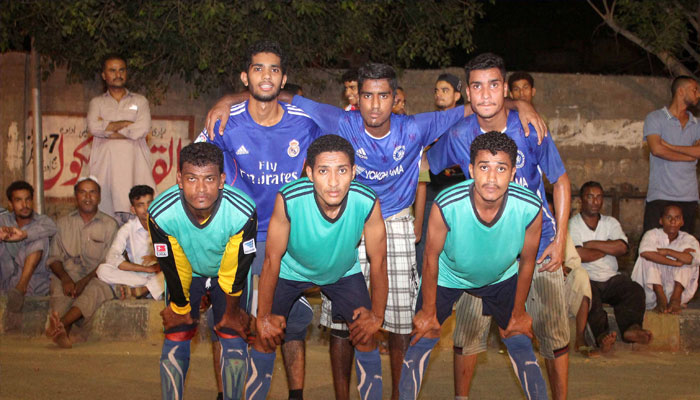
In Lyari, one of Karachi’s oldest neighbourhoods – famous for footballers, boxers and musicians, yet too often reduced in the national imagination to violence and neglect – a young writer has quietly offered a different story.
Umair Razzaq, who first drew attention in 2018 with ‘Lyari Rising’, a book he wrote while still a bachelor’s student of English literature, has now turned his pen to the field of education. His new 50-page booklet, ‘The Art of Teaching in the 21st Century’, may be slim, but it carries an ambition larger than its size: to remind readers that teaching, more than technology or infrastructure, remains the beating heart of learning.
At first glance, the chapter titles look like chalkboard slogans: ‘We Need Good Teachers till the End of Time’, ‘Self-Effacement Teaching’, ‘Schools Are Mere Buildings; Teachers Are Architects’, ‘Artificial Intelligence Will Never Replace a Good Teacher’, ‘The Effects of a Failure Teacher Are Far-Reaching’ and ‘Why Do You Want to Quit Teaching’. The repetition of ‘teacher’ is no accident. For Razzaq, the profession is not one topic among many but the axis on which the future turns.
The booklet opens with a sweeping claim: “We need good teachers till the end of time”. This is not modest. It is a declaration of faith. Razzaq traces a lineage from Prophets and philosophers to neighbourhood mentors, insisting that no society can thrive without teachers at its core. The rhetoric is stirring, if occasionally grand. Unlike policy experts who cite data on teacher effectiveness, Razzaq appeals to moral conviction and lived memory.
The point is not to prove with numbers what everyone already knows, but to reignite respect. In this sense, his approach resembles Parker J Palmer’s ‘The Courage to Teach’, which also begins not with statistics but with the inner calling of the teacher. Both works argue, in their own ways, that teaching is less a job than a vocation.
In ‘Self-Effacement Teaching’, Razzaq introduces a concept rarely named so explicitly. The best teachers, he writes, efface themselves. They do not dominate the stage but create conditions for students to flourish, even surpass them. His metaphors are simple but effective: the scaffolding that disappears once the building stands, the candle consumed in giving light. The emphasis on humility pushes back against cultures of vanity, where teachers may mistake authority for ego.
There is a risk, of course, that ‘self-effacement’ could be misread as passivity. Yet Razzaq’s intent is clear: humility does not mean absence, but service. Here too, one hears echoes of Palmer, who wrote that good teaching “comes from the identity and integrity of the teacher” – not from performance or showmanship.
The third chapter moves from personality to structure: “Schools are mere buildings; teachers are architects”. Razzaq’s argument is blunt: no matter how well-funded, a school without strong teachers is an empty shell. Recall Karachi neighbourhoods where new schools decayed for lack of motivated staff, contrasted with modest setups where inspired teachers worked miracles.
The metaphor of the architect is striking. Teachers, like architects, imagine structures that will outlast them. They do not just transmit knowledge; they design intellectual dwellings in which students learn to live.
Here, Razzaq’s vision parallels Sir Ken Robinson’s famous critique of industrial schooling. Robinson argued that education systems too often obsess over structures, timetables and curricula, forgetting that real learning depends on relationships. Razzaq, writing from Lyari rather than London, arrives at a similar conclusion: investment in brick and mortar is wasted without investment in human beings.
The fourth chapter faces the 21st century head-on: can artificial intelligence replace teachers? For Razzaq, the answer is a firm no. He acknowledges the usefulness of digital tools – quizzes, grading software, adaptive apps – but insists that the heart of teaching lies in encouragement, empathy and moral formation. Students learn more from the eyes of a teacher, he argues, than from the screen of a device.
This chapter feels particularly timely, given the global anxiety around AI. Where Silicon Valley pitches technology as disruption, Razzaq casts it as an assistant at best. His scepticism is grounded in local realities: in many Pakistani classrooms, electricity is unstable and the internet unreliable, making grand promises of AI irrelevant. But his deeper point is universal: no algorithm can replace the moment of encouragement after failure, or the spark of curiosity lit by a human presence.
That said, Razzaq might have gone further in exploring teacher-AI collaboration. Robinson and others have suggested that technology can amplify creativity when used wisely. By focusing on resistance, Razzaq leaves the partnership potential underdeveloped.
In ‘The Effects of a Failure Teacher Are Far-Reaching’, Razzaq confronts the shadow side of his subject. A bad teacher, he writes, does not merely fail to teach; they actively deform futures. Recall pupils who abandoned dreams after being humiliated or discouraged by careless teachers. The ripple effects – lost confidence, diminished trust, wasted talent – extend far beyond the classroom.
This chapter is the most emotionally charged. Few educational texts in Pakistan dare to state so bluntly that teachers can ruin lives. Razzaq does. It is a necessary counterweight to the idealisation of teachers as flawless heroes. At times, the tone risks being punitive. Not all ‘failure teachers’ are villains; many are victims of low pay, overcrowding and burnout. Razzaq could have acknowledged these systemic pressures more fully. Still, the warning is salutary: mediocrity in teaching is not neutral; it leaves scars.
The booklet ends with a note of compassion. ‘Why Do You Want to Quit Teaching’ addresses teachers directly, acknowledging the exhaustion, the lack of respect, the meagre salaries and the bureaucratic overload. Razzaq does not scold; he sympathises. Yet he gently urges teachers to remember their first spark: love of knowledge, service to children, or a sense of calling.
If you must leave, leave because your path calls you elsewhere, not because the system has broken your spirit. The tone is pastoral, almost therapeutic. After five chapters of exhortation, this closing chapter feels like a hand on the shoulder of a weary colleague. Razzaq’s style is simple, metaphorical and deeply local. He writes without jargon, using images drawn from his surroundings: this accessibility is a strength. It makes the booklet suitable for practising teachers, trainee teachers and even parents.
What distinguishes him from global authors like Palmer or Robinson is not the originality of the arguments but the location of the voice. To hear these convictions – about humility, creativity and irreplaceable teachers – not from Harvard or Oxford but from Lyari is itself refreshing. It reminds us that the philosophy of teaching is not the property of Western academies; it arises wherever teachers reflect seriously on their craft.
The strengths of ‘The Art of Teaching in the 21st Century’ are moral clarity, accessibility, and timeliness. It affirms the dignity of teachers at a moment when machines and bureaucracies threaten to eclipse them. It also situates that affirmation in a Pakistani, urban, working-class context rarely represented in educational literature.
The weaknesses are predictable: lack of empirical evidence, romanticisation of teachers and a defensive rather than imaginative stance toward AI. At 50 pages, the arguments often feel sketched rather than developed. But perhaps that is the point: a booklet is not a dissertation; it is a spark.
It is worth remembering that this is not Razzaq’s first book. ‘Lyari on the Rise’already showed his instinct to write against the grain, to insist that dignity resides where outsiders see only despair.
In ‘The Art of Teaching in the 21st Century’, he carries that instinct into education. Once again, he takes a voice often silenced – the everyday teacher in an under-resourced setting – and insists that this voice matters, not just locally but globally.
‘The Art of Teaching in the 21st Century’ is a small book with a large heart. It will not satisfy readers looking for data, case studies or policy blueprints. But it will encourage teachers, challenge communities to honour them and remind us that, in the words of Razzaq, “we need good teachers till the end of time”.
Placed alongside Palmer’s ‘The Courage to Teach’ or Robinson’s critiques of industrial schooling, Razzaq’s work feels less polished, less researched – but no less authentic. If Palmer speaks of the soul of the teacher and Robinson of the creativity of the child, Razzaq speaks of the dignity of teaching in a place where both are too often overlooked.
From Lyari, he gives us not just an argument but a witness: that despite poverty, neglect, and now the threat of machines, the art of teaching endures – fragile, humble, irreplaceable.
Concluded
The writer holds a PhD from the University of Birmingham, UK. He tweets/posts @NaazirMahmood and can be reached at:
mnazir1964@yahoo.co.uk