Joint Senate panels’ meeting: Carmakers warn govt they too will start importing used vehicles
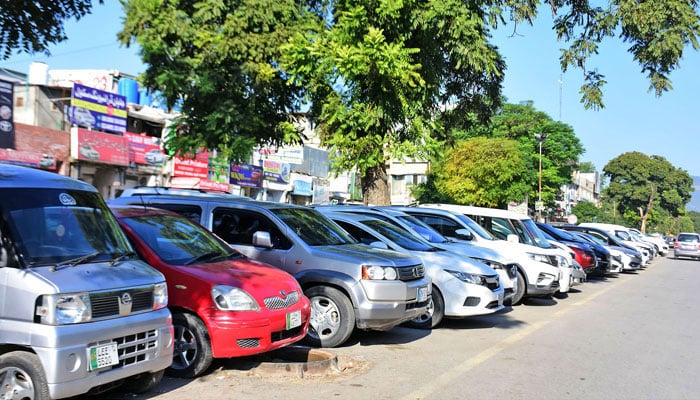
ISLAMABAD: Despite extending the time frame for allowing import of used cars from the next fiscal year under the agreed conditions of the IMF, the auto manufacturers have threatened the government to start importing used vehicles and selling in the market.
If the government allows the import of used cars at a tariff of 40 percent from July 2026, they might halt manufacturing in Pakistan as done by big giants of the auto sector in Australia and New Zealand.
The Ministry of Industries high-ups informed the Senators that the government had worked out the Voluntary Separation Scheme for employees working in the Utility Stores Corporation (USC). The summary has been prepared and forwarded to the ECC of the Cabinet for allocation of Rs15 billion for undertaking VSS in the USC for consideration in its next meeting.
A heated debate occurred during the proceedings of the joint meeting of the Senate Standing Committee on Finance and Revenues and Industries here at the Parliament House on Monday.
Only two senators opposed the manufacturers of the auto sector, arguing that the Aoun money continued and the quality of domestic car makers was highly compromised. However, the Chairman of the Senate Panel on Industries, Aon Abbas, supported the auto sector. But Senator Muhammad Abdul Qadir sternly opposed the domestic auto manufacturers when Pakistani officials from the Ministry of Commerce plainly informed the Senate panels that the tariff reduction for imported used cars was the part of the IMF conditions and could not be reversed.
However, the government has extended the time frame for allowing import of used cars as initially it was planned to grant permission from September 2025 but now it would be permitted from July 2026. The auto sector representative made two claims that 61 percent price of vehicle was mainly because of taxation regime. Secondly they argued that the quality of cars manufactured in Pakistan and Japan was similar and there was difference of only specification.
The manufacturers of auto parts asked the Senate panel to block the import of used cars because two millions jobs would be the stake. The joint meeting of Senate Standing Committee on Finance and Revenue and Standing Committee on Industries and Production, co-chaired by Senator Saleem Mandviwalla and Senator Aon Abbas, was held to discuss the issues faced by automobile sector.
Representatives of automobiles sector highlighted the existing tax regime and recent hindrances for automobile sector. They stated that around one lac fifty thousand vehicles have been produced in Pakistan annually and which the same is as produced in 2004. In recent years, the automobile sector has achieved localisation of auto sector, however, the decrease in regulatory duty on used cars is threatening its survival.
Officials of Commerce Ministry stated that the government has removed restrictions on the commercial import of used vehicles in accordance with IMF commitment. Following the decision, the government has decreased regulatory duties to create competitive markets and facilitate consumers. Officials optimised further decrease in regulatory duty in the coming years and extending the limit of five years old vehicle to six to seven years.
Representatives of a company pointed out the existing taxes on various segments of vehicles, and stated that the government taxes on its SUV is Rs14.4 million and its market price is Rs24.4 million.
However, Senator Muhammad Abdul Qadir favoured the government decision of reducing the regulatory duty stating that the decision will pave a way for competitive markets and will result in benefiting the consumers.
After a detailed deliberation, the joint committee recommended for rationalisation of regulatory duty on used cars as it will affect the livelihood of 2 million households attached with the automobile sector.
Concerning the recent fire in Export Processing Zone Karachi which was erupted due to delay in dumping of inflated wastes. The joint committee directed the FBR to draft a workable mechanism for timely dumping of inflated waste to protect the Export Processing Zone from any loss in the future.
The joint committee also raised the matter of increased taxes in EPZs despite legal protection available to these units, the member IR, FBR briefed the committee that the tax matter is already under consideration in proposed industrial policy.


-
 Aurangzeb confirms Saudi Arabia $10bn interest, says B2B shift ongoing
 -
 Pakistan to build artificial island to boost oil exploration
 -
 Special pink bus service launched for women on Green Line route
 -
 Same number plates from other provinces lead to wrong e-challans for Karachiites
 -
 State institutions ‘fail’ to perform constitutional duties: KP CM
 -
 CTD orders psychological testing of police on VVIP security duty
 -
 Navy busts drug consignment valued at $130m
 -
 Three ex-secretaries in race for ETPB chief post