Blueprint to blackout
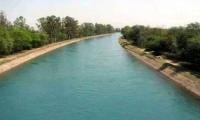
In July 2025, Nepra set the power purchase price for FY26. Hydropower is projected to be the cheapest source at around Rs12.25 per kWh. However, the Neelum Jhelum Hydropower Project (NJHPP), the fourth-largest public-sector dam, will not deliver electricity this year due to its closure.
Pakistan's hydropower development has a history that spans several decades, beginning with the Mangla Dam on the River Jhelum, which was conceived in 1950. Despite encountering challenges, the project was operational by 1967, one year ahead of schedule. The Tarbela dam, envisioned in the 1960s, completed its first phase of 3,478MW within eight years, in 1976. Likewise, the Ghazi Barotha, with a capacity of 1,450MW, was conceived in the early 1990s. Construction began in 1995 and was completed in 2004.
The NJHPP, with a capacity of 969 MW, began commercial operations in 2018 after a lengthy gestation period of over 30 years. However, it faced challenges right after its inauguration. Water leakage in tunnels and other technical problems led to its closure in July 2022. It resumed operation for a few months in 2023, but the major tunnel collapse in April 2024 led to its complete shutdown again.
Recent reports suggest that it could take another two years to resolve the ongoing issues. The estimated damage amounts to Rs35 billion, with additional losses of over Rs100 billion from the suspended electricity generation at the NJHPP. This also affects the project's goal of reducing carbon dioxide emissions by about 2.4 million tons. It is important to note that the estimated cost required for repairs will eventually be taken with Nepra for its recovery through tariff when finalised.
There is no doubt that large hydro projects carry significant risks, often leading to delays due to financial and political constraints. A study of 245 dams found that budgets typically underestimated total costs by around 99 percent due to inflation, debt servicing, currency depreciation, and environmental costs. But the story of the NJHPP is more than this. Understanding what went wrong with the project is crucial, especially when numerous new projects of various capacities are currently under construction.
The NJHPP, initiated by Wapda in 1983, completed its pre-feasibility study in 1987. The first PC-I was approved for Rs15.253 billion, but work could not start due to a funding shortfall. In 1997, a pan-Nordic firm developed a revised project design for 969MW. A new PC-I was approved in 2002 for Rs84 billion, with an initial completion date of 2008, but work could not commence.
The project is located in a seismic zone, so considering the site's geological characteristics was essential during the initial design. However, this was overlooked. After a severe earthquake in 2005, design changes were required, but the contract was awarded to the Chinese Consortium in 2007 based on pre-2005 designs, with an expected completion by October 2015.
In May 2008, Neelum Jhelum Consultants, a joint venture of five firms, was engaged to review the design and oversee project construction. However, the absence of financing, coupled with land acquisition and electricity constraints, prevented the contractor from initiating work. Construction began in 2012 after securing funding.
In 2010, the use of two Tunnel Boring Machines (TBMs) was introduced as an alternative to the traditional drill and blast method to save time. This led to the revised PC-I twice, first in 2013, increasing the budget to Rs272 billion, then in 2015 to Rs404 billion and extending the completion date to November 2016. Despite the use of TBMs, the project remained incomplete by the deadline.
The NJHPP is indeed a challenging project. It involves building a deep underground powerhouse and about 50 kilometers of tunnels in challenging Himalayan terrain. Initial planning underestimated the project's complexity. Many hydropower projects worldwide have faced similar tunneling and topographic challenges. Despite these obstacles, these projects were completed and are currently operational.
For example, the Jinping-II Hydropower project in China and the Nant de Drance project in Switzerland exemplify effective engineering strategies. Key success factors in both projects include thorough geotechnical studies, adaptable tunneling plans, independent technical reviews and transparent contractual arrangements. Their preparedness for rock bursts and high-stress conditions further ensured success, showcasing how governance and technical excellence can work together.
The NJHPP faced financial issues due to piecemeal funding, including foreign loans and electricity surcharges, leading to frequent disruptions. The lack of transparency regarding a surcharge imposed in 2008 that continued after completion underscored mismanagement, as consumers paid without knowing how their money was used.
A single lead agency is crucial for mega-infrastructure project success. The Neelum Jhelum Hydropower Company (NJHPPC) was established in 2004 to improve governance and financial transparency. Its independent board was intended to enhance decision-making, but the significant presence of government officials compromised its autonomy. Frequent leadership changes, coordination issues among stakeholders, political interference and weak oversight led to delays and increased costs.
The NJHPPC accumulated significant loans that required government guarantees and higher tariffs. Its establishment failed to ensure efficiency or transparency, mirroring issues faced by other state-owned enterprises (SOEs). Lacking independence and accountability, the NJHPPC is now among the loss-making SOEs, with cumulative losses surpassing Rs58 billion.
The NJHPP, once viewed as an engineering marvel, only served as a cautionary tale of mismanagement. Its current challenges indicate flaws in its basic design, its construction quality, poor contingency planning and/ or pre- and post-construction audits. Leaving aside the environmental implications and impacts on local communities, the NJHPP illustrates how technical complexity combined with poor governance can lead to operational failures.
In May 2018, the Central Development Working Party approved a third-party audit to evaluate the project's cost overruns. However, to date, no such report has been publicly available. Recent developments have shifted focus to legal and technical investigations, especially after structural faults were discovered in the tunnel.
In July 2025, the prime minister established a judicial commission, led by a former judge, to investigate the matter and hold those responsible accountable. The report of this commission is pending. It is anticipated that the accountability established by the commission's report will lead to improved management of future projects.
The writer is an energy expert and senior research economist at the
Pakistan Institute of Development Economics (PIDE), Islamabad.