Lyari rising: Part - I
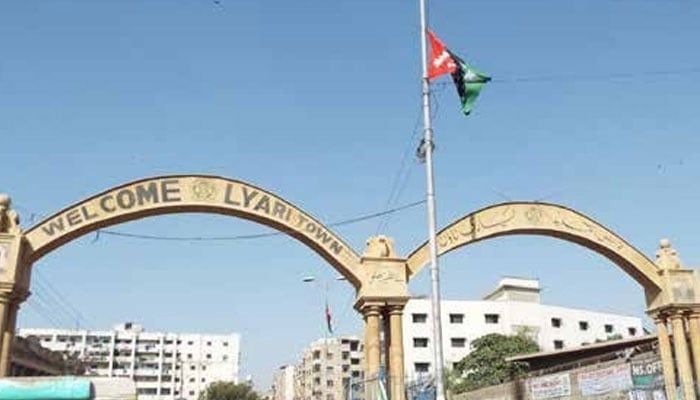
Lyari in Karachi has produced many prominent intellectuals, journalists, poets and writers. From poets such as Essa Baloch, Waheed Noor and N M Danish (a brilliant poet and debater of my college days in the 1980s) to journalists like Nadir Shah Aadil, Latif Baloch and Saeed Sarbazi; from political activists Lal Bakhsh Rind, Sangat Wahid Baloch and Ramzan Memon, to writer Ramzan Baloch, trade union leader Usman Baloch, and culture and theatre enthusiasts Rauf Rufi and Yaseen Bizenjo, the list of outstanding names who have enriched the cultural and intellectual life of Lyari and Karachi is a long one.
To this list we may now add a younger voice, Umair Razzaq, a Lyari-based citizen journalist, teacher, youth advocate and writer. He came to prominence with his book ‘Lyari on the Rise’ (Raheel Publications), an attempt to counter the mainstream media’s negative portrayal of Lyari by highlighting its social, cultural, and artistic vibrancy, particularly during the period from 2015 to 2017. At the time he wrote it, Umair was a final-year student of English Literature at Benazir Bhutto Shaheed University, Lyari. He was already active in youth advocacy and well known for his criticism of the media’s biased coverage of his community.
Published in 2018, ‘Lyari on the Rise’ was conceived as a deliberate shift in narrative. It challenged sensationalist reporting and parachute journalism by telling real stories of hope, cultural richness and community resilience. At a time when negative stereotypes had overshadowed Lyari’s identity, the book was hailed as a meaningful effort to reclaim the region’s image through education, literature and critical engagement with the media. Instead of reproducing the dominant narrative of violence, Umair highlighted the community’s art, culture, education and the initiatives of its youth.
This was an important step in presenting Lyari’s true face to the wider world. Since then, Umair has been recognised as part of a new generation of voices from Lyari working to reshape perceptions through education, literature, and activism. Lyari, after all, is one of Karachi’s oldest neighbourhoods, long celebrated for its cultural traditions but unfairly branded as a hub of crime and violence. Growing up there exposed him to both the challenges of marginalisation and the resilience of the community. His awareness of how mainstream media reduced Lyari’s identity to gangs and drugs, while ignoring its heritage of education, art, music and sport, inspired him to respond with journalism and literature.
Umair’s work reflects the determination of Lyari’s youth to tell their own stories. Rather than retelling narratives of conflict, he brings forward accounts of youth-led initiatives, cultural revival, educational movements and sporting achievements. He stresses that Lyari should not be seen as a conflict zone but as a centre of creativity, resistance and strength. In his view, the community deserves to be remembered for its poets, musicians, footballers and social activists rather than its gangs. His book and his public voice consistently emphasise the agency of Lyari’s young generation, who are shaping their identity through education, art, sport and entrepreneurship.
He is also sharply critical of Pakistani media, which he accuses of stereotyping Lyari for commercial gain. His work, therefore, resonates with larger debates on media ethics and representation. By recording stories of resilience, he also contributes to preserving Lyari’s cultural and social memory for future generations. In this sense, ‘Lyari on the Rise’ gave the community a new literary voice at a moment when it was emerging from years of conflict. For Lyari’s young people, Umair became a symbol of how education and writing could reclaim identity and resist marginalisation.
Lyari has produced countless cultural icons – musicians, football players, boxers and community activists – yet their stories have rarely reached the mainstream. Umair Razzaq stands among a new generation of writers determined to change that. His book is more than local storytelling; it is a political act of reclaiming space for Lyari within Karachi and Pakistan’s public imagination. He represents part of a new intellectual wave of writers, students, and community journalists who are challenging how their home is perceived. Through ‘Lyari on the Rise’, he not only brought forward stories of hope but also challenged the dominance of mainstream narratives, proving that young voices from marginalised areas can, and must, define their own identities.
The book functions as both testimony and social critique. It reframes Lyari not as a troubled neighbourhood but as a hub of resilience, culture, and youth activism. It strongly criticises the media for portraying Lyari almost exclusively through the lens of gang wars, drugs, and crime. Umair describes how journalists parachute into the neighbourhood, sensationalise stories of violence, and ignore deeper realities. This one-dimensional portrayal, he argues, has stigmatised Lyari’s residents across Karachi and Pakistan. His argument echoes wider global concerns about how marginalised communities are stripped of complexity and reduced to cliches.
Against this, he shifts attention to Lyari’s cultural identity: its football grounds, its boxing champions, its Balochi and Sindhi music traditions, and its artistic communities. He documents youth-led educational and social initiatives that rarely receive attention in the press. For Umair, Lyari is not Karachi’s ‘problem child’ but its cultural heartbeat. These sections of the book are its strongest, as they allow readers to see Lyari’s lived reality beyond the news ticker.
Education occupies a central place in his narrative. He describes how local students, teachers and educational movements are quietly reshaping the community’s future. Writing itself, he argues, becomes an act of resistance, a way for Lyari’s youth to assert their place in Pakistan’s intellectual life. While the book would have been strengthened by more case studies, data or oral histories, its testimonial quality remains persuasive. Umair’s central claim is that Lyari’s new generation must reclaim its narrative. He presents Lyari as ‘rising’ because its young people are rejecting imposed labels and constructing alternative images of themselves.
This theme aligns the book with global youth movements that resist stigma through literature, art and media, whether in South African townships or Brazilian favelas. The style is accessible, conversational and passionate rather than academic. It weaves personal observation with community narratives, creating an intimate portrait of Lyari. At times, it is more polemical than analytical, making bold assertions without always providing systematic research. Yet this is also what gives the book its vitality: it is a first-person testimony, rare in the literature on Lyari.
As counter-narrative literature, it offers a voice to marginalised youth in Pakistan’s urban peripheries, carrying symbolic weight as activist writing. Ultimately, ‘Lyari on the Rise’ is best understood as a cultural and political intervention. It marks a turning point where Lyari’s youth began to speak for themselves and contest external representations. For outsiders, it challenges stereotypes and forces a reconsideration of assumptions about the neighbourhood.
For the youth of Lyari, it is a source of pride and inspiration, a reminder that writing can be as powerful as protest. Despite its limitations, Umair Razzaq’s book stands as a milestone in Karachi’s urban literature, reimagining Lyari not as a site of despair but as one of resilience, creativity and resistance.
To be continued
The writer holds a PhD from the University of Birmingham, UK. He tweets/posts @NaazirMahmood and can be reached at:
mnazir1964@yahoo.co.uk