Over 75% of cancer patients in Pakistan diagnosed at late stages, warn public health experts

LAHORE: Only three percent of cancer patients in Pakistan are diagnosed at an early and curable stage, while 22 percent are detected in the second stage. The remaining 75 percent are identified only in advanced stages three and four — when survival chances are minimal despite patients selling belongings and exhausting savings on costly treatment.
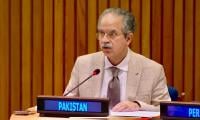
“Cancer survival depends on how soon the patient gets treated. In breast cancer, survival is 99 percent in stage one and 90 percent in stage two, but the prognosis becomes poor in later stages,” said Prof. Shahzad Ali Khan, Vice Chancellor of Health Services Academy (HSA) Islamabad, while delivering the keynote address at the public health session of the annual medical oncology conference in Lahore.
The three-day international gathering, Best of ASCO 2025, brought together oncologists, researchers, and public health experts from Pakistan and abroad to share the latest knowledge and treatment options. Organised by the Society of Medical Oncology Pakistan (SMOP), it featured sessions on therapies, immunotherapy, palliative care, and public health approaches.
Prof. Khan warned that cancer, once more common among affluent groups, is now spreading among the poor who cannot bear its staggering costs. He noted that the disease behaves differently in Pakistan compared to the West, appearing at younger ages, growing faster, and often responding poorly to drugs developed abroad.
He lamented the absence of a comprehensive public-sector cancer hospital, stressing that Atomic Energy Commission centers are no substitute for modern oncology services. “There is one oncologist for every million people. But with most patients reaching stage three or four, even more oncologists cannot change outcomes,” he said.
Prof. Khan identified two main obstacles to timely treatment: community-level delay due to lack of awareness, and system-level delay caused by untrained primary care physicians and the absence of a referral mechanism. “Doctors often hesitate to refer suspected patients for fear of losing clientele. With no referral system, patients reach oncology centers late, when the disease is no longer manageable,” he remarked.
On prevention, he urged Pakistanis to adopt healthier lifestyles. “Diet in our society is becoming cancerous, 90 percent of Pakistanis don’t exercise, stress is rising and sleep is becoming an issue. Unless we address these, the cancer burden will worsen,” he cautioned.
Prof. Khan also criticised holding discussions in luxury hotels, saying: “Talking about poor cancer patients in five-star hotels is hypocrisy. Universities and public institutions should host these events. HSA is ready to provide free space and volunteers,” a comment that drew applause.
Other speakers stressed that without awareness and prompt treatment, cancer patients will continue to face delayed care and high mortality, and called for strategies involving government, medical institutions, and civil society to strengthen cancer care infrastructure.
At another session of the oncology conference, organized with the support of a local pharmaceutical firm, experts highlighted Pakistan’s rising cancer burden. Citing International Agency for Research on Cancer (GLOBOCAN) data, they noted that breast cancer accounts for 31 percent of female cancers, followed by head and neck cancers at 8.6 percent, lung cancer at 5.6 percent, and colorectal cancer at 5.1 percent. Limited infrastructure and high out-of-pocket costs mean many patients abandon treatment midway.
International experts stressed the promise of immunotherapy, particularly immune checkpoint inhibitors such as Pembrolizumab, which have become globally recognized for superior efficacy and fewer side effects compared to chemotherapy.
Dr. Ilya Pokataev, Head of the Clinical Research Center and Chemotherapy Department at Moscow City, shared clinical trial data on a biosimilar Pembrolizumab, showing equivalent quality, safety, and immunogenicity to the original molecule.
The session, moderated by Dr. M. Nauman Zahir of Dr. Ziauddin Hospital, emphasized that Pembrolizumab is now indicated in 24 types of cancer, potentially benefiting thousands of patients in Pakistan — provided it becomes affordable and accessible.
Oncologists welcomed the availability of new treatment options, noting that access to advanced therapies such as immunotherapy could transform outcomes if effectively integrated into local systems. They stressed that while affordability remains a key barrier, evidence-based therapies tailored for Pakistani patients are vital to reducing the country’s growing cancer toll.
Participants also acknowledged the role of scientific forums, supported by industry partners, in introducing innovative treatment approaches to the medical community — provided they align with public health priorities and reach patients nationwide.


-
 Aurangzeb confirms Saudi Arabia $10bn interest, says B2B shift ongoing
 -
 Pakistan to build artificial island to boost oil exploration
 -
 Special pink bus service launched for women on Green Line route
 -
 Same number plates from other provinces lead to wrong e-challans for Karachiites
 -
 State institutions ‘fail’ to perform constitutional duties: KP CM
 -
 CTD orders psychological testing of police on VVIP security duty
 -
 Navy busts drug consignment valued at $130m
 -
 Three ex-secretaries in race for ETPB chief post