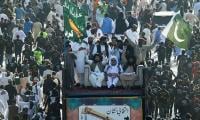
RAW network busted in Karachi, six suspects arrested

KARACHI/ISLAMABAD: The Counter-Terrorism Department (CTD), Sindh, in collaboration with the Intelligence Bureau, has dismantled a major network of India’s Research and Analysis Wing (RAW) operating in Pakistan, and arrested six suspects in connection with the target killing of a social worker in Badin.
Addressing a press conference on Saturday, Additional Inspector General, CTD, Azad Khan, flanked by DIG CTD Azfar Mahesar and SSP CTD Irfan Bahadur, said the breakthrough came during the investigation into the May 18 murder of 45-year-old Abdul Rehman, a social worker in Matli, district Badin.
The arrests in connection with the RAW-linked murder highlight how a Gulf state has become a staging ground for Indian intelligence targeting Pakistanis. The investigation also exposed the use of parallel teams set up executing multiple attempts to eliminate designated individuals. The operation focused on the killing of alleged Jamaat-ud-Dawa worker Abdul Rehman, also known as Razaullah Nizamani.
This approach—cultivating Pakistanis in Gulf countries for such operations—has been used repeatedly. For example, attackers involved in an assassination attempt on Hafiz Saeed had all spent time in the Gulf, groomed by RAW. In 2023, Maulana Shahid Latif of Jaish-e-Mohammad was also assassinated by a team organised through a Gulf-based Pakistani handler.
In the Badin case, the RAW handler, Sanjay Sanjeev Kumar (alias “Fauji”), recruited Salman—a resident of Sheikhupura living in the Gulf. After starting out as roommates, even when Sanjay relocated, they maintained a growing friendship that eventually culminated in the formation of a network of Pakistani workers involved in terror operations in Pakistan.
Salman established contact with Umair, his cousin with a criminal background, via an encrypted messaging app. Umair was promised Rs 10 million and a European visa in exchange for tracking Abdul Rehman, also known as Razaullah Nizamani.
After an advance of one million rupees sent by Salman, Umair recruited Sajjad and Shakeel. The trio traveled to Hyderabad in April, purchased a bike, stayed in a hotel and started surveillance, but eventually abandoned the mission and returned home. Under renewed pressure from Salman—who promised to arrive from the Gulf—they resumed preparations.
Simultaneously, Salman enlisted a second surveillance team through an associate named Arsalan, also based in the Gulf and formerly a delivery worker. Arsalan was flown to Pakistan with Rs 500,000 and recruited four men tasked solely with surveilling the target, not carrying out the attack. Eventually, both teams converged: Salman and Umair stayed in a hotel in Hyderabad, acting under Sanjay’s guidance. A hardened criminal was also brought in. After tracking Nizamani to a shop and following him upon his return, the team shot him dead and immediately fled.
Following the successful operation, Salman slipped back to the Middle East. Subsequent raids led to multiple arrests—including Umair Asghar, Sajjad, Obaid, Shakeel, Arsalan, and Talha—stretching from July into August. Recovered evidence included firearms, a motorcycle, mobile devices, and remnants of a safe house in Karachi. Investigators confirmed that RAW had financed the operation through formal banking channels, branding these “extra-territorial killings” as state-sponsored terrorism under international law.
At the press conference, Additional Inspector General, CTD, Azad Khan said RAW funded the terror network through banking channels and other means, with a separate case registered under terror-financing provisions. “CTD Sindh and the federal agency worked tirelessly using technical resources to track down and arrest six suspects,” Khan said.
According to Khan, Indian media highlighted Abdul Rehman’s killing extensively, portraying it as the elimination of an “enemy of India”. He said that since the case involved propaganda and anti-terrorism provisions, it had been transferred to the CTD in Karachi. A joint investigation team, headed by the DIG CTD, was formed to probe all angles, including the suspects’ statements, recovered items, bank transactions and links with the banned Sindh Revolutionary Army (SRA). Khan revealed that evidence suggested RAW employing SRA operatives to facilitate its terror agenda in Pakistan.
Legal proceedings have been initiated under anti-terrorism laws, and further arrests are expected as additional teams work to apprehend remaining suspects. He further stated that the conspiracy was linked to developments with regard to Indian attack of May 9-10, during which the law enforcement agencies had anticipated retaliatory actions by hostile elements. “RAW’s involvement in this murder has been proven through solid technical evidence,” he said.
According to the CTD chief, Salman, a Pakistani national from Sheikhupura, arrived in Karachi and went to Hyderabad, where he stayed at a hotel. Four other suspects—Umair Asghar, Sajjad, Obaid, and Shakeel—travelled from Muridke and Sheikhupura to join him. The group conducted a five-day reconnaissance operation in Matli before the killing.
On the day of the attack, Shakeel, Obaid, and Sajjad travelled to Matli and executed the shooting, while Umair and Salman remained in Hyderabad to coordinate operations under Sanjay’s remote supervision. After the murder, Salman fled to a Gulf country via Karachi airport and later escaped to Nepal. “During this time, the handler remained in constant contact with the team,” Khan added. He noted that the operation was heavily funded by RAW through various financial channels, prompting the registration of a separate case under terror-financing laws.
“On 8 July, we arrested four suspects—Umair, Sajjad, Obaid, and Shakeel. Later, on August 17-22, we arrested Arsalan and Talha Umair for their involvement in the financial network,” Khan said. He stressed: “Such extra-territorial killings fall under the definition of state-sponsored terrorism in international law. This is not RAW’s first attempt; similar operations have been carried out in other countries using the same modus operandi.” The CTD chief presented a link chart to the media, explaining how financial trails, bank transactions, travel histories and handler communications corroborated RAW’s involvement.
During the question-and-answer session, Khan clarified that the victim had no political affiliation and was a landlord known for his social work. To another question, he said the arrested suspects had prior criminal records and had even disclosed the names of other potential targets in different provinces.


-
 Aurangzeb confirms Saudi Arabia $10bn interest, says B2B shift ongoing
 -
 Pakistan to build artificial island to boost oil exploration
 -
 Special pink bus service launched for women on Green Line route
 -
 Same number plates from other provinces lead to wrong e-challans for Karachiites
 -
 State institutions ‘fail’ to perform constitutional duties: KP CM
 -
 CTD orders psychological testing of police on VVIP security duty
 -
 Navy busts drug consignment valued at $130m
 -
 Three ex-secretaries in race for ETPB chief post