A deluge of tragedy
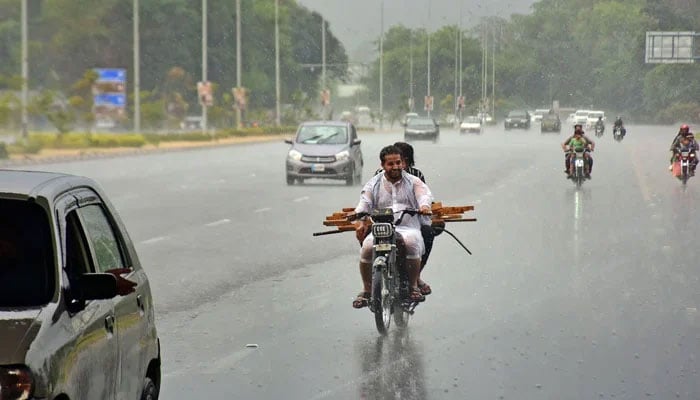
Since late June, Pakistan has endured one of the most intense monsoon spells in recent memory, beginning with torrential rain across the Potohar plateau.
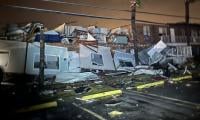
The urban centres in Potohar suffered serious flooding as drainage systems collapsed under pressure, the streets of Rawalpindi and Islamabad turning into rivers. As this urban deluge receded, the crisis expanded northward, where cloudbursts in Khyber Pakhtunkhwa, Buner, Swat, Gilgit-Baltistan and the federal territories triggered flash floods that obliterated entire settlements within minutes.
By mid-August, the cumulative death toll across northern Pakistan had already exceeded 700. In Khyber Pakhtunkhwa alone, nearly 400 lives were lost, including men, women and children, most of them in Buner where a single cloudburst wiped out entire communities. There, close to 200 people perished in a single night, while hundreds remained missing and thousands were displaced. [And then came the rain havoc in Karachi just a few days back].
In total, the 2025 monsoon season has till now left over 700 dead, hundreds injured and hundreds still unaccounted for. The infrastructure losses have included hundreds of homes destroyed, dozens of schools flattened and livestock washed away, while bridges and roads that linked villages collapsed into torrents. Families who survived returned to find not only their houses gone but also their livelihoods reduced to nothing.
As the waters subsided, another danger surfaced. Snakes, driven out of their natural habitats by the deluge, entered homes and settlements. In Khyber Pakhtunkhwa, reports confirmed rising cases of snake bites – yet, in most hospitals, anti-venom was simply not available, leaving vulnerable families with no defence. This silent hazard exposed the secondary threats that come in the aftermath of floods, stretching already fragile health systems even further.
The failures revealed by this disaster extend beyond immediate response. The early warning systems, though technically in place, were unable to provide timely alerts. In Buner, residents complained that no mosque loudspeakers or local channels had warned them, and many were caught in their sleep as torrents struck. Meteorologists had indeed predicted heavy rainfall, but the cloudbursts that dropped more than 150 millimetres of rain in a single hour proved too localised and too sudden for centralised systems to anticipate. The urban flooding in Potohar also showed how development on natural waterways has magnified risks, since storm drains and channels were already blocked or altered by unchecked construction.
At the same time, unchecked encroachments along rivers and floodplains made the devastation worse. Hotels, guest houses and settlements have narrowed natural waterways and removed vital flood buffers. In the Swat region, buildings constructed right on riverbeds were swept away, but their collapse also choked channels and forced water into populated areas, magnifying destruction. These mistakes are not new, but each year they continue with little enforcement.
Deforestation has also stripped the country of its natural defences. Pakistan’s overall forest cover has declined by nearly one-fifth since 2000. In Khyber Pakhtunkhwa, which was once celebrated for afforestation campaigns, forest cover dropped from more than 20 per cent in 2000 to 16 per cent in 2023. From 2001 to 2024, the province lost nearly 10,000 hectares of tree cover, leaving slopes bare and fragile. In Gilgit-Baltistan, too, forest cover has shrunk to below 4.0 per cent. Without tree roots to stabilise soil and absorb rain, slopes collapse under cloudbursts, sending mud and boulders into valleys and villages. Communities that once relied on forests as buffers now find themselves exposed to landslides, flash floods and erosion.
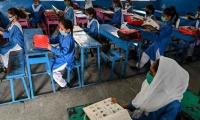
Yet the most difficult losses are not captured in official tallies. A child who loses both parents in a flood is left without shelter, care or future. A widow whose cattle are drowned loses not only her source of income but her sense of security. School children whose classrooms were washed away face not only disruption of education but also trauma that lasts for years. These are the human dimensions of loss and damage that remain absent from climate debates. They cannot be reduced to numbers, yet they must form part of any honest assessment of what these disasters mean.
If we calculate the total loss and damage from this year’s monsoon season, the economic burden could reach billions of dollars, much like the floods of 2022, which inflicted more than $30 billion in damages and reconstruction needs. While this year’s floods may not have covered a third of the country as in 2022, the deaths, the destruction of homes and schools, the loss of livestock and the long-term impact on children and families together make the true cost enormous. Unlike bridges or buildings that can eventually be rebuilt, the psychological and social damages cannot be repaired so easily.
The way forward requires both national reforms and international accountability. Within Pakistan, climate governance must be strengthened urgently. Early warning systems should be localised and people-centred, relying not only on satellite forecasts but also on community networks that can rapidly reach remote areas. Encroachments along floodplains must be removed through decisive political action, and rivers restored to their natural capacity. Forest protection must be enforced strictly, while afforestation must engage local communities to protect their land. Rehabilitation efforts must also include psychosocial care, safe housing and livelihood support, ensuring that recovery restores dignity and not just infrastructure.
At the international level, climate justice must move beyond rhetoric. The countries of the Global North, which are responsible for the bulk of historic greenhouse gas emissions, owe a clear debt to those on the frontlines of climate impacts. For Pakistan, this means that funds for loss and damage should come as grants rather than loans, and that support should be directed to resilience building rather than debt servicing. Global finance must include the human dimension of loss and damage, ensuring that orphans, widows, displaced families and traumatised children are not forgotten in the arithmetic of aid.
This monsoon season has once again shown the fragility of Pakistan’s ecosystems and governance, but also the urgency of global action. It has revealed how poor planning and weak enforcement can turn heavy rainfall into a human tragedy, and how silence on climate justice prolongs suffering. Those who have lost homes and loved ones cannot wait for abstract promises or delayed pledges. They need care, security and recognition today.
If Pakistan reforms its own systems while the world fulfils its climate responsibilities, then the future need not repeat the suffering of this summer. If not, then every monsoon will bring not only water and destruction but also the painful reminder that the world still refuses to protect its most vulnerable.
The writer is an environmental scientist and leads the programme on ecological sustainability and circular economy at SDPI. She tweets/posts @ZainabNaeem7