Pakistan raises alarm over right-wing extremists, laments stigmatisation of Muslims
"Terrorism within and from Afghanistan single most potent threat to region and world," Ambassador Asim Iftikhar tells UNSC
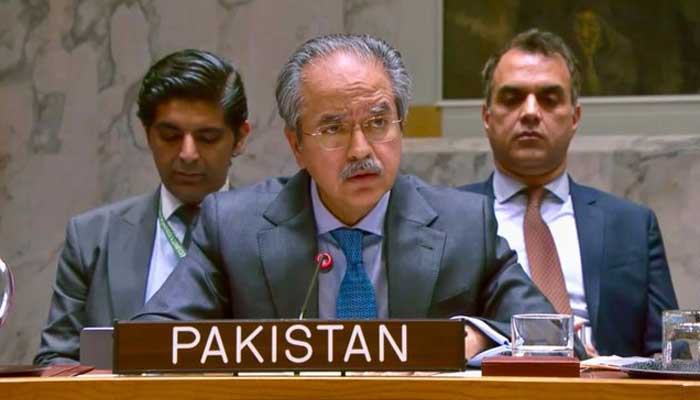
Lamenting the stigmatisation of Islam and Muslims, Pakistan has brought the United Nations Security Council's (UNSC) attention to the rise of right-wing extremists and fascist movements around the world.
"It is not understandable, and is indeed unacceptable, that every name on the Security Council's terrorism lists is Muslim, while terrorists and violent extremists elsewhere escape scrutiny. There is no non-Muslim in the lists," Pakistan's UN Ambassador Asim Iftikhar said during a UNSC meeting on "Threats to international peace & security caused by terrorist acts".
Urging the need to make adequate changes to the sanctions regimes to incorporate new and emerging threats, envoy Iftikhar called for an "end to the stigmatisation of Islam and Muslims".
"We must accept the reality. There has been a surge in the emergence of right-wing, extremist and fascist movements in several countries and regions of the world, leading to terrorist violence.
"Yet, we see a strong inclination to see acts by non-Muslims not as terrorism, but often described just as violent crime," remarked the Pakistan envoy.
The diplomat further highlighted that the existing situation contradicted both the UN and UNSC's stated position that terrorism is a global phenomenon and it cannot and should not be associated with any religion, nationality, civilisation or ethnic group.
Evidence of TTP-BLA collaboration
Highlighting that Pakistan's principal adversary — India —was active in sponsoring terrorism in Pakistan, the Ambassador Asim Iftikhar stated at the same session that New Delhi bankrolls and supports terrorist proxies.
"Indeed, terrorism within and from Afghanistan is the single most potent threat to that country, to the region, and the world," he remarked, adding that the threat from various other terrorist groups, such as Tehreek-e-Taliban Pakistan (TTP) and Baloch terror groups having sought refuge in ungoverned spaces in Afghanistan, remained unaddressed.
"For Pakistan, the danger is grave and immediate. The TTP, with nearly 6,000 fighters, is the largest UN-designated terrorist group, operating from Afghan soil.
"With safe havens close to our borders, it directly threatens our national security," Iftikhar noted.
He further maintained that there was "credible evidence of collaboration between the TTP and BLA and the Majeed Brigade, including sharing of terrorist training camps, that has targeted our strategic infrastructure, economic projects in Pakistan, and most tragically our people".
Stressing that Islamabad condemned terrorism in all its forms and manifestations, the envoy said that only a few countries had done more for the success of the global counter-terrorism efforts.
"Pakistan has been at the forefront on both counts — with 80,000 casualties and hundreds of billions of dollars in losses to our economy, Pakistan's sacrifices are unmatched. So is our resolve to eliminate this menace," he said.


-
 Punjab by-polls: Notices served on minister, SAPM for ‘violating’ election code of conduct
 -
 27th Amendment empowers FCC to hear all constitutional cases: minister
 -
 JF-17 attracts strong attention at Dubai Airshow as friendly country inks procurement MoU
 -
 US lawmakers laud Punjab govt's initiative to modernise brick-kiln
 -
 Security forces gun down 30 terrorists in multiple IBOs in KP: ISPR
 -
 MQM-P calls for new province in Sindh
 -
 US report validates Pakistan military edge over India: PM
 -
 Banned TTP poses serious threat to Pakistan security: UNSC panel