Rising Pakistan

As Pakistan celebrates its 78th Independence Day and Maarka-e-Haq victory, we stand at a defining moment in our national journey. Independence Day is not merely a ceremonial occasion; it is a reaffirmation of the ideals for which our forefathers struggled – freedom, dignity, self-reliance, and progress.
This year’s celebrations are especially significant. For the first time in over a decade, Pakistan is not looking back at a year of economic turbulence, but forward to a decade of opportunity. We are entering a new chapter – one defined not by crisis management, but by strategic transformation.
It is a moment when Pakistan is emerging as a land of promise and possibility, with reforms taking root, investor confidence returning and a clear vision guiding our path: URAAN Pakistan – a homegrown economic transformation framework designed to deliver inclusive growth, sustainability and global competitiveness.
Even respected international voices have acknowledged this shift. Barron’s, one of the most credible global financial publications, recently described Pakistan’s recovery as “nothing short of remarkable” and a “macroeconomic miracle.” That is not an exaggeration – it is the recognition of hard choices, disciplined governance and the resilience of 240 million Pakistanis.
In mid-2018, Pakistan entered a prolonged period of economic uncertainty and mismanagement. As a result, high inflation, rising debt, dwindling reserves and widening deficits painted a grim picture. By 2022, global shocks – Covid-19’s aftermath, commodity price spikes and catastrophic floods – had further weakened the economy.
But in the last year, Pakistan has turned a corner. This turnaround has been the result of deliberate, disciplined policy choices. Inflation – once a crippling 38 per cent – has fallen to 4.1 per cent in July 2025, easing the burden on households. Interest rates have been slashed from 23 per cent to 11 per cent within twelve months, making capital cheaper for businesses and investors.
Fiscal discipline has reduced the budget deficit to 5.4 per cent of GDP and created a 2.4 per cent primary surplus – the strongest in recent history. For the first time in 14 years, Pakistan’s current account is in surplus – $2.1 billion – signalling a fundamental shift from consumption-driven imports to export-oriented growth. The Pakistan Stock Exchange has soared past 145,000 points, a record high, reflecting renewed investor trust.
These numbers translate into lower costs for businesses, more room for public investment and a stronger rupee, all of which set the stage for sustainable economic expansion.
Stability is only the foundation. Transformation is the real goal. That is the essence of URAAN Pakistan – a structured economic and development framework aimed at making Pakistan a $1 trillion economy by 2035.
The 5Es framework that underpins URAAN Pakistan offers a strategic blueprint. The first is Exports: Breaking free from the historical overreliance on textiles, Pakistan is diversifying into information technology, engineering goods, agro-processing, high-value manufacturing, mining, blue economy and creative industries. Special Economic Zones (SEZs) under CPEC Phase II are designed to integrate Pakistan into global supply chains.
Second is E-Pakistan: Building a digital economy by expanding broadband access, implementing the National AI Policy, and investing in fintech, e-governance, and digital literacy. The Pakistan Startup Fund is enabling young entrepreneurs to launch scalable businesses. Through the E-Rozgaar and Digi Skills Programs, youth are gaining digital freelancing skills, connecting them to global markets.
Third is Energy & Infrastructure: Expanding renewable energy, modernising transmission networks, reducing line losses and improving connectivity through modern highways, railways, and ports. The Main Line-1 railway modernisation under CPEC will significantly reduce logistics costs.
Four, Environment: Mainstreaming climate resilience into planning, scaling up solar and wind energy, promoting water-efficient agriculture, and restoring degraded ecosystems. Pakistan is actively tapping into the Green Climate Fund and voluntary carbon markets to finance climate-smart projects.
And lastly, Equity, Ethics & Empowerment: Prioritising inclusive growth through education reforms, better health coverage, nutrition programmes, population planning and targeted social protection. This includes initiatives for women entrepreneurs, persons with disabilities and marginalised communities, ensuring that economic benefits are widely shared.
For decades, Pakistan’s growth model has been vulnerable to external shocks because it was consumption-led, debt-fueled and import-heavy. The shift to export-led industrialisation is a strategic departure. Policy reforms in tariff rationalisation, customs automation and SME financing are boosting competitiveness. The SBP Risk Coverage Program is improving access to finance for small businesses – critical for job creation.
IT exports are already crossing $3 billion annually, and with targeted incentives, they are projected to reach $15 billion by 2030. The agriculture modernisation drive is turning Pakistan from a raw commodity exporter into a high-value food products exporter, opening new markets in the Middle East, Central Asia and beyond.
A defining feature of Pakistan’s transformation is the digital revolution. By 2027, Pakistan aims to have 100 per cent broadband penetration. E-governance reforms are digitising tax collection, procurement and service delivery – cutting leakages and improving transparency.
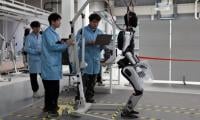
The National AI Policy is positioning Pakistan to capture opportunities in artificial intelligence, robotics and automation – critical for competing in the Fourth Industrial Revolution. The government’s focus on coding, data science and cloud computing skills is creating a workforce ready for global demand.
Climate change is perhaps Pakistan’s single greatest long-term economic risk. The 2022 floods caused over $30 billion in damages, a stark reminder that climate adaptation is not optional. The 13th Five-Year Plan embeds climate-smart agriculture, flood protection infrastructure, renewable energy scaling and urban resilience planning. Renewable energy’s share in Pakistan’s energy mix is targeted to reach 60 per cent by 2030. The government is actively pursuing green bonds and ESG-linked financing to mobilise private capital for climate-friendly projects.
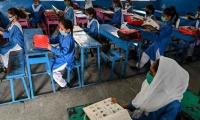
No economy can rise without investing in its human capital. Pakistan’s youth – making up 64 per cent of the population – are its greatest asset. The government is expanding technical and vocational training to train one million youth annually in high-demand skills. Higher education sector reforms are being undertaken to provide our youth with education that prepares them for the future.
Digital education platforms are being developed to bring quality learning to every district, bridging rural-urban divides. Social protection programmes such as the Benazir Income Support Programme are being expanded to include entrepreneurship grants and digital skills training for women.
To fund this transformation, Pakistan is shifting towards sustainable finance. The State Bank’s green banking guidelines, the Securities and Exchange Commission’s ESG integration requirements, and the introduction of green and social bonds are aligning capital flows with national priorities.
The Ministry of Planning is spearheading an Integrated National Financing Framework (INFF) – a first for Pakistan – to harmonise public budgets, private investment, development aid and climate finance under a unified national strategy.
Economic resurgence is intertwined with sovereignty and national pride. This year, Pakistan successfully launched an advanced Earth Observation Satellite, enhancing capabilities in agriculture monitoring, disaster management and environmental protection. This achievement places Pakistan among a select group of nations with independent space capabilities.
At the same time, Pakistan’s defence of its territorial integrity – while maintaining a responsible posture for regional stability – underscores the maturity of its statecraft. The spirit of Marka-e-Haq reflects a people committed to peace but resolute in safeguarding their sovereignty.
Pakistan stands at a rare convergence of stability, vision and opportunity. The reforms are in motion, the economic fundamentals are strengthening, and the world is beginning to notice. But this momentum must be sustained through consistent and predictable policies; deepening institutional reforms; continued investment in human capital and technology; expanding export markets and upgrading industrial capabilities; and mainstreaming sustainability into every sector.
Seventy-eight years after independence, our greatest strength remains our people and unity. If we act together, Pakistan can emerge as one of the great economic success stories of the 21st century. Let us move forward towards a Pakistan that is prosperous, innovative, and dignified; a land where opportunity is not the privilege of a few, but the birthright of all.
The writer is the federal minister for planning, development, and special initiatives. He tweets/posts @betterpakistan and can be reached at: minister@pc.gov.pk