Rights of minorities still a distant dream, says report
Islamabad:Despite constitutional guarantees and international commitments, the rights of religious minorities in Pakistan remain largely unfulfilled, a concern echoed by speakers at a high-profile...

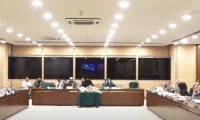
Islamabad:Despite constitutional guarantees and international commitments, the rights of religious minorities in Pakistan remain largely unfulfilled, a concern echoed by speakers at a high-profile seminar held here to mark National Minority Day.
The event, organized by the Parliamentarians Commission for Human Rights (PCHR), to discuss the preliminary findings of two parallel studies conducted to map the implementation of religious minority-specific policies, initiatives, and affirmative actions at both federal and provincial (Sindh and Punjab) levels.
The studies were conducted under the European Union-funded project Together for Tolerance: Strengthening Minority Rights and Inclusion, implemented by PCHR with the Centre for Social Justice (CSJ) as a co-partner.
The research offers a detailed analysis of the civil, political, economic, social, and cultural rights of religious minorities across the two provinces. The leadership of the Parliamentarians Commission for Human Rights (PCHR), including Executive Director Shafique Chaudhry and Chairman Riaz Fatyana, emphasized the need for stronger legal and institutional measures to safeguard religious minorities, highlighting research findings on forced conversions, discrimination, and limited representation, and called for translating constitutional commitments into inclusive, practical reforms.
Abdul Khaliq Shaikh, Federal Secretary, Ministry of Human Rights attended the inaugural session, while European Union Acting Head of Delegation, Philipp Oliver Gross, attended as the guest of honour.
In his address, Philipp emphasized that protecting freedom of religion or belief including the rights of religious minorities is a priority for the European Union globally. They reiterated that the ratification and respect of obligations under international human rights treaties are a requisite under the GSP+ scheme, which allows Pakistan to export to Europe without tariffs for a notable range of products.
The EU is actively working with the government and civil society to advance the agenda of human rights and ensure that Pakistan respects its obligations. Abdul Khaliq Shaikh, while sharing his thoughts highlighted that the Government of Pakistan is fully cognizant of the challenges faced by religious communities and is committed to introducing policies in line with the vision of the Founder of Pakistan, as articulated in his historic address to the first Constituent Assembly on August 11, 1947.
He further emphasized that the Government of Pakistan values the support of the European Union and is making every effort to fulfill its obligations under ratified international treaties. Highlighting some key measures, he mentioned the proposed Bill to establish the National Commission on the Rights of Religious Minorities, as well as various steps taken by the government in follow-up to the landmark 2014 Supreme Court judgment, commonly referred to as the Tassaduq Jillani judgment.
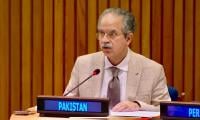
He commended the efforts of PCHR in conducting the research studies and extended his full support, promising to incorporate the studies' recommendations into the government’s reform agenda. In his keynote address Dr. A.H. Nayyar highlighted the persistent gaps between constitutional promises and the lived realities of religious minorities in Pakistan.
He stressed the need for proactive state measures to address systemic discrimination and ensure equal rights for all citizens. Later, PCHR leading experts Dr. Shafqat Munir and Dr. Sofia Anwar presented the preliminary findings from two research studies, revealing a deeply concerning picture of minority rights in Pakistan.
The data shows an alarming rise in forced conversions, especially targeting minor girls from Hindu and Christian communities in Sindh and South Punjab. Victims face severe legal hurdles, intense social pressure, and prolonged judicial delays. Attacks on religious sites including Ahmadi worship places, churches, temples, and minority graveyards -- remain frequent, often met with only symbolic or no state response.


-
 Aurangzeb confirms Saudi Arabia $10bn interest, says B2B shift ongoing
 -
 Pakistan to build artificial island to boost oil exploration
 -
 Special pink bus service launched for women on Green Line route
 -
 Same number plates from other provinces lead to wrong e-challans for Karachiites
 -
 State institutions ‘fail’ to perform constitutional duties: KP CM
 -
 CTD orders psychological testing of police on VVIP security duty
 -
 Navy busts drug consignment valued at $130m
 -
 Three ex-secretaries in race for ETPB chief post