As Islamabad fixates on India’s latest provocations over the Indus Waters Treaty, a far more alarming – and largely ignored – crisis is silently unfolding in the Himalayan heights of Occupied Kashmir. This is no longer just about who controls the water. The more urgent question is: will there be any water left to fight over?
The glaciers that feed Pakistan’s mighty Indus River system are melting fast. And worryingly, most of these glaciers lie upstream, under Indian control. This isn’t merely an environmental concern; it is a slow-burning national emergency. If these ice reserves vanish, so will Pakistan’s ability to grow food, generate power, and support life as we know it.
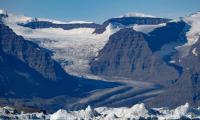
Kashmir, often called the ‘Third Pole’ because of its massive glacial cover, holds nearly 18,000 glaciers – most of them in Occupied Kashmir. These frozen giants are the birthplaces of the Indus, Jhelum and Chenab rivers, which keep Pakistan alive. But the numbers are grim: nearly 30 per cent of the region’s glacial mass has already been lost in the last 60 years. Scientists warn that if current trends continue, up to 70 per cent could vanish by the end of the century.
Among these critical glaciers, Kolahoi stands out. It is the largest glacier in Kashmir and the primary source of the Jhelum River – a lifeline for Azad Kashmir and much of Punjab. Since 1962, Kolahoi has shrunk by a quarter and is now retreating at a staggering rate of 35 meters a year – much faster than other glaciers in the Himalayas. It’s not alone. Other vital glaciers like Thajiwas, Kousar Nag and Tarsar Marsar are also disappearing rapidly. With each passing year, Pakistan’s water future becomes more uncertain.
While global warming is the primary culprit, the situation is being worsened by how India is treating the environment in Occupied Kashmir. Deforestation and shortsighted infrastructure projects – like the construction of cement plants and roads near glacial regions – are all speeding up the melt. Perhaps the most alarming trend is the explosion of mass tourism, especially the annual Amarnath Yatra. What was once a modest pilgrimage now draws hundreds of thousands of visitors to sensitive zones like Pahalgam and Sonamarg. These areas, already stressed, now have to absorb the impact of traffic, garbage, noise and massive human presence.
This neglect comes at a huge cost to Pakistan. The country is more than 80 per cent dependent on the Indus River system, which originates from these very glaciers. The Jhelum and Chenab, vital for agriculture in Punjab and Sindh, are now threatened by reduced flows. A drop in water levels would not just endanger crops – it would hit food security, electricity generation and access to drinking water for millions of Pakistanis.
Even more worrying are the new threats emerging from the melting glaciers. As they retreat, they leave behind unstable glacial lakes. When these burst – often without warning – they unleash devastating floods. These Glacial Lake Outburst Floods (GLOFs) are becoming more frequent. Just in recent years, remote valleys in Gilgit-Baltistan have seen entire villages washed away in minutes.
Pakistan cannot afford to look away. It must recognise this unfolding crisis for what it truly is: a matter of survival. The first step is to treat glacial retreat as a national security emergency. A dedicated, well-funded programme to study and monitor glacier behaviour, especially in the upstream Himalayan belt, is urgently needed. International partnerships and regional cooperation with institutions in China, Nepal, and even India – where possible – can help improve early warnings and data sharing.
Islamabad also needs to step up on the diplomatic front and make glaciers melting a dynamic part of its narrative on Kashmir. Instruments like the UN Watercourses Convention give Pakistan a legal basis to ask for transparency and accountability. India’s refusal to allow environmental scrutiny over pilgrimages like the Amarnath Yatra cannot be left unchallenged – not when the consequences flow directly into Pakistan.
Even in the midst of political hostility, Pakistan must not give up on the idea of regional climate cooperation. India and Pakistan may not agree on borders, but both stand to lose everything if Himalayan glaciers vanish. Track-II diplomacy – where scientists, environmentalists, and civil society actors from both sides work together – could be a bridge when official channels remain frozen. Platforms like the Paris Agreement and the Saarc Climate Action Plan offer blueprints for joint action, if there is political will. Irrespective of the Indian response, Pakistan must continue to press this issue to underline its gravity.
Kashmir’s glaciers are not just distant sheets of snow and ice. They are Pakistan’s lifeblood, and they are vanishing before our eyes. This is a slow-motion disaster with devastating consequences, unfolding under Indian control and global indifference. If Pakistan does not act decisively now – through research, diplomacy, and resilience-building – its rivers may dry up long before any treaty is breached or renegotiated.
The writer is an Islamabad-based researcher with a special interest in India, Pakistan and regional affairs. He can be reached at:
sabursayyid@gmail.com