Ex-diplomats say India can’t suspend Indus Water Treaty unilaterally
Experts call New Delhi's move to suspend World Bank-brokered treaty violation of int’l law
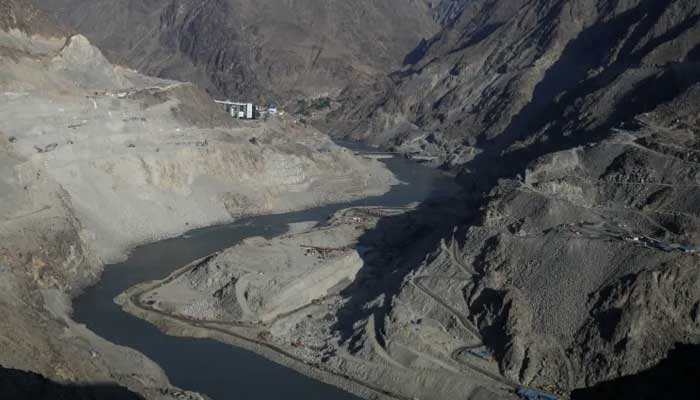
Former diplomats and experts said that New Delhi can not unilaterally withdraw from the bilateral Indus Water Treaty facilitated by the World Bank in 1960.
Prime Minister Narendra Modi-led government announced punitive diplomatic measures against arch-rival Pakistan in response to Pahalgam attack that at least 26 tourists dead in Indian Illegally Occupied Jammu and Kashmir (IIOJK).
Speaking to Geo News, former high commissioner of Pakistan to India Abdul Basit said that the Indus Water Treaty can neither be suspended nor terminated unilaterally and advised against spreading panic in this regard.
“India cannot immediately stop Pakistan's water,” Basit said, expressing fear India may take some adverse action against Pakistan
He said that bilateral trade between the two countries had already been suspended, therefore, the closing of the Wagah-Attari border does not matter much to Pakistan.
“We should be prepared, India can make any move,” he cautioned.
Concurring with Basit, former ambassador and PPP Senator Sherry said treaties are not suspended or terminated unilaterally.
She recalled that India had blamed Pakistan for an attack in IIOJK during President Clinton's visit in 2000. However, the allegation was proven wrong following the investigation, she added.
Referring to the latest attack in IIOJK, she said all indications point to a false flag operation.
Echoing similar views, former senator Mushahid Hussain Syed said India used the Pahalgam incident as an excuse to suspend the Indus Water Treaty as it wants to “put pressure on Pakistan under the plot”.
He said the Indus Water Treaty is a bilateral international agreement between Islamabad and New Delhi and added that if the Modi-led government stopped Pakistan’s water, then it would be a violation of international laws and “tantamount to war”.
He also called for the need to inform the UN secretary general about false allegations being levelled by India against Pakistan.
“We are ready at all levels to give a befitting reply to India,” Syed added.
The Indus River is one of the longest on the Asian continent, cutting through ultra-sensitive borders in the region, including the demarcation between nuclear-armed India and Pakistan in Kashmir.
The 1960 Indus Water Treaty theoretically shares water between the two countries, but has been fraught with disputes.
Pakistan has long feared that India, which sits upstream, could restrict its access, adversely affecting its agriculture.


-
 Punjab by-polls: Notices served on minister, SAPM for ‘violating’ election code of conduct
 -
 27th Amendment empowers FCC to hear all constitutional cases: minister
 -
 JF-17 attracts strong attention at Dubai Airshow as friendly country inks procurement MoU
 -
 US lawmakers laud Punjab govt's initiative to modernise brick-kiln
 -
 Security forces gun down 30 terrorists in multiple IBOs in KP: ISPR
 -
 MQM-P calls for new province in Sindh
 -
 US report validates Pakistan military edge over India: PM
 -
 Banned TTP poses serious threat to Pakistan security: UNSC panel