High taxes on EVs contradictory to govt’s policies: Ministry
Industries ministry requests to revert sales tax to 8.5% from 25% proposed in budget 2024-25
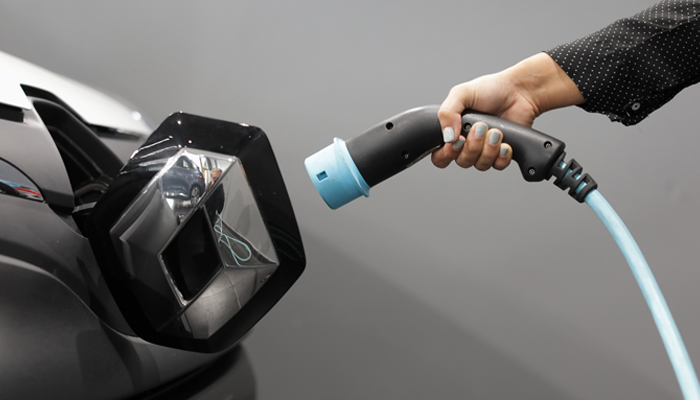
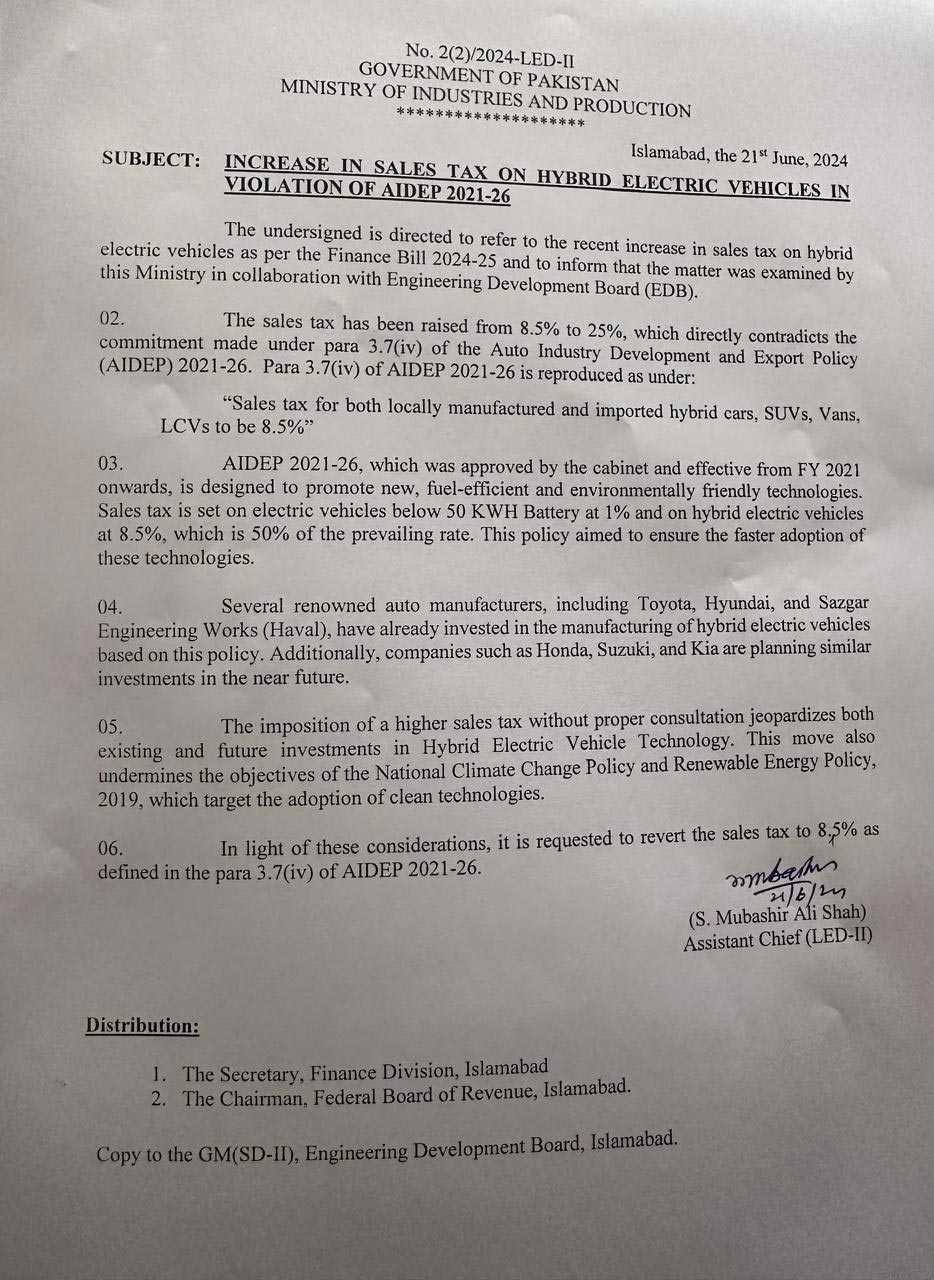
ISLAMABAD: The Ministry of Industries and Production has sought reversal of a proposed hike in sales tax on electric and hybrid vehicles in the new budget, saying that the increase in tax is violation of government’s policies aimed at promoting new technologies.
In a letter written to the Finance Division and the Federal Board of Revenue (FBR), the ministry said the sales tax has been hiked from 8.5% to 25%, which directly contradicts the commitment made under the Auto Industry Development and Export Policy (AIDEP) 2021-26.
It said AIDEP was formulated to promote new, fuel efficient and environment friendly technologies.
“Sales tax is set on electric vehicles below 50KWH Battery at 1% and on hybrid electric vehicles at 8.5%, which is 50% of the prevailing rate,” the letter said adding that the policy aimed to ensure the faster adoption of these technologies.
The industries ministry said several renowned auto manufacturers have already invested in the manufacturing of hybrid electric vehicles based on this policy, while some companies are planning similar investment in the near future.
“The imposition of a higher sales tax without proper consultation jeopardises both existing and future investments in Hybrid Electric Vehicle Technology. This move also undermines the objectives of the National Climate Change Policy and Renewable Energy Policy, 2019 which target the adoption of clean technologies.”
In light of these considerations, the ministry requested to revert the sales tax to 8.5% in line with the export policy.
A day earlier, the senators grilled FBR Chairman Asim Ahmad over the hike in taxes imposed on hybrid and electric cars, among other items.
The Senate Standing Committee on Finance, in a meeting chaired by Pakistan Peoples Party (PPP) Senator Salim Mandviwala, in Islamabad raised an objection on the increased tax rate on electric and hybrid vehicles.
The government has, as per analysts, devised the budget in line with the recommendations of the International Monetary Fund (IMF), as Islamabad hopes to sign a new and bigger programme with the global lender.
The federal government had to increase taxes and reduce the fiscal deficit as part of negotiations with the IMF, with which it is discussing a loan of $6 billion to $8 billion, as it seeks to avert a debt default for an economy growing at the slowest pace in the region.


-
 Trump pushes South Korea on Alaska LNG deal: Why Seoul is hesitant
 -
 AI boom could trigger severe market shocks, Bank of England warns
 -
 US inflation rises less than expected: What to know
 -
 OpenAI’s revenue run rate nears $70 billion: What to know
 -
 Canada’s economy records zero growth in July as key sectors decline
 -
 UK diesel price hits all-time high amid Middle East supply crunch, RAC warns
 -
 Meta’s Muse AI agent gets new tools for small businesses: What to know
 -
 China weighs allowing ByteDance, Alibaba to purchase new Nvidia RTX Pro 5500 chips
-
 Why Bill Gates is calling for stronger AI rules amid growing safety concerns
 -
Meta’s Muse agent targets one of the economy’s most profitable sectors: Key details to know
-
Andy Burnham refuses to back Heathrow’s third runway
-
US, China agree to $30 billion tariff cuts; Launch 'Super Intelligence' AI dialogue