UAE gives assurance to IMF on Pakistan’s external financing gap
UAE envoy assures IMF officials that his country will play a role in Pakistan’s economic stability
In a major development, the United Arab Emirates (UAE) on Tuesday gave assurance to the International Monetary Fund (IMF) on cash-strapped Pakistan’s external financing gap.
According to Geo News, the development came during a meeting between the IMF mission chief and the UAE ambassador in Pakistan on Tuesday, on the sideline of the ongoing policy-level talks between the international lender and Islamabad in connection with the first review of the $3 billion standby arrangement (SBA).
The IMF delegation met the UAE envoy to confirm the availability of external financing to Pakistan.
Matters related to Pakistan’s external financing gap worth $6.5 billion and other issues were discussed in the meeting, revealed well-placed sources.
During the meeting, the UAE envoy assured the IMF officials that his country would play a role in Pakistan’s economic stability.
Amid the ongoing policy-level talks, the global lender agreed to keep the annual tax target unchanged at Rs9.415 trillion. The caretakers have informed IMF that they would not impose any new tax, the sources said.
They further said that the caretakers have decided to approach Saudi Arabia, the UAE and other friendly countries as the cash-strapped nation was facing a huge financing gap amounting to $6.5 billion.
The country is likely to seek help from the Islamic Development Bank, Asian Development Bank and the World Bank.
It is pertinent to mention here that with the start of policy-level talks, Pakistan and the IMF agreed to revise the fiscal and external framework to secure a staff-level agreement under the $3 billion SBA, reported The News on Tuesday (today).
The policy-level talks will conclude tomorrow (Wednesday). The Washington-based lender has so far expressed concern over the exchange rate in the context of a free market-based mechanism, materialising all required dollar inflows, and hiking electricity and gas tariffs.
It is expected that the current account deficit will be reduced, so import compression will be used slightly to minimise the external financing gap.
The government will have to hike the gas tariff in line with the calculation worked out by the regulator. The electricity tariff in line with fuel price adjustment and quarterly tariff adjustment will have to be increased. The FBR’s envisaged tax collection target was proposed to remain unchanged at Rs9.415 trillion. However, the IMF has asked for a plan B in case of a revenue shortfall in the current fiscal year.
In a separate meeting, Caretaker Prime Minister Anwaar-ul-Haq Kakar approved five major steps in order to overhaul the taxation system and broaden the tax base to bring 1.5 million new taxpayers into the tax net.





-
 Quantum stocks surge following US plans to award $2 billion and take equity stakes
 -
 Why does the Trump administration want to award $2 billion to quantum computing firms?
 -
 OpenAI eyes speedy IPO as market awaits SpaceX filing, source says
 -
 Mercury reaches $5.2 billion valuation on AI startup push
 -
 GameStop increases eBay stake as takeover battle escalates following rejection
 -
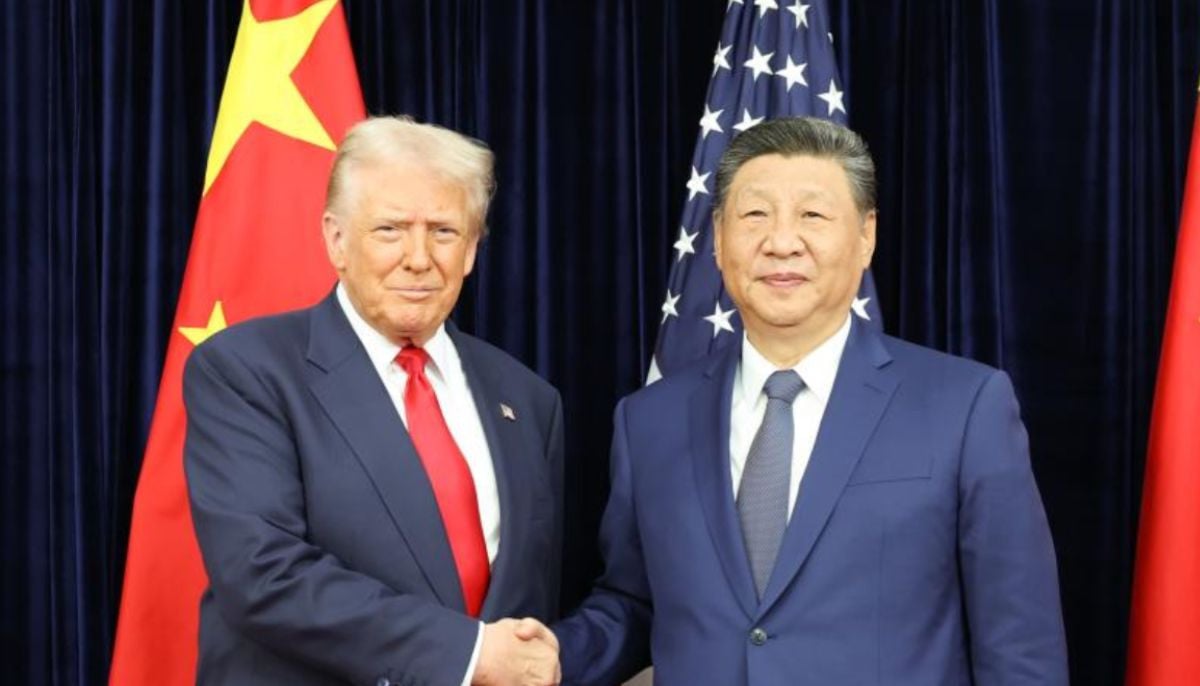 China confirms order for 200 Boeing jets following Trump-Xi summit
 -
 Berkshire Hathaway’s new CEO Greg Abel reshapes portfolio: Biggest changes explained
 -
 Home Depot says core shopper remains ‘resilient’ despite higher gas prices
-
 Standard Chartered to cut more than 7,000 jobs as AI use accelerates: What you need to know
 -
‘A difficult boss’: StanChart CEO Winters issues major statement on Warsh’s new Fed role
-
Meta outlines sweeping layoffs amid AI-driven restructuring in internal memo
-
Chinese greenfield investment in Europe reaches record high