
FM Bilawal holds talks with Russian counterpart on Black Sea grain deal
Bilawal informs Lavrov about BSGI discussions with Ukrainian and Turkish counterparts, Sec Blinken and EU
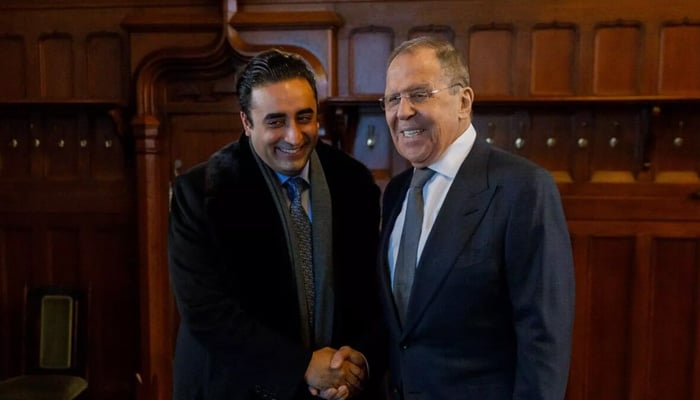
The Black Sea Grain Initiative (BSGI) Wednesday came under discussion between Foreign Minister Bilawal Bhutto-Zardari and his Russian counterpart Sergei Lavrov, as the two held a telephone conversation on bilateral matters, the Foreign Affairs ministry said in a statement.
The initiative permits food and fertiliser exports from three Ukrainian Black Sea ports — Odesa, Chornomorsk and Yuzhny/Pivdennyi.
Recognising the importance of this initiative and its potential impact on disruption of global food supply chains causing food inflation and food-security-related challenges, FM Bilawal underscored the need for concerted efforts to find viable solutions that would in particular benefit developing countries already under economic strain, the statement read.
He expressed the hope that all parties involved in the initiative would engage in constructive dialogue to revive it. In this regard, the minister reiterated Pakistan’s support for international efforts for restoring the deal by addressing the concerns of all sides.
Bilawal also informed Lavrov on his discussions on BSGI with his counterparts of Ukraine and Turkiye, the US Secretary of State and the European Union High Representative.
Meanwhile, the Russian minister shared his government's perspective on the issue, after which the two Foreign Ministers agreed to remain in close contact on the matter.
Both Bilawal and Lavrov had a useful exchange on bilateral matters and growing cooperation between the two governments in diverse areas with Bilawal renewing his invitation to his counterpart for a visit to Pakistan.
Deal suspension could raise grain prices 10-15%
Meanwhile, the International Monetary Fund has estimated that Russia's exit from the deal could drive global grain prices up by 10-15%, but said it was continuing to assess the situation.
IMF chief economist Pierre-Olivier Gourinchas told reporters the Black sea grain deal had been "very instrumental" in ensuring ample supplies of grains could be shipped from Ukraine, easing price pressures on food. Its suspension would likely put upward pressure on prices, he said.
"We're still assessing where we're going to land, but you would be thinking that somewhere in the range of 10 to 15% increase in prices of grains is a reasonable estimate," he said.
The IMF on Tuesday forecast that global headline inflation would fall to 6.8% in 2023 from 8.7% in 2022, dropping to 5.2% in 2024, with core inflation declining more gradually to 6.0% in 2023 and then 4.7% in 2024.
Gourinchas told Reuters it could take until the end of 2024 or early 2025 until inflation came down to central bankers' targets and the current cycle of monetary tightening would end.
What is Black Sea Grain Initiative?
The Black Sea deal was brokered by the UN and Turkey in July last year to combat a global food crisis worsened by Russia's February 2022 invasion of Ukraine. Ukraine and Russia are among the world's top grain exporters.
Russia has complained that under the deal not enough grain has reached poor countries. But the UN argued the arrangement has benefited those states by helping lower food prices more than 20% globally.
Nearly 33 million metric tons of corn, wheat and other grains have been exported by Ukraine under the arrangement. The last ship left Ukraine under the deal on Sunday.
To convince Russia to agree to the Black Sea deal, a three-year memorandum of understanding was struck in July 2022 under which UN officials agreed to help Russia get its food and fertilizer exports to foreign markets.
While Russian exports of food and fertilizer are not subject to Western sanctions imposed after Russia's invasion, Moscow has said restrictions on payments, logistics and insurance have amounted to a barrier to shipments.
Russia's main demands were the resumption of its ammonia exports through a pipeline to the Ukrainian port of Odesa and the reconnection of its state agricultural bank Rosselkhozbank to the SWIFT international payments system. It was cut off by the European Union in June last year after the invasion.
About 60% of Ukraine's exports were shipped via solidarity lanes and 40% went via the Black Sea while the UN-backed grain deal was in operation.


-
 Security forces gun down 30 terrorists in multiple IBOs in KP: ISPR
 -
 MQM-P calls for new province in Sindh
 -
 US report validates Pakistan military edge over India: PM
 -
 Banned TTP poses serious threat to Pakistan security: UNSC panel
 -
 CM Afridi clarifies remarks on by-poll after ECP requests army deployment
 -
 Dubai sees 3.2m Pakistani passengers in 2025 as airport sets new milestone
 -
 Security forces kill 23 Indian proxy terrorists in KP's Kurram
 -
 Pakistan to construct island to boost oil exploration: report