Indonesia president says regrets past rights abuses in country
More than half a million leftists were massacred across the Southeast Asian nation in the mid-1960s, a bloody spectacle that ushered in the long rule of dictator Suharto
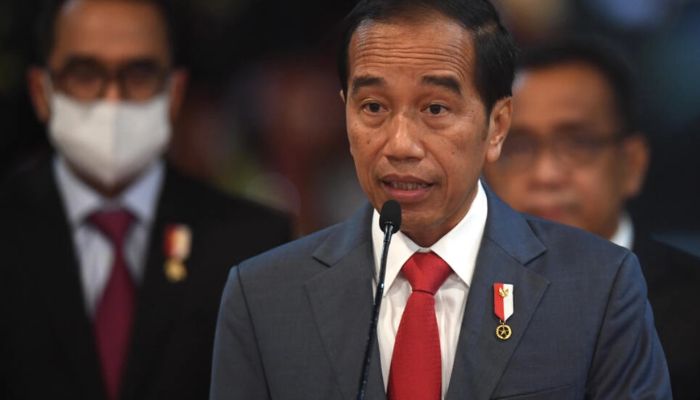
JAKARTA: Indonesian President Joko Widodo on Wednesday expressed regret over mass human rights violations committed in the country's past, including a violent anti-communist purge in the 1960s and the disappearance of student protesters in the late 1990s.
More than half a million leftists were massacred across the Southeast Asian nation in the mid-1960s, a bloody spectacle that ushered in the long rule of dictator Suharto, whose fervent anti-communist stance remains decades on.
The killings led to the collapse of the now-banned Indonesian Communist Party (PKI), once among the biggest in the world behind those of China and the Soviet Union.
"With a clear mind and a sincere heart, I as the leader of this country, admit that gross human rights violations have happened in several incidents and I regret they happened very much," Widodo said in a speech at the state palace in the capital Jakarta.
"I have sympathy and empathy for the victims and their families."
He said the government was trying to "rehabilitate" the victims' rights "without negating the judicial resolution", without specifying how it would do that.
The president also mentioned the murder and abduction of dozens of student protesters and activists during mass street rallies in 1998 that brought down the three-decade dictatorship of Suharto.
The Indonesian leader went on to list 10 other violations that took place between the 1960s and the early 2000s before he rose to power, based on the findings of a commission he ordered to investigate the violations last year.
He acknowledged rights abuses in the restive easternmost province of Papua, including a 2003 army and police operation that left dozens of civilians dead and where officers were accused of murder, torture and abduction.
Papua has been the scene of a decades-old rebel insurgency aimed at gaining independence from Indonesia after it took control of the former Dutch colony in the 1960s.
Human rights groups said Widodo's expression of regret, like several other Indonesian leaders before him, did not go far enough.
"The recognition is not enough. It should not have been only regret, but also apology," Usman Hamid, director of Amnesty International Indonesia told AFP, adding the government should resolve the rights abuses through the courts.


-
 Ex-FBI agent cites 'a lot of proof' suggesting Nancy Guthrie is dead
 -
 Eight charged after police dismantle massive illicit cannabis grow operation in Ontario
 -
 Trump grant cuts hit health, disaster relief and education across US, analysis finds
 -
 EU plans total social media ban for under 13s as von der Leyen targets big tech
 -
 Pete Hegseth impeachment vote put on hold after House cuts session short
 -
 EU to launch Climate Insurance Alliance to close growing protection gap after extreme temperatures
 -
 US interest rates rise as Fed signals another hike could be coming this year
 -
 Police recover body from pond after massive search for missing Noah Woods