Print Story
X




In its second season, Bisconni Music offers little innovation.
| “ |
I designed this rhyme/To explain in due time.” – ‘In the End’ by Linkin Park
Between the sizzling last season of Coke Studio ‘22 (curated and produced by Xulfi), the early years of the same (during the reign of Rohail Hyatt) and Velo Sound Station (helmed by Bilal Maqsood) any new music series, digital or televised, has pretty large shoes to fill.
A slew of other music series, especially the second wave of Pepsi Battle of the Bands and the brand’s newest series, Why Not (helmed by executive producer Ali Hamza) means content creation platforms are emerging faster than we can spot them. The idea is for Pakistani artists to have platforms where they can showcase their talent, each backed by a landscape that hopes to be unique in complementing the music.
This year, Coke Studio perches at the top of the table with its reimagined vision, almost making us wonder if this is the same show that’s been around for more than a decade. Ergo, the depiction of music on any platform has to look different unless there is no visual component. Independent series that are now defunct such as Lussun TV and True Brew TV and the brilliant, still ongoing folk-centric Lahooti Sessions have confirmed the hypothesis that it can be done. Music videos also play a role so the audio-visual has got to be delicious enough for us to move away from binging something or the other on Netflix.
Because of the pandemic that restricted social contact leading to a halt in concerts, digital series of a musical nature provided a music-hungry audience a chance to experience musicians in a live setup.
But, in 2022, live music is finding its footing slowly with strictly-followed SOPs. Keeping this in mind, digital/music TV series needed to innovate again. Coke Studio 14 did. Velo Sound Station charmed us enough that we’re hoping it makes a comeback.
Others not so much…
When any brand backs (yet) another music show, expectations that fans across demographics will indulge in it demands a radically different show in audio and visual department. Even Uth Records (backed by Ufone) which ran for just two seasons before ending, showcased a narrative that differed from other shows. Why is all this important? Because with such music series, past and present, one has to ask what the purpose of shows such as Bisconni Music is?
It seems to be working on the format that was first set by Coke Studio. Live recordings of music in studio-format. That doesn’t sound original, right? The first season, produced by Saad Hayat, can be forgiven because a first season is always trial and error. Plus, it did have some decent tracks, especially Sajid and Zeeshan’s ‘Keep Moving’ and Mughal-e-Funk’s ‘Meda Ishq’ featuring Aizaz Sohail and Mahnoor Altaf.
The show is now back with its second season in 2022 and for some unfathomable reason, it looks a little like Coke Studio of the early years-meets-Pepsi Battle of the Bands (performances from judges when it returned in 2017)-meets-Pepsi Smash (defunct). With music producer Raafay Israr - a good idea to change producers - things are stuck in a rut. Take the artist line-up as an example. Instead of showcasing a thinking one, it looks a little like the B-team of Coke Studio from its latter seasons. There’s also a bit of Velo Sound Station in there if you look closely. Having seasoned musicians on instruments does not make much off a difference if it’s the same old mix, presented in a new bottle.
If season one had odd collaborations and artists including Natasha Humera Ejaz, Haroon Shahid and Ahmed Jahanzeb, all of whom have delivered better songs on other platforms, season two is the predicament where we can question the show’s real purpose.
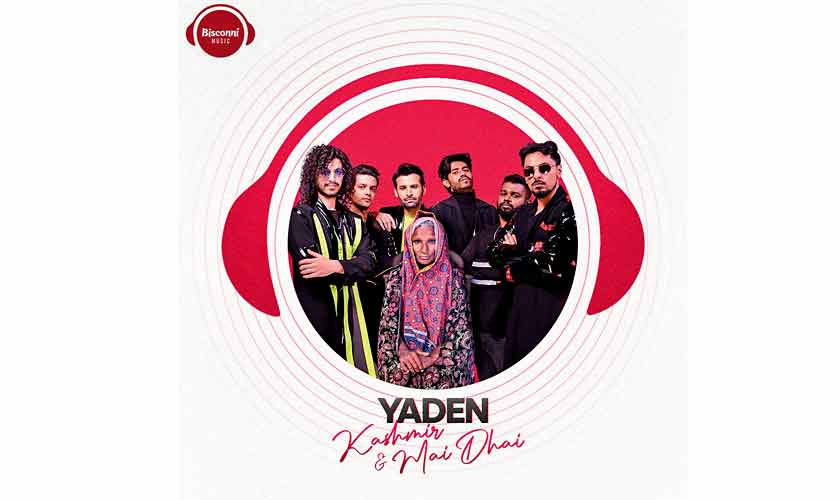
So far, as this article goes in print, Bisconni Music (an amalgamation of various artists) has, wait for it, Aima Baig, Asim Azhar, Asrar Shah, Raafay Israr, Amanat Ali, Maria Unera, Mai Dhai and Kashmir (music group). Off the following, the one song that has redeeming qualities is Kashmir and Mai Dhai collaborating for a song called ‘Yaaden’; you don’t see it coming but when it does, it reminds you that pop and folk can work together in harmony.
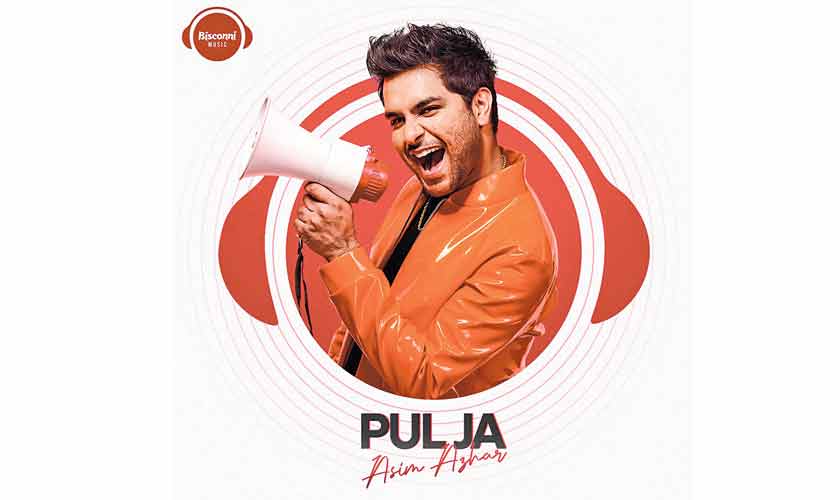
The odd combination is the collaboration between Maria Unera and Amanat Ali (whose identity as a musician remains unclear). In fact, in hindsight the song is so dull that I’d rather listen to Qurram Hussain and Maria Unera’s ‘Aaja Na’ from Cornetto Music’s second season - a song that I wrote off only to realise it has the audacity to simply find a corner in your musical memory. Watch the music video as well; it has an appeal that doesn’t appear at first but slowly the layers come undone and it results in a decent pop banger. Meanwhile ‘Pul Ja’ by a red-jacket wearing Asim Azhar has fetched over 3 million views but I can’t tell if the set is a hollow effort or the song. An original song by Asim Azhar, and yet his performance-based tribute to the late Farhad Humayun during the last edition of Lux Style Awards was far more superior. He is a popular singer but the setup was as banal as the song. Bisconni Music in its second season doesn’t have an identity.
The beginning of the songs and the stage look like Coke Studio 14’s second cousin, twice removed. A little bit from the past, a little from the present, and the result is just visual and aural chaos. ‘Ranjha’ by Raafay Israr, Aima Baig’s ‘Tu Mera Na Hua‘ and Asrar Shah’s ‘Malang’ sound like songs they’ve done before and in much more interesting fashion on other platforms.
The bigger question is why the series - which has no particular genre and space for everyone - didn’t choose younger musicians or play a genre within a genre.
Coke Studio 14, for once, had a think tank with musicians like Sherry Khattak, Natasha Noorani and Abdullah Siddiqui. And as Abdullah told Instep in an interview, a lot of names were thrown out. We, therefore, managed to see, the future of music and seasoned artists. The idea of assistant music associate also worked in the show’s favour. Bisconni may not have the budget of a Coke Studio but in its second season, it should’ve shown more experimentation in collaborations and above all, an audio-visual narrative that didn’t make us yearn for another Velo Sound Station or Lussun TV instead. Two seasons in, Bisconni Music needs to rethink its strategy or it will float aimlessly as a show that’s neither here nor there.
Numbers are great indicators of reach and engagement, but don’t always reflect the quality of content.