

Print Story
X




Coke Studio reinvents itself in the audio and video department for its 14th season, saluting the changing dynamics in music and its future.
“I can/See angels/
Sitting on your ears.”
– Hafiz
For the first time since inception, Coke Studio went from a studio format featuring artists and an entire house-band [made up of musicians decided upon by the producer(s)] to a point where its background became befitting to an endearing audio showcase. Even as the effort was made, it felt that the visual novelty had left the building. You could forego it and opt for just the songs. Coke Studio Explorer (season 11) being one exception. But no more.
Coke Studio’s Season 14 demands attention in its audio and visual department on equal terms and it must be adhered to. The reason? In its 14-year history, Coke Studio has had strong visual narratives that eventually became monotonous.
Coke Studio fourteen is like a time machine where you come out the other side with a much different experience and opinion, almost wondering if this music TV series was ever connected to same show (with its prolific history) or one that is constructing an entirely new one.
“Gather with some loyal friends/Or sit alone/And sing beautiful songs.” – Hafiz
Electronic music is not about EDM (electronic dance music) but is a sub-genre. Though there have been traces of electronic music in Coke Studio in the past, it’s never been this obvious. Furthermore, the electronic elements meld with the songs and the collective elements. It’s almost as if the country’s biggest show is endorsing what independent musicians have been doing for quite a while. But even as there is acceptance, there were nuances kept in mind.
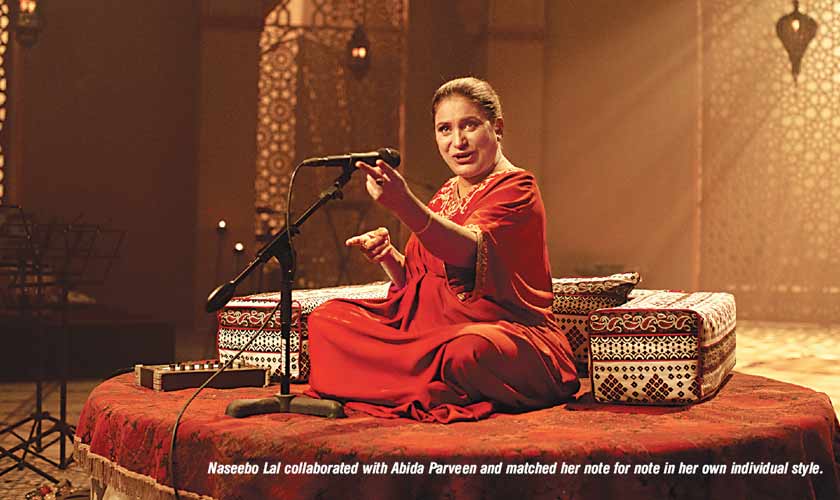
The season opened with ‘Tu Jhoom’, a collaboration between regularly featured artist on Coke Studio, Abida Parveen, with the heart-warming Naseebo Lal. There is strong control on keeping the sound close to the narrative of the empowering song which speaks of how even with struggles we go on, passing on a ubiquitous message. This may well be one of the finest appearances by Abida Parveen on Coke Studio. It’s actually a sensible collaboration.
Another profound collaboration Xulfi brought to the season was ‘Kana Yaari’ between Kaifi Khalil, Eva B x Abdul Wahab Bugti. From the opening by Abdul Wahab Bugti in his mother tongue, Balochi, we know we’ve entered a folk tune, which is always a welcome. As an electro-realm follows, so does Kaifi Khalil as he takes the song to a groove. A sonic change is followed by the underrated bi-lingual Eva B rapping. For a folk song, a Balochi “dancehall” pop banger, Abdul Wahab Bugti, one of the fewer folk artists on the series should’ve been allotted more time. If tradition is something to be proud of and is stitched into our DNA, it would be nice to not go completely overboard and forget the music of the people.
‘Sajan Das Na’ - while not a favourite - features two of the country’s biggest musical names - Atif Aslam and Momina Mustehsan - and Coke Studio 14 cannot possibly go entirely rogue. Its ethos of romanticism has appealed to fans before, and it was handled with as much of a narrative as the rest of the songs on the show, so the science of Coke Studio was kept in mind while producing.
To be fair, both Momina and Atif carried the single that matched the audio-visual ideas behind it.
‘Mehram’ reminded us that Arooj Aftab, nominated for two Grammy Awards, is one of the brightest artists and Asfar Hussain was a good find by Pepsi Battle of the Bands as part of Bayaan. A vessel of thoughts, a fierce intensity, emotional carnage brought by loss - no matter which way you cut it, there is something deeper to ‘Mehram’ that is both inexplicable and heart-wrenchingly beautiful. This is one of the strongest collaborations on the series and the more you listen, the more you find.
Ali Sethi, who has been consistently releasing music in various hues and is among Coke Studio’s featured artists from past seasons with different producers, returns with a collaboration with Shae Gill, leaving his ghazal avatar behind. The result is a song that is as multicultural as Ali Sethi with Shae Gill providing the ying to his yang. While Sethi embraces his folk side, we also see the iconic Sheema Kirmani. The electronic element adds textures to the single which is unlike previous Ali Sethi songs for Coke Studio.
The collaborative ‘Ye Duniya’ by Sherry Khattak-led Karakoram and rappers Talha Anjum and Faris Shafi respectively shows sonically the coming together of rap and neo-rock but also the dichotomy we find ourselves in. An ode to the present, it is the self-expression of the artists of today.
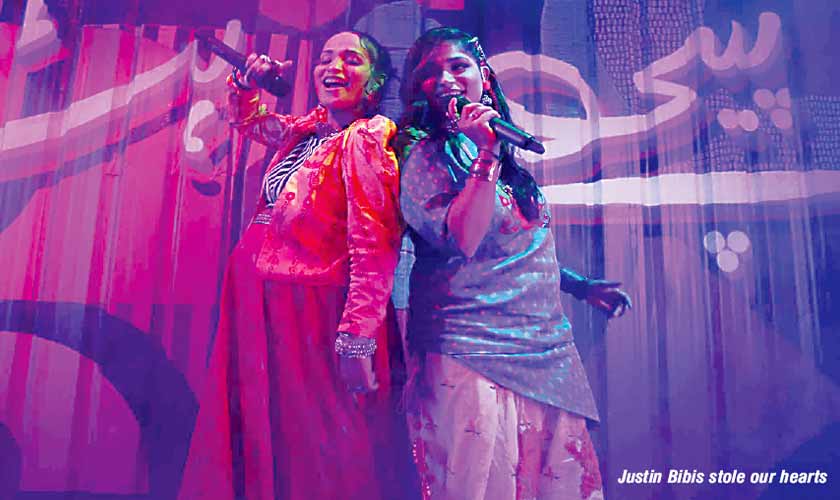
‘Peechay Hutt’ by Hasan Raheem x Justin Bibis x Talal Qureshi is among the top three songs of Coke Studio 14. ‘Peechay Hutt’ was meant to be a flashpoint for the future of music and it certainly is. Associate music producer for the song, Talal Qureshi noted in a presser, “My experience with Coke Studio has been an amazing one, everyone involved in this project did an amazing job. It’s encouraging to see Coke Studio actively push a fresh sound and fresher talent. I’m proud to be a part of evolving our music industry and pushing the bounds of what Pakistani music can be.”
Faris Shafi, who made his debut with Coke Studio this season, was still on-point and Coke Studio finally managed what fans had been longing to see: Meesha Shafi and Faris Shafi collaborating. The singing siblings rumbled with ‘Muaziz Saarif’, a gut-punch to haters and a subtle message by Meesha to those who struggle in silence to not fall in an abyss. Both siblings are on fire and you have to hear it to believe it. A volatile song, its also among the top three songs of this season.
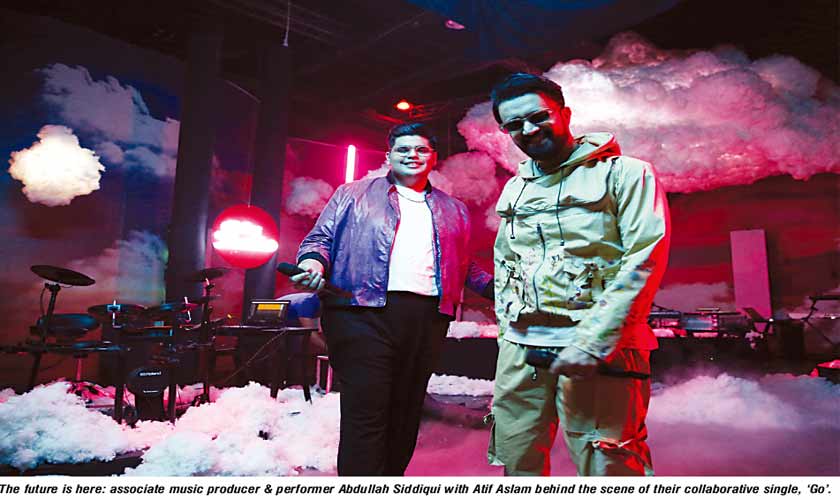
Like a chameleon who can go into any form of vocals, Atif Aslam and Abdullah Siddiqui collaborated for the song ‘Go’ and the world stood still, at least for us, for a second. When music’s youngest prodigious son and the country’s biggest music artist whose voice and fans transcend borders experiment with a song that is meant to acknowledge the changes within the show and how music has evolved in the country, you have to listen. Neither Atif Aslam nor Abdullah Siddiqui feel threatened by each other and therefore the space they take is one they both seem to be enjoying, which reflects within the performance and the song ‘Go’. Refreshing and entering another exoplanet, ‘Go’ is the song that should convince everyone how music has rapidly changed within a few years and embracing the new while paying ode to tradition is a delicate art.
“For we have not come here to take prisoners/Or to confine our wondrous spirits.” –Hafiz
The visual tree of each song matches the overarching theme. ‘Tu Jhoom’ has this gorgeous visual landscape which comes from the mind of Zeeshan Parwez (who notes that either it’s a genetic memory or a Mughal scene he once saw). The result is earthy colors, courtyards, and dancers who give themselves to the music.
In ‘Kana Yaari’ between Kaifi Khalil, Eva B x Abdul Wahab Bugti, video director Jamal Rahman takes his cue from the song’s narrative and lets his artists dismantle colourful doors before reaching the final one with an air of optimism.
The video for ‘Mehram’ apart from featuring the two artists in different rooms, counts Hashim Ali as production designer. The narrative of the song is also found in its video, directed by Murtaza Niaz. In different rooms, the video showcases how the rooms are a form of neglect as photos and books seem to be gathering dust. Underneath, memories of love lay buried. Unhealed emotionally, and in different rooms, coated with a sense of loss, the surroundings don’t give any hope as they meet and sing facing each other. Classy stuff!
Even the video is reflective of that sentiment. For ‘Pasoori’, production designer Hashim Ali brings to life a communal space embraced by artists who celebrate dimensions of humanity through various emotions, styles, spirituality and not just a calculated interpretation of ethnicity.
‘Ye Duniya’ with its industrial video almost feels like a silent hint to the Coke Studio of the past while nodding to the artists of the present and the future while genre-hopping.
‘Peechay Hutt’ shows the guerilla direction style of Kamal Khan. From set design to amalgamation of the three artists, the props, everything goes with the song. Put this on repeat (on YouTube) and look at the detailing by production designer Beenish Waiz-Umer.
For ‘Muaziz Saarif’, a one-take video, directed by Kamal Khan, Faris didn’t shy from cheekily inviting others to do what he can do while Meesha showcases a ferociousness that is hers alone. Bilingual singers with words meant to hit haters and a delicate message to those who suffer, we find them in a dramatic house, with each room designed by Harris Khatri and the self-assured persona the two artists brought to the song, we’re sold.
“Art is the conversation between lovers.” –Hafiz
Every show can’t get everything right and ‘Neray Neray Vas’ by Soch The Band x Butt Brothers kind of falters. If the song isn’t appealing, you could watch the music video since there is so much effort behind both (audio and video) but that’s a personal choice. The song doesn’t fit in what has so far been a flawless season. But there are always imperfections. This song is one.
If Coke Studio’s biggest asset was Abdullah Siddiqui as associate music producer to nearly two-thirds of the season, while Xulfi allowed people to do what they’re good at, the biggest oversight was giving Momina Mustehsan a solo song called ‘Beparwah’. It doesn’t matter if the video was literally shot on the moon or some magical garden, Momina Mustehsan was also given a song with none other than Atif Aslam. Instead of solo Momina, this slot could’ve been given to so many artists from the current season. My money is on Justin Bibis who were excellent and to do so in front of the silky voiced-Hasan Raheem in ‘Peechay Hutt’ is an art-form. Other artists like Naseebo Lal, Eva B, Arooj Aftab or a folk artist either from the show or someone else could’ve been given this slot. Pandering to the public is something Coke Studio needs to dispense with if it hopes to appeal to people with as much vigour and beyond numbers.
Perhaps another blunder was that given how Coke Studio 14 publicized the return of Faisal Kapadia to music as featured artist in the season after he said goodbye after Strings ended, the expectations were higher than anything. When Kapadia’s ‘Phir Milenge’ arrived, we realized this broken love song was perfect for Faisal Kapadia, everything was working except one little factor: it should’ve been a solo. Either do not publicize Faisal Kapadia’s return as something mammoth because as he begins singing and goes through different corridors, just once you don’t want Young Stunners or any artist for that matter to disturb his goodbye. Faisal Kapadia was open to working with new musicians but that doesn’t mean make him collaborate and give Momina a solo. It makes little sense.
What is palpable is that electronic, hip-hop and pop bangers did find a place in Coke Studio. Balochi folk pop did as well but should this team comeback (and we hope they do), they must make some room for folk from different areas. Sound of the Nation means true inclusive designs and that means searching. As the pandemic takes a backseat and SOPs are followed, we must remember folk artists and instruments are on their last legs and shows like Coke Studio can help. But, overall, this certainly is the best season we’ve seen in years.