

Print Story
X

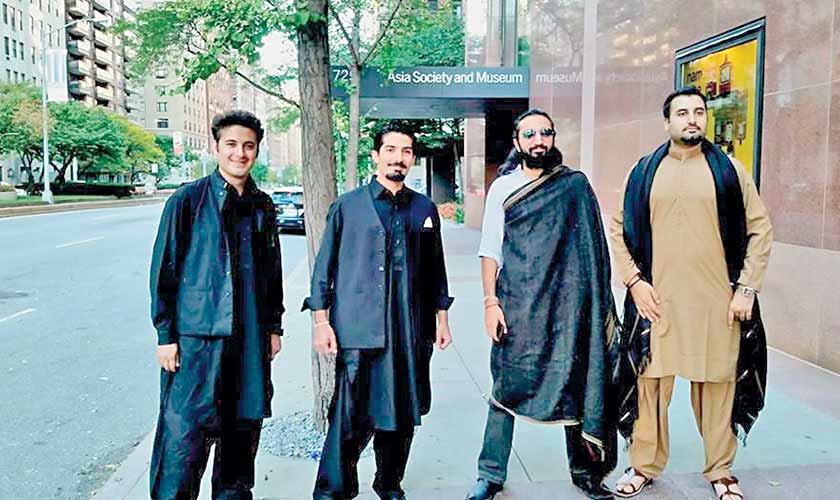
Khumariyaan is a quartet of hybrid-folk music from Peshawar/Islamabad featuring Aamer Shafiq, Farhan Bogra, Shiraz Khan and Sparlay Rawail with hits like ‘Tamasha’, ‘Ya Qurban’ ‘Bela’ and ‘Rasha Mama’ among several others. Having been around for more than a decade, they have performed beyond Pakistan in countries such as United Kingdom, USA, Ireland and Paris.
Abbas Ali Khan may have moved residence from Islamabad to Karachi, but the underrated singer/producer with bonafide songs like ‘Malal’, ‘Mujhe Baar Baar’ and ‘Sun Re’ continues to release beautifully songs after releasing at least two albums, and composing for films among other achievements.
Both Khumariyaan and Abbas Ali Khan joined forces to release a song called ‘Khumar’. Abbas Ali Khan is both music producer and vocalist for ‘Khumar’ while Khumariyaan composed the song with Adnan Samad Khan and Maria Ievsutina aka Masha starring in the music video. Directed by Aown Gurmani Baloch, and available on all major streaming platforms, it presents a narrative as well as the band and singer/producer Abbas Ali Khan within the music video. The story begins from a car with Adnan Samad and Maria Ievsutina aka Masha and what goes on akin to a short-film where emotions oscillate between its two protagonists. It’s something fans of Khumariyaan, who find their music transfixing as well as those of Abbas Ali Khan, who realize just how terrific he is, must watch to understand its larger meaning. Giving it away would be a shame.
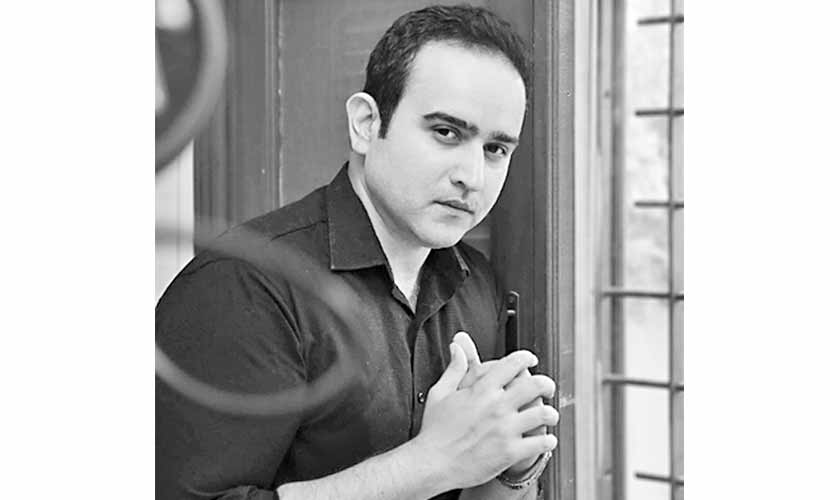
Khumariyaan’s lead guitarist, Sparlay Rawail, spoke to Instep about the combined effort. He shared, “The song is by Khumariyaan and Abbas Ali Khan and is a modern Pushto track based on a song that the band had made years ago.”
Sparlay added: “The track and the music video are very close to our hearts in that as the band gets older so does its need to put out more mature and complex themes and emotions. The existential lyrics along with a dreamscape music video with no real end or beginning is an effort to capture the constant battle between the agony and ecstasy of being in love.”
Natasha Baig drops ‘Wajood e Zan’ to celebrate women
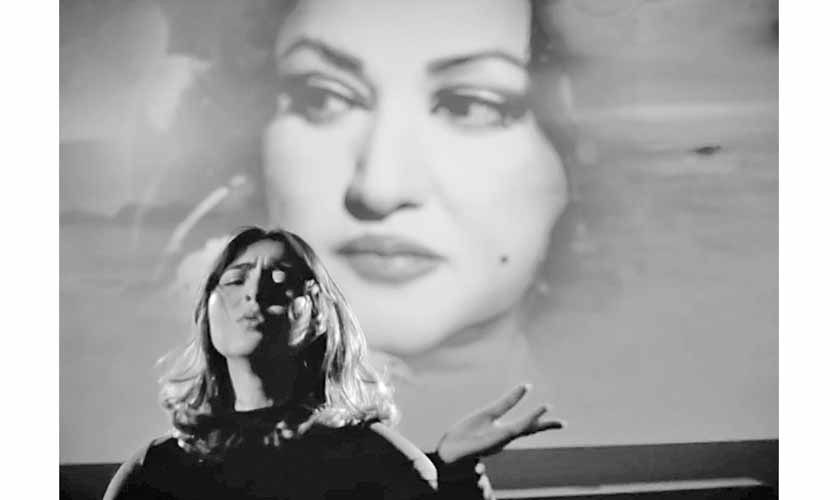
Natasha Baig has diversified her career on the basis of pure merit and learnings. After releasing her debut album, Zariya, she released her second album, Khirad, which draws upon the works of Allama Iqbal and is in a sense a tribute to the late Pakistani poet. The story began from Coke Studio 11 and has culminated in a full-length album. Since releasing the album during late 2021, Natasha has not been inactive and was one of the highlights during a medley of current musicians at the last edition of Lux Style Awards.
With the arrival of women’s day, Natasha dropped the audio-visual treat that is ‘Wajood e Zan’ - meant to be a tribute to strong women whom she personally considers iconic and women at large. Post-release, she spoke to Instep about the song.
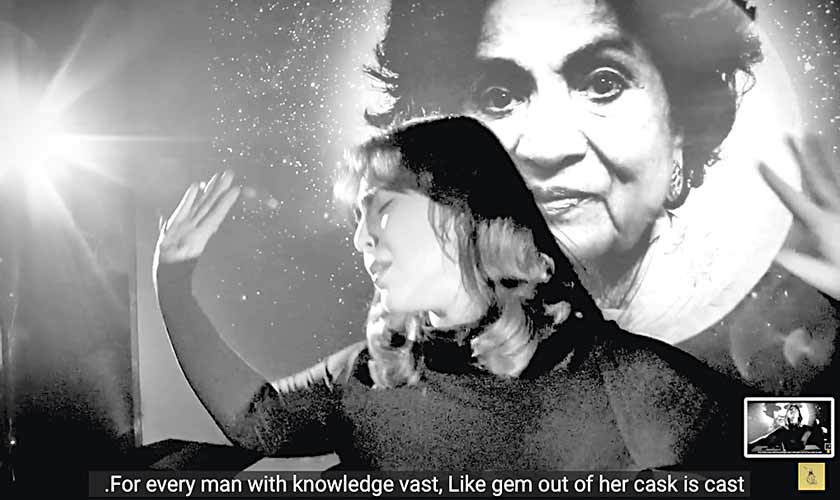
“‘Wajood e Zan’ is a kalaam by Allama Iqbal that we all know,” she began, “Whenever something impactful needs to be said about women, people quote this kalaam. I was fortunate enough to be able to compose this kalaam because composing a kalaam by Allama Iqbal is always a task. Because of the help of my team - many contributed - I was able to do this and I feel the way it has come out I’m very satisfied. I’m vocally myself in the song; I composed it myself although the initial compositional idea and the first line composed is by an upcoming (talented) musician Abdul Rafay. Then I got the direction and I took it further and composed the whole thing and my brother, Sameer Baig, has produced it.”
Shedding light on the music video, Natasha recalled, “When it came to the videography, I thought it is a song that if someone looks back at it a decade or two from now, the same feelings and emotions should be felt by listeners that I felt when I sang this kalaam.
“I really wanted all the women who are on my radar to become a part of this. I also wanted to make other people a part of this but I had a limited amount of time, which is why I was not able to incorporate more people but all the people who came and took out time, I’m extremely grateful to them and I’m glad I was able to do this.”
The video for ‘Wajood e Zan’ is a monochromatic dreamscape where you encounter, albeit briefly, and in a skyline those who were present for the shoot and those who are no longer with us. Among them were inspiring names such as Arfa Karim, Bano Qudsia, Benazir Bhutto, Fatima Jinnah, Fatima Surriya Bajiya, Haseena Moin, Mariam Mukhtar, Nazia Hassan, Noor Jehan, Parween Rehman, Parveen Shakir, the late Reshma, Ruth Pfau, Dania Enwar, Dua Malik, Frieha Altaf, Hajra Yamin, Hina Rizvi, Isra Shafi, Kainat Imtiaz, Kulsoom Aftab, Layla, Mahrukh Abbasi, Manal Faheem Khan, Maria Miandad, Mariam Iqbal Desai, Nimra Rafiq, Rabya Kulsoom, Reeja Jeelani, Reham Rafiq, Rimsha Qureshi, Rubya Chaudhry, Sadia Khatri, Samaviya Asghar, Srha Asghar, Xenab Ansari and Zhalay Sarhadi. With women from various fields, the music video possesses a genuine layer of authenticity as they appear and disappear from our sight. An emotional Natasha Baig counts the ways of their individual and collective spirit which never falters, fighting back each quandary with as much vigour and grace they can muster.