

Print Story
X




Zeb Bangash talks to Instep about her newest project, working between Pakistan and the USA, and why she believes royalties are the single biggest issue plaguing the music industry.
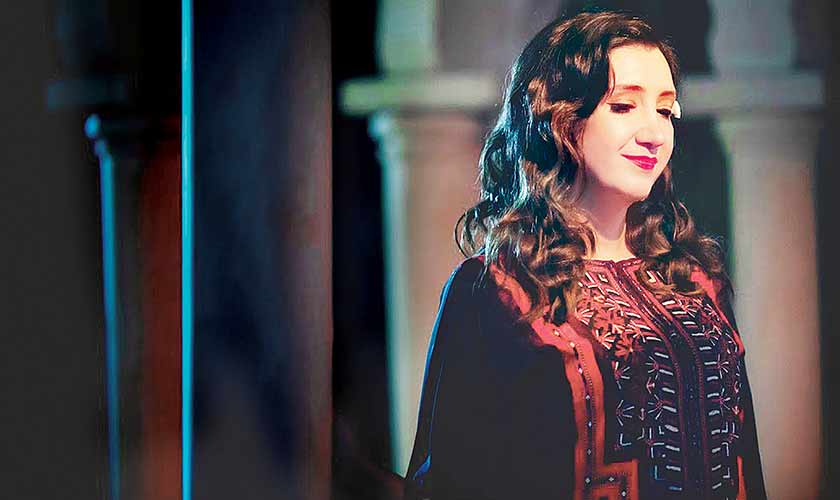
Zeb Bangash is in Karachi for a few days before heading to Lahore as she promotes her newest project. Like most of our preceding interviews, we end up making a slew of segues from the project at hand. Sitting before me via video chat, Zeb Bangash is just as down-to-earth as she was when we first met during the early years of Zeb and Haniya and a mighty album called Chup. It has been a while since we have spoken at length, but during that period, Zeb has mastered singing for films and TV serials; she has won awards, gotten married and is still making delicious world music.
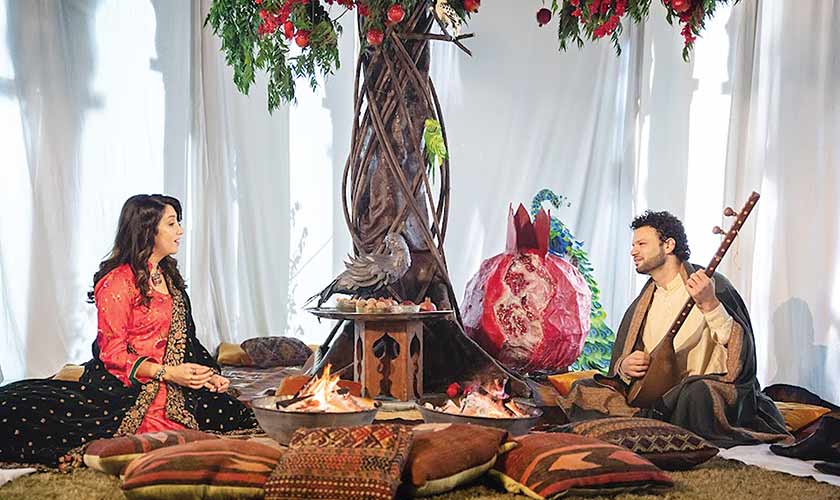
In Lahore, a showcase paying homage to Afghanistan took place just last month, post-interview. Zeb Bangash and Shamali Afghan presented a series of songs; an exhibition curated by Hashim Ali featured an installation designed by Mahina Reki. The exhibition also featured artists from various mediums including Awais Gohar and Daniyal Hasan.
Travelling through time
Zeb Bangash now resides in America having gotten married during the period of “2017 or 2018,” she says. But unlike many influential celebrities, her focus isn’t on her married life. What is most palpable is Zeb’s candid willingness to talk about the project, which is called A Love Letter to Kabul. It has come during a time when geopolitical decisions have left the people of Afghanistan – once again – under the regime of the Taliban.
“You may say I’m a dreamer/But I’m not the only one/I hope someday you’ll join us/And the world will be as one.” – ‘Imagine’ by John Lennon
A love letter to Kabul may have arrived at a strategic time but the timing is just coincidental. What it does tell us clearly is that even as Zeb Bangash has managed to find a balance between working in the music scene from America to Pakistan and so on, she admits the to and fro is good. Before we delve into the subject at hand, I wonder what has happened to her other band, the worldly Sandaraa (which means ‘Song’ in Pushto).
“Due to Covid, everyone kind of left the city,” she recounts. “Sandaraa may kind of change a little bit in shape but it’s definitely still a thing,” she confirms, adding that her collaboration with Michael Winograd and the others is very much on the cards. However, her current focus is on A Love Letter to Kabul. “It’s one of the many projects I’m doing but yes, at the moment A Love Letter to Kabul is my current release.” Behind this project is a sweet story that deserves some space.
And so begins Zeb: “Shamali Afghan and I have been trying to collaborate for several years. Shamali’s father was my grandmother’s favourite musician and all these songs – ‘Paimona’, ‘Bibi Sanam’ – I kind of learned from his singing. He was like a family member and my grandmother used to call him over.”
As Zeb time travels to the origin, she remembers, “My grandmother used to call him ‘son’ and he was always kind of there. Then, the family moved to Canada and years later, I connected with Shamali Afghan. His mannerism, his style of singing reminded me of what I knew. It was like cousins reuniting so we decided to work together.”
Ironically enough, what didn’t happen during pre-Covid times happened during the Covid-19 days. Connecting and coming to Pakistan was followed by others who joined the project including Hashim Ali and Saad Sultan.
As Zeb goes on, she describes not just how this project originated but how it transformed into something that everyone started taking ownership of. “We went to Peshawar and got authentic cultural music for it. But then, we let it go because it’s a project we did primarily because we wanted to. There was no agenda behind it. We had plans to release it in October.”
“We were paying and honouring the Ustaads of Kabul so we decided to call it A Love Letter to Kabul.”
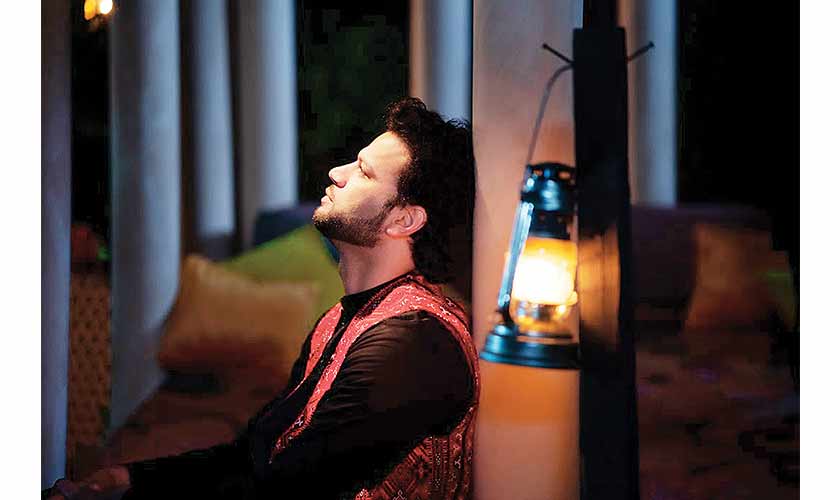
A Love Letter to Kabul contains three live songs that are covers of three different Ustaads between the time-frame of “the beginning of the 20th century to someone who passed away three years ago. Each of them had a difference in their context, style and what they brought to the music.”
As for the arrival of the project, though it was planned for an October release, its timing coincides with America pulling out of Afghanistan leaving Afghan people to cope with their new reality, unprepared. Given everything that is happening in Afghanistan right now, does it hit a nerve unexpectedly?
“Afghanistan, including Kabul has seen so much suffering for so long with people being displaced in one form or another - and now specifically - arts and artists are now in a much more vulnerable position,” says Zeb. “So, I think this is all we can do. I’m not a politician and I don’t have an idiosyncratic idea about what’s happening, but Shamali and I talked about it and not just us, everyone involved in this project. We worked on this music with a lot of love, and we felt nurtured by it and all we can do is present it to the Afghan people. This music is very rooted in the culture and it’s a modern interpretation but it’s not coming from a space that’s about showing another sound so much as it is coming from a space that’s rooted in tradition.”
“A lot of time when conflict happens in a place for a long time, even though you care about it, you’re reductive about it and its one turmoil in one place after the other. But for me, it’s not about the politics but the beauty. I have a personal connection to the people, to the language, to the music and musicians. I have so many friends, so for me it is a very real place. When we did this project, there was no angle to it. This project came out of love to honour a culture that has nurtured us. Now, yes, there is a gravity to the situation, an uncertainty; the intention has always been to love and to honour, and that’s what we’re trying to do.”
The success of
television and film soundtracks
Zeb Bangash has a lush career as she has sung songs for both television and film and has won public and critical support. None of those songs would be where they are in our memory had it not been for Zeb and her exceedingly charming delivery of songs. From popular TV dramas that beam into homes to films as diverse as Manto to Superstar and beyond, Zeb describes her journey without hesitation with both mediums.
“They are different mediums but musically they are kind of similar. In many ways, the TV OSTs in Pakistan are just as popular as a film song. The style and genre is very similar but with OSTs you are singing about the larger theme. While there is modernisation in musical instruments and arrangements, it is still based heavily on eastern melodies and traditional expression.
I started with a pop album and I love that a lot but I’ve always been inclined slightly towards the flourishes, the difficult stuff. I am happy I get to do OSTs because I get to try out things I’m learning,” says Zeb, who is a disciple of Ustaad Naseeruddin Saami.
“In South Asia, you learn different styles and expressions and you learn different kinds of music. It’s a lot of fun,” says Zeb about playback singing. “Sometimes you are singing for a character that is an assertive woman and sometimes it’s genderless so it’s really nice.”
Adding how it compares to the mechanism that is singer-songwriter flair, Zeb makes a distinction. “When you do singer-songwriter material, it is very close to home and musically it can be intimate but not as complex or difficult as the other mediums. I really think someone else’s song for a third person is challenging and exciting and there’s a lot of growth in it.”
“I don’t mind stealin’ bread from the mouths of decadents/But I can’t feed on the powerless when my cup’s already overfilled.” – Hunger Strike by Temple of the Dog
Zeb Bangash is not a stranger to corporate-backed music, having appeared on Coke Studio as Zeb and Haniya and later as a solo featured artist to enormous success. But there is always a debate that corporate-backed music is bad. It’s a debate that has been in play since Vital Signs appeared in a Pepsi campaign converting ‘Dil Dil Pakistan’ to ‘Pepsi Pepsi Pakistan’ to the musical behemoth that is Coke Studio. Alternatively, these songs have a controversial nature in that they will not get nominated at the country’s most persistent award shows (even if they deserve to).
“If it’s a great song, even if it has been released on a corporate platform, it will still be a great song and nothing can take that away from it. Similarly, a song by the coolest independent artist if it’s an unsuccessful song, it is just an unsuccessful song.
“For me, the value of a song does not become less or more, whether corporate or non-corporate. I think it’s wonderful that different kinds of platforms are coming up. That is really one way of pushing music towards mainstream. It allows Pakistani musicians to become mainstream celebrities in Pakistan in a way that they could if they worked across the border.”
However, a corporate platform can come with its own limitations, adds Zeb. “For instance, Nescafe Basement wants to promote new talent, Coke Studio always has fusion in it, so that can be a limiting factor if we only have corporate platforms. I wish there were more corporate platforms and there’s definitely value for the artist.”
Having worked with a record label while releasing the debut Zeb and Haniya album as well as Coke Studio under multiple producers, Zeb is clear that the one issue that needs to be spoken about more than other matters right now is that of royalties.
“Music and corporations have been doing great music for approximately 20+ years in this country so why are artists still not getting royalties? If musicians are one of your biggest cultural entities for the region and the world, how come they are not paid royalties. We don’t get that due.”
The other thing, a very obvious characteristic of the industry, is pointed out by Zeb. “What happens with platforms is that they are not band-centric but singer-centric. No matter how you try, and they need a specific band, and you sometimes lose out on that originality, that stream of content. It’s not a debate. It is my observation.”
– Photo Credits: Amna Zuberi