

Print Story
X




Impact of the British Raj on state institutions in the sub-continent
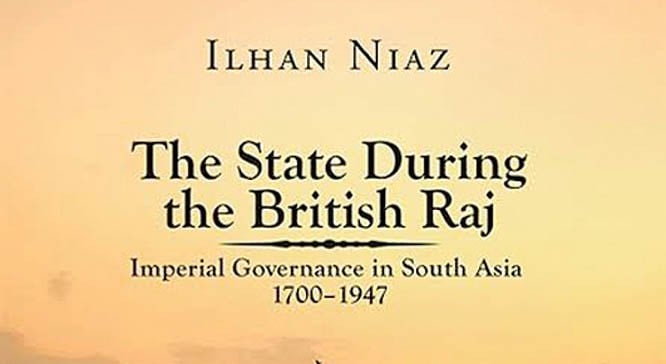
According to Ilhan Niaz in The State During the British Raj, the impact of the British rule on the sub-continent was multi-layered. The subordination of the sword to the supremacy of the civilian rule, the secularisation of India, recognition of differences between the communities by the Raj and its solution: to accord representations to competing identities. It was further intensified by the idea of meritocracy and the form of representation in the South Asian environment. All of these subjects were eventually wrapped up with the idea of constitutionalism.
Today, however, both the successor states i.e. India and Pakistan, have lost sight of the need to strengthen the core elements of this legacy - a secular constitutional state, ruled by civilian politicians, through a merit-based and autonomous civil service, military and judiciary. This was done with the promise of rapid development.
Rather than condemning the states for their ‘failure’, perhaps the phenomenon could be better understood in the context of societies not necessarily following one prototype. For they might develop their own systems based on the ground realities of their own historical consciousness.
It might be useful to view history as a series of overlays. A civilisation takes control of another and then imposes its values and institutions upon it. It may not always be for the purposes of control or exploitation. It could just be a statement that the culture of the rulers is superior and is supposed to be emulated. This has generally been the case in northern India which was repeatedly exposed to wars, raids and conquests. The area was constantly targeted for as long as history has been recorded, probably because the land was fertile and the people a good source of slave labour. This resulted in one overlay over another, the people of the area and their culture partially surviving in some mutated form.It may be useful to view history as a series of overlays. A civilisation takes control of another and then imposes its values and institutions upon it. It may not always be for the purposes of control or exploitation. It could just be a statement that the culture of the rulers is superior and is supposed to be emulated.
The European overlay was especially peculiar in the sense that it was of a society that had been transitioning towards an industrial order when it took over the area. It was a new phase in human history. The systems that the Europeans imposed on India were from an industrialised society - a product of the industrial revolution, backed by a certain historical legacy, the likes of which had not been experienced ever in human history. The superimposition of values, rules and institutions which the Europeans treasured at the time of conquest must have found resistance of all sorts from people in colonies like India who treated their own values and systems as articles of faith.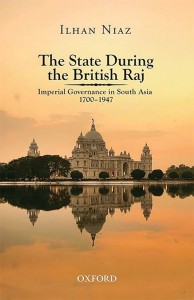
It may have been an uneasy co-existence. That the imposition was accepted and made part of the value structure back then does not seem to matter much any longer, as the culture that preceded these impositions seem to be resurfacing both in India and Pakistan since 1947.
It should not be surprising that most state institutions that exist today are the result of the massive intervention that the British colonial rule brought about in the subcontinent. But the way these institutions have been manipulated over time is a classic case of the interaction between an imposed structure and people’s response in the light of their own historical experience.
Niaz in The State During the British Raj focuses on state institutions that were perpetuated by the British in the pre-partition subcontinent and how they changed afterwards. He stresses that not enough emphasis has been laid on the significance of the colonial period on the events after the partition. This, he asserts, is particularly mind-boggling as the institutions that were established then are still in force and no change has taken place in their structure even after all these years.
He says this happened due to a number of developments that were taking place at the time the Indo-Pak partition happened. The first was that the Americans imposed their own order on the world. But they were a world power that did not carry the burden of a colonial historical legacy and hence failed to distinguish between political systems and state behaviour. It was assumed that through democracy the world would emulate the system that the United States offered, as an improvement on the lot. The second strand came from the Marxists. In India, the Marxists operated under state patronage. In Pakistan, they became more of an anti-establishment group. The third strain came from religion and manifested itself in the form of Islamist thought and Hindu revivalism. Islamists saw the intervention as a stark consequence of not being Islamic enough and sought salvation in a return to its pristine archaic purity. It all worked out in a synthesis that has retained the exterior of the structure but robbed it of its spirit, for the eventual outcome to be different from what was intended. In other words, there is a discrepancy between formal institutions of the state and what the people make of them.
It could also be that what is generally assumed to be positive values like democracy, meritocracy and secularism or even the evenness of the implementation of the law may not resonate with the local wisdom which may have another take on these altogether. The absoluteness of values against which all else should be judged is thus open to question.
Niaz has written a number of books including Old World Empires-Cultures of Power and Governance. The Culture of Power and Governance of Pakistan, An Inquiry into the Culture of Power of the Subcontinent. He has also been regularly published in reputable academic journals and has received many prizes for his writings.
The State During the British Raj
Author: Ilhan Niaz
Publisher: Oxford
Price: Rs1550
Pages: 305