Print Story
X




There could be a parallel history of creative people who have in a state of utter desperation committed suicide. So what does life and death, creation and destruction, mean to an artist
"Death is the dark backing a mirror needs if we are to see anything" Saul Bellow
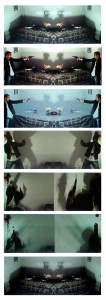
In Rashid Rana’s 2004 Ten Differences, 53 seconds on a loop single channel video installation, the protagonist (the artist) aims a gun at his mirror self, fires and falls with blood smudged on the background wall. Apart from dealing with imperceptible differences within similar realities, the work also refers to violence in society, particularly self-inflicted, especially how our nation has experienced years of self-destruction -- with the state machinery involved in spreading religious fanaticism.
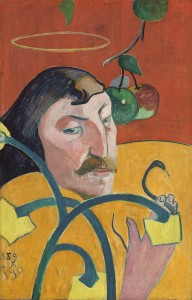
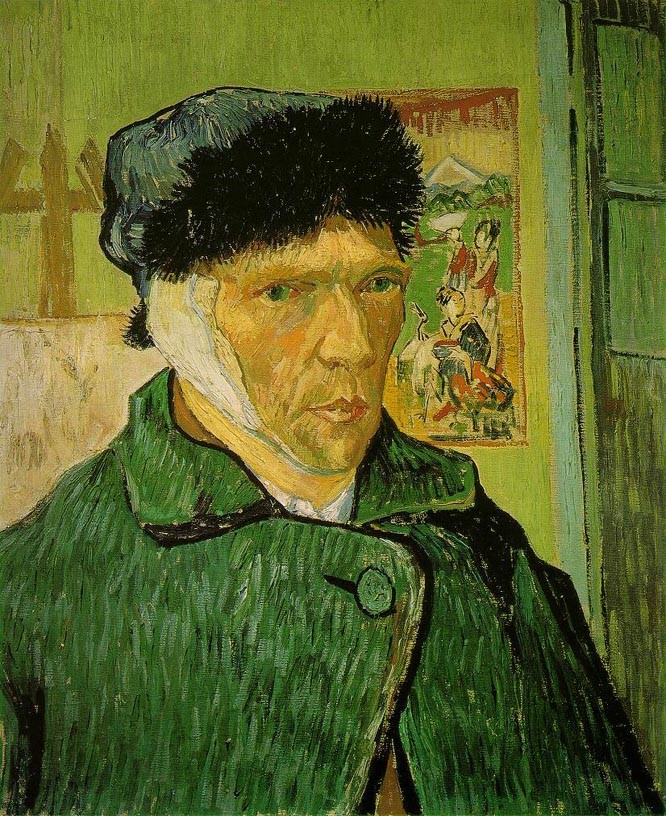
But, more than a comment on the country’s situation, Rana’s video can be read as being about suicide. Though not uncommon in general, the tendency is more prominently seen among those who are in the business of creativity. In fact, there could be a parallel history of art and culture: of visual artists, writers, singers, actors who took their own lives. Among actors one can recall the names Marilyn Monroe, Robin Williams, Guru Dutt, Divya Bharti and Nannah. Writers such as Thomas Mann, Walter Benjamin, Ernst Hemingway, Virginia Wolf, Stefan Zweig, Sylvia Plath, Yukio Mishima and, in our surroundings, poets Shakaib Jalali and Sarah Shagufta ended their own lives. In the realm of visual arts, the list is long including Vincent van Gogh, Paul Gauguin, Arshile Gorky, Mark Rothko, R.B. Kitaj and Jean-Michel Basquiat.
Close to home, Asim Butt hung himself in his house. The angst, depression or desperation that leads to suicide cannot be fathomed but one does start to look at the works of these writers and artistes in a different light after they’re gone. Not necessarily in a sympathetic way but more to search for clues to their intention of suicide. Often the clues are not there, not in the words of Wolf or performance of Williams or Dutt. One doesn’t detect it either in the canvases of Kitaj or Rothko; not even in the public art of Asim Butt.
Where was the plan to kill in all those years of creative output? Or was it just an impulsive act? According to Kurt Vonnegut suicidal tendency is "like walking along the edge of a cliff". Beyond these names who actually finally committed suicide, many creative personalities deal with this issue on a daily basis -- to be or not to be. Till they sort of make a compromise and continue with their disappointments, disillusionments and miseries. In the life of an artist, the happiest moments are far fewer than the grey period.
Today’s wide-selling ‘successful’ artist who has a sprawling house and a happy family is desolate deep down. The moment he comes to his studio and confronts his work, his biggest challenge is the blank paper, empty canvas, block of wood or some other material -- how to transform it into art that is a segment of his self. He must create what the Shylocks of culture want from him and not what he aims for and is capable of. Sadequain was once asked about his urge to make so many paintings, to which he had said: "Once I complete a work, I am not certain about it; so I have to make another one!"
Some artists are not satisfied with their work. In a state of utter desperation, they stop and kill themselves like Rothko and Van Gogh. But before reaching that irredeemable and irretrievable stage, many artists have suicidal temperaments. Even if their death is caused by an accident, their lives mark the path to self-annihilation. Take two examples from two different locations, times and contexts. Jackson Pollack perished in a car crash and Zahoorul Akhlaq was murdered in his house. Pollack died due to drunk driving, a constant state for him. Dying in an accident was not a surprise for a person who was so addicted to alcohol. Although Akhlaq’s death had nothing to do with his alcohol intake, he too spent his last years drinking. However, his end was on a high note because the painter was making works which were a culmination of his years of research into the aesthetics of indigenous image-making.
In that respect, Akhlaq was not a lone artist. Some of his contemporaries, like the earlier generation of artists, wasted themselves in alcohol: Sadequain, Ahmed Parvez, Bashir Mirza and many after them drowned themselves in drink -- indicating a connection between creativity and destruction.
Like in Hindu mythology, where creation, preservation and destruction are interconnected (Brahma, Vishnu, Shiva), the three streaks are present in the mind of every artist. A maker of image is also a preserver of it, as well as its destroyer. In order to create something new, you need to negate what is already there. This includes what lies outside but more what is within you as an artist: your previous beliefs and pictorial practices. A creative person has to deal with this condition because embarking on every new project means discarding what was already made; hence one part of his personality (since our creations are indispensable segments of ourselves) has to be put to rest.
So who cares if Walter Benjamin "committed suicide at Portbou on the French-Spanish border while attempting to escape from invading Nazi forces", or Paul Gauguin killed himself in a far off island, or Virginia Wolf drowned herself in Ouse river. They may have cut off their years on this planet, yet they continue to live through their words and works. To some extent, their works can be viewed as compensation for what they lost or were unable to achieve during their life span. Stream of consciousness in literature (Wolf), expressionism in visual arts (van Gogh), unexpected aesthetic solutions (Basquiat) remind us of those who left their mark in the world of art and literature.