Print Story
X




His time and influences at Cambridge

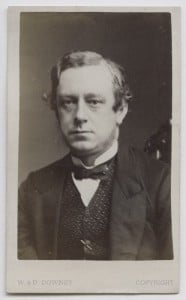
While at Cambridge University, G.M. Trevelyan’s academic interests went beyond just reading history. Listening to Bertrand Russell, G. E. Moore and Wedgewood, tackling each other on subtle issues of modern philosophy, instilled in him the capacity to delve deep into the historical processes, which helped him to draw profounder conclusions. He also imbibed scholarly influences from towering figures like McTaggart and Henry Sidgwick.
Before he left Cambridge in 1903, Trevelyan had become very good friends with Alfred Whitehead who lived in a nearby village by the name of Grantchester. Frederick Maitland, who once was at Trinity College but later went on to become the Downing Professor of the Laws of England, also left an indelible impression on young Trevelyan. By the closing decade of the nineteenth century, the Cambridge History School was still small, but it was expanding fast. It was a sort of workshop where "two remarkable men were making enlargements in the scope of historical study". Archdeacon Cunningham of Trinity College founded economic history and worked to lend it academic credence and Maitland used medieval Law as the tool "to prise open to our view the mind of medieval man and to reveal the nature and growth of his institutions".
Quite interesting was Trevelyan’s encounter with Sir John Robert Seeley (1834-1895) who had been the Regius Professor since 1869. It is pertinent to mention here that Regius Professor in History at Cambridge is one of the most prestigious academic positions in England since the days of Henry VIII. The appointment on that position is made by the Crown.
Coming back to Trevelyan and his interaction with Seeley, he found Seeley "a fine old Victorian of a fighting, dogmatic breed, and he had done much to nourish the infancy of the Cambridge History School". But Seeley’s assertion about history as a science, having no link with literature put him off. On top of it all, Seeley insinuated Carlyle and Macaulay as ‘charlatans’ whom Trevelyan revered in great measure. For Trevelyan, literature and history were twin inseparable sisters. The predominance, prestige and success of physical sciences by the late nineteenth century led many historians to "suppose that the importance and value of history would be enhanced if history was called a science and if it adopted scientific methods and ideals…" Trevelyan believed that analogy did not hold much water.
Trevelyan thought, as he stated in one of his lectures History and the Reader, the study of mankind did not resemble the study of the physical properties of atoms or the life-history of animals. He went on to argue that finding out the properties of one atom meant finding out the properties of all atoms. Similarly, the habits of one robin help to ascertain the habits of all robins. But the life history of one man or a few individual men could not tell the history of all men. A scientific analysis of the life history of any man is virtually not possible. "Men are too complicated, too spiritual, too various, for scientific analysis". History, according to Trevelyan, is a matter of rough guessing from all available facts. It deals with intellectual and spiritual forces which can hardly be scrutinised by any method that can be called as scientific.
Lord Acton succeeded Seeley after his death in 1895. Acton’s knowledge, experience and outlook were European. English liberalism also formed an important part of his philosophy. He had the capacity to enthrall the audience. Therefore, dons of all subjects crowded to his oracular lectures, which at time Trevelyan found puzzling but all the more captivating. He remembered Acton as someone who "had the brow of Plato, and the bearing of a sage who was also a man of the great world."
Some of his ideas bore similarity to what Trevelyan had held as a young student of history but Acton gleaned them from other sources and from wider experience. Liberty of thought and conscience was what he cherished the most. But he nursed a sort of indifference towards medieval history. Thus history began to be interesting, as he once confessed to Trevelyan, with Martin Luther. "Modern history was to him (Acton) a record of the slow evolution of freedom and the rights of conscious, through a balance of rival forces." From that statement, Acton appeared to be an idealist because the balance of the rival forces is what the sages of humanity strove for since the beginning of human civilization, but that remained a distant dream.
After benefiting from the wisdom and scholarship of these extraordinary individuals, Trevelyan bade farewell to Cambridge in 1903. He did extremely well in the examination but resisted the ambition to be an academic; probably because he wanted to pursue a career in history writing and Henry Sidgwick advised him to steer clear of academic circles if he wanted to write books.
Also read: Trevelyan’s poetic prose-- I
Trevelyan did return to Cambridge but after a quarter of a century and as Regius Professor. He was later elevated to the position of the Master of Trinity College. During the intervening period, he made history by writing history in the words of Winston Churchill. (I will write a separate column on his works.) There are about twenty books to his credit. Trevelyan mostly did political history but the social aspect had also been a distinctive feature of his history writing.
Another dimension that distinguishes him as a historian is his style which had a literary flair. He thought three men created the norm of modern historiography -- David Hume, Robertson and Edward Gibbon. He rated Gibbon as the greatest, but obviously Hume and Robertson were his predecessors and had a very high place in the history of history in Scotland, the place of their origin. But Trevelyan thought, in Gibbon "the perfection both of the science and of the art of history were reached." One can make sense of his admiration for Gibbon. He wrote history as a piece of literature, which Trevelyan liked immensely. In him as well as in Gibbon, history and literature found a tryst.
Concluded