Print Story
X




A new book delves into the lives and legacies of great musicians of the subcontinent, several of whom have never been written about in depth before
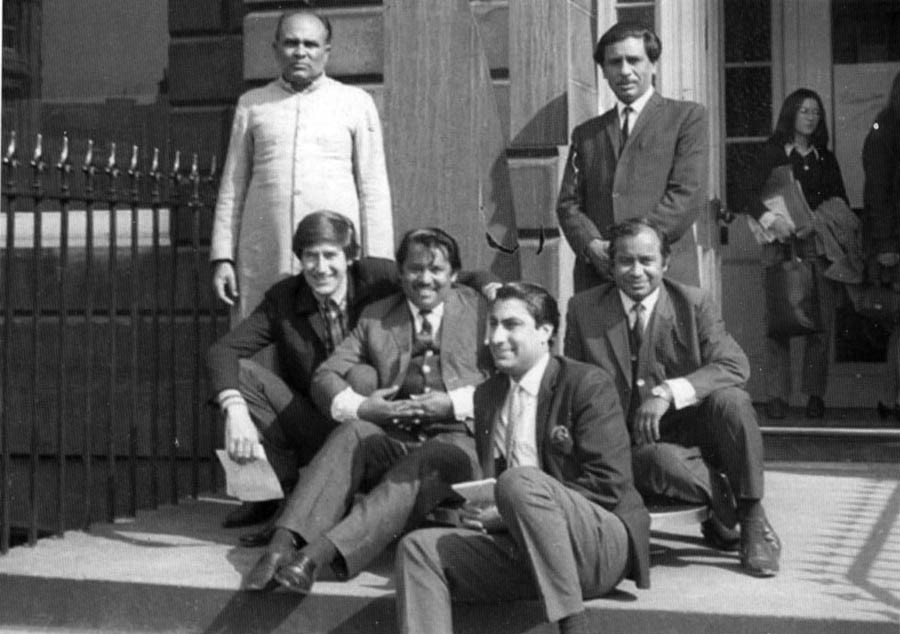
Ayub Aulia’s interest in music is hidden from no one. He has been found at music concerts and befriended musicians all his life. In the introduction to his book he has given a brief resume of how his interest in music developed and it was sealed forever because of his marriage into the family of tabla maestro Ustad Allah Rakha Khan.
This book is a collection of sketches that he has written about the leading musicians of the sub-continent over a period of time. Since very personal in nature, they have a special touch about them. It may be a generalised account of their prowess as musicians but it also reflects his very individual perception about these outstanding musicians and their music. Most of these he knew personally and it does add that personal touch to an account that may otherwise be impersonal and objective.
The famous personalities from the world of music that he has selected for his book are Ustads Ashiq Ali Khan, Barre Ghulam Ali Khan, Ameer Khan, Munawwar Ali Khan,, Nazakat Ali Salamat Ali Khan, Nathoo Khan, Mukhtaar Begum, Roshan Ara Begum, Rasoolan Bai, Master Jhande Khan, Ravi Shanker, Rafeeq Ghaznavi, Naheed Niazi, Fareeda Khanum, Kundan Lal Saigal, Noor Jehan and Soofi Khuda Buksh.
Many of these famous music personalities have been written about, and some written about a lot, and some despite being very prominent in their fields and probably also very outstanding in their art have not been written about that much. The piece on Rasoolan Bai is therefore of great value because not much had been penned on her, especially in Pakistan. It was Aulia’s good fortune that he was able to meet and then strike an acquaintance with Rasoolan Bai when she had come to Lahore in the early 1960s to participate in one of the very early sessions of the All Pakistan Music Conference which had been set up just then. Some in Lahore are still alive who were present in that concert and were lucky enough to hear her sing as well. Rasoolan Bai sang, as has been written in the article, the classical "tappa" very well, and in the course of the twentieth century kept the form alive.
Most gaiks left singing the classical tappa and switched to thumri and then the ghazal, especially in Pakistan where ghazal has greater acceptance and is a more favoured form. Ayub Aulia has written that tappa was the creation of Mian Shoori who was from Benarus but had lived most of his early life in the Punjab because of which most people thought that he was from the Punjab, probably from Kasur and his progeny were primarily responsible for the propagation of kheyal in various cities and towns like Luckhnow, Gwalior and Agra, and one way or another founded some of the gharanas of kheyal. But without doubt Rasoolan Bai was an outstanding gaika and had no parallel in singing the tappa and Benarus ang thumri.
Aulia has written that Master Jhande Khan was born in Jammu, and not Gujranwala, as is generally known and is probably buried there as well. There are many unauthenticated references about these very famous personalities floating around probably because not enough research has been done on them. Generally, it is assumed that the audience and possible researchers too bask in the glory of the moment. Music is thought to be too important to be only heard. Unfortunately, once past their prime, these vocalists and instrumentalists are heard no more and eventually get lost to history, only left at the mercy of gossip and lore.
Other than that, Aulia has also written about Nisar alias Nath, the eldest son of Bhai Lal Mohammed who died very young. According to Ghulam Hasan Shaggan, Nisar was the chosen heir and the father wanted him to carry on his musical legacy, but his death in the prime of his life saddened Bhai Lal immensely. Even then he gathered himself, and forced Ghulam Hasan Shaggan to carry on the burden of the family’s tradition.
Such bits of information, which the author was exposed to first-hand, have added value to the book. Rafiq Ghaznavi was great friends with Manto. Aulia also personally knew Rafiq Ghaznavi and when Manto wrote a very salacious article on Noor Jehan that also mentioned Rafiq Ghaznavi, the latter wrote a letter to Manto saying since he was not able to sell his books he had started to sell his friends. This letter was never posted because Manto died soon after.
Aulia also says that during Iqbal’s lifetime only Rafiq Ghaznavi was allowed to compose and sing Allama’s verses, which he did under the name of Rafiq Rung. The ustads of Rafiq Ghaznavi were Abdul Aziz Beenkar and Arore Khan and his shagirds were Madan Mohan, Lal Muhammed Iqbal and Mehdi Zaheer.
Ayub Aulia himself was born in Gujranwala and then spent fifty-five years abroad. Because of being married to the daughter of Ustad Allah Rakha, he got to know most of the musicians, which refreshed his incipient interest in music. Another advantage of living in Britain was that he could listen to Indian musicians live which was and is not possible for music lovers in Pakistan. He has written an account of one of the concerts at the Royal Albert Festival Hall in which Ravi Shanker, Allah Rakha Khan, Sharad Kumar, Faqir Muhammed, Maskeen Khan, Shiv Kumar Sharma, Lakshami Shanker, Sabri Khan and Palghat Ragoo played and sang. It appears that the other interest of Ayub Aulia is literature and by quoting Ghalib profusely he has pointed not only to Ghalib’s great ability to draw imagery from music, but also to the great link that exists between the word and the note.
Sangeetkaar Author: Ayub Aulia
Publisher: Adabe Aalia
Publications 2017
Price: Rs 400
Pages: 152