Print Story
X




Garam hamaams used to be the poor man’s favourite facility away from home. Today, these may be less common, but the existing ones are doing very well
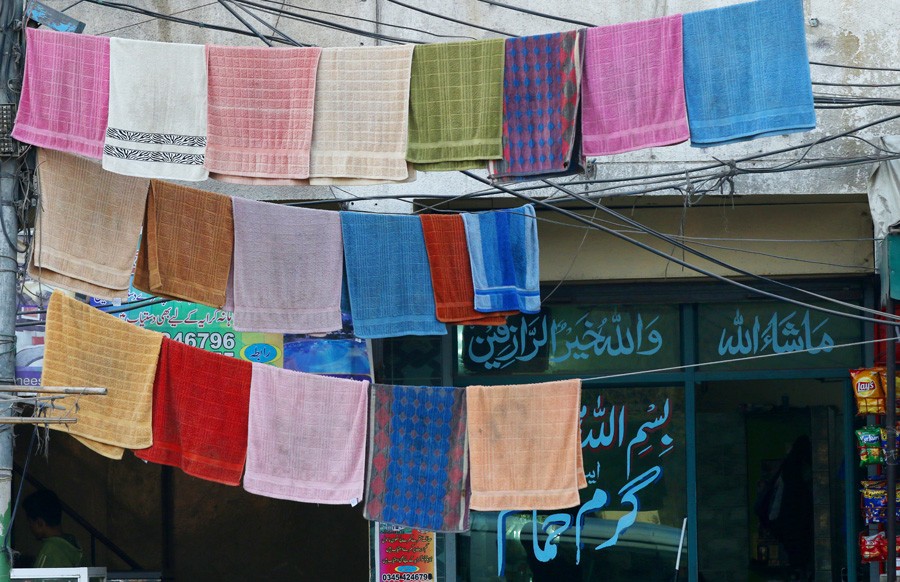
Right opposite to the Speedo Bus stand’s exit gate near the Lahore Railway Station, one comes across a couple of hairdressers’ shops situated next to each other, with colourful towels hanging on suspended wires at their entrances. The towels serve as an indication that these shops also offer you bathing facilities with hot water.
At some distance from these shops, there sits a cobbler who also provides shoe polishing service to the customers (he has regulars) as well as passersby at economical rates. It is also hard to miss the sight of a middle-aged person ironing clothes of customers standing beside him and those who have gone inside the hair dressers’ shops for hair cut, a shave, a mustard oil hair massage, or a hot water bath at a facility called ‘Garam Hamaam’.
It might surprise many but the fact is that a large number of people still go to garam hamaams on a regular basis. Though there are locals as well but mostly the visitors are the ones who are travelling.
Lahore’s Railway Station is just one of the many spots where you find clusters of garam hamaams. The other places include Bund Road, Badami Bagh, Saanda Rd, Old Anarkali, Kot Lakhpat, and the Walled City.
Hafiz Adil Bhatti owns a hair salon combined with a garam hamaam in Anarkali. He has been in the business since childhood. In fact, he inherited the business from his father who had mentored him in his early years. Bhatti receives his customers with a smile beaming across his face and presents them with a clean towel, a soap, and shampoo. Traditionally, he calls out the number of the cubicle which is free for use, and the customer in waiting proceeds towards it.
Talking to TNS, Bhatti says that most of his customers are students of the nearby institutions such as Government College University (GCU) and the University of Punjab (PU), who are residing in hostels or shared accommodations. According to him, the reason why they like to avail the hamaam is because "the facilities in their accommodations are often poor; hot water is available for a limited period of time (early morning) and the toilets are filthy. "Our hamaam is cleaned after every use, and dried with the wiper."
Among his frequent visitors are lawyers of lower courts and higher courts who have come from other cities to appear for hearings. They plan their journeys in a way that they can freshen up at the hamaam first. This saves them the money that would have been spent if they had rented a hotel/motel room for a night’s stay.
An average sized hamaam consumes around 1,800-2,000 gallons of water in a day, and costs up to Rs60 per customer. The customers are requested by the hamaam owner to finish bathing within a stipulated time and close the tap once the bucket lying in the washroom is full. There are hamaams that also have showers but mostly buckets are provided for bathing purposes. Those who spend longer time and use excessive water have to pay extra money.
One wonders how feasible is the business of garam hamaams going to be, as energy prices hit the roof and load shedding of gas during winters becomes common. Bashir Nai (barber), who works at a hairdressers’ in the Walled City, says they burn wood to heat water because gas is costly. Additionally, coal formed from burning woods lights the fire for long hours.
He recalls how he switched to wood when he received gas’s monthly bill of Rs14,000. Burning wood costs him only around Rs6,000 per month.
Sheeda is the owner of a garam hamaam in Shaam Nagar. His visitors are workers and labourers who always insist on paying less than he demands. He charges between Rs30-40 from those who insist to pay less than the normal rate (Rs60), but in that case the quality of service is not the best. Here, the customer is only offered desi soap and no shampoo. They also get a bucket of warm water. There are regular customers who avail this facility on credit throughout the month and clear the outstanding dues when they receive their monthly wages. Similarly, the hamaams on Bund Road have a different clientele and mostly serve the mechanics and drivers of different vehicles including buses, trucks, and vans, passengers coming in for day trips or job interviews, labourers employed for loading and offloading goods, and so on.
Shaboo Nai runs a hamaam on Bund Rd. His setup is a little different. He irons the clothes of customers while they take bath. He is confident of a loyal clientele because of the value-added services he provides. "The drivers of passenger buses wear washed and pressed clothes whenever they go to another city. When they come back they expect their cleaned and washed clothes to be ready for their next journey," Nai says.
Tariq Iqbal, a resident of the Ravi Road area, explains that earlier there would be hamaams everywhere because the concept of attached bathrooms was not common. "One bathroom for all living in a joint family system wouldn’t suffice. So, people started going to hamaams."
He says that in summers, the hamaam owners earn even more because they do not have to make arrangements for hot water while the charges remain the same. As Iqbal says, "Whenever I have a haircut, I get a head massage also, and take bath before leaving the shop. Taking bath at the hamaam is fun."