


Print Story
X




Social and cultural inhibitions come in the way of awareness
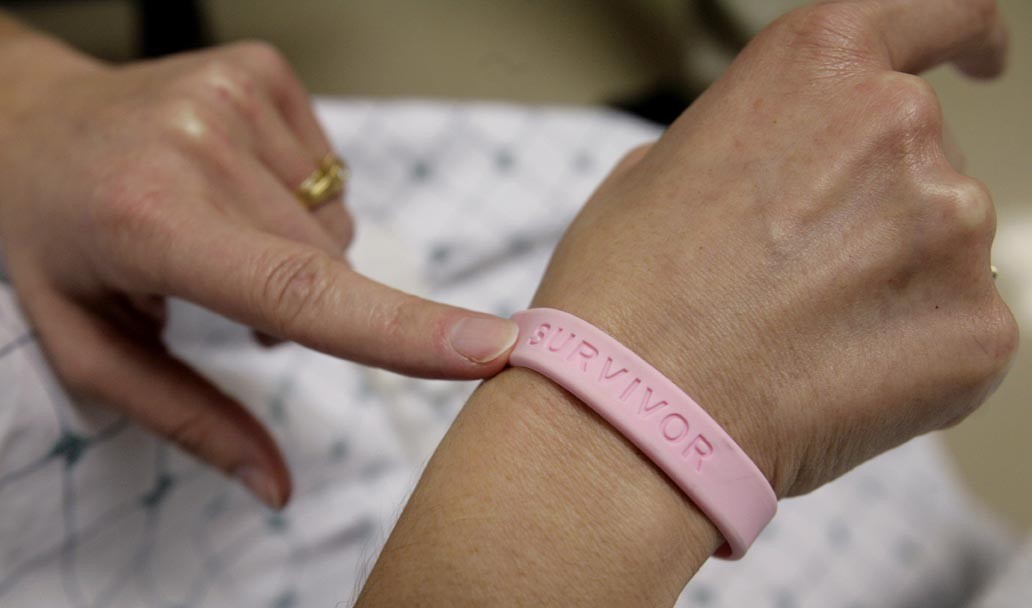
Samia Tahir, 35, living in Ghotki Sindh, became aware of breast cancer some 13 years ago when her mother was diagnosed with this fatal disease. Samia’s two aunts have also suffered from this disease.
"Sitting together in our house one night we watched a programme on breast cancer on Pakistan Television (PTV). The experts were discussing symptoms of the disease. We keenly watched the programme and advised our mother, sitting with us, to get a check-up," she says, sharing the story of her family.
"One day, while taking shower, she discovered a red lump in her breast. We went to the local doctor. He referred us to Liaquat National Hospital in Karachi, where the doctors diagnosed her with breast cancer," she recalls.
Her mother was operated upon at Shaukat Khanum Memorial Cancer Hospital (SKMCH). Her breasts were ultimately amputated, and she is cured for now.
Samia says there is no proper mechanism of spreading awareness about this disease in our society. She points out lack of awareness about post-treatment. In many cases, even relatives of the patient do not want to visit him or her, fearing this was a contagious disease.
In Pakistan, according to studies, there is an average 10-12 per cent increase in the number of breast cancer patients every year. However, the massive campaign against this disease is mostly seen every October only, the month internationally declared for breast cancer awareness.
A few days ago, Pakistan’s parliament building was lit in pink colour as part of a campaign. "In Pakistan, unfortunately, we see that this awareness is mostly seen in October in connection with the international campaign and there are few efforts in the rest of the year," says Dr Muhammad Asad Parvaiz, an oncologist at SKMCH.
Read also: Testing at the doorstep
"We need a massive campaign in our society because every ninth women in this country is likely to be affected by this disease. And still women, mostly in rural areas, do not know about this disease," he says, urging for creating awareness through syllabus in universities and at local level in union councils through local bodies representatives.
He says that even girls and women do not talk about it with each other because the disease of cancer itself is taboo here. He calls for ending these communication barriers through effective and consistent campaigns.
He believes there is need to discuss this issue on the media, "Awareness is mainly in urban areas and not in rural areas. And there is still room for improvement in this campaign and its strategy." He laments that no proper campaigns exist at the federal or provincial level.
In our society, even saying the word "breast" while talking about this disease is considered a taboo. There is very little knowledge about the disease among Pakistani women. A study conducted at Rawalpindi General Hospital about breast cancer awareness among 600 women found that nearly 70 per cent women were totally ignorant of the disease, while 88 per cent did not know about breast self-exams and 68 per cent did not understand the significance of finding a lump in the breast.
It is assumed that with the existing breast cancer awareness strategies, the rate of early detection of this deadly disease is very slow. Another study by Rufina Soomro of Liaquat National Hospital titled, "Is breast cancer awareness campaign effective in Pakistan?" concludes that cultural taboos have been one of the biggest issues preventing women from seeking treatment or even knowing about the disease.
Pink Ribbon is one of the prominent originsations working on spreading awareness about breast cancer in Pakistan. It is working with many public and private institutes, including Atomic Energy Commission Pakistan and Higher Education Commission of Pakistan. With HEC, Pink Ribbon is running a very extensive youth awareness programme for the last six years.
Through this youth awareness programme Pink Ribbon has reached out to more than 850,000 young students in colleges and universities across the country.
One of the main challenges Pink Ribbon faces is getting people to talk about the disease and be more open about it. In Pakistan, even the women avoid discussing the issue especially when they need to.
Because of this indifference, the condition usually gets worse and when breast cancer is finally detected, it is usually too late. The organisation has also run free mobile mammography service to women in urban and rural areas of Pakistan in the past.
It is often observed that a number of misconceptions become part of normal life and then are trusted blindly by illiterate as well as educated people of a society. Such beliefs and taboos are the biggest obstacle in awareness about breast cancer and its treatment. The biggest of them is the topic itself, states a study conducted by SKMCH.