

Print Story
X




Pakistan ranks among the worst countries in the world that offer their children the poorest opportunities to grow and flourish
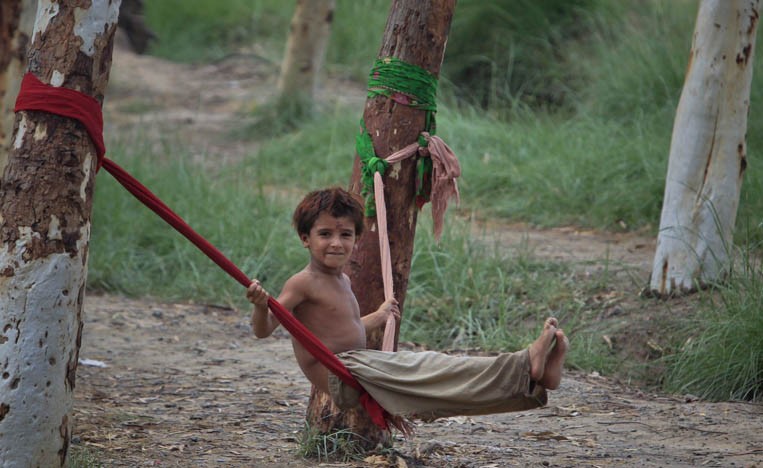
The latest report compiled by Save the Children titled Stolen Childhood, ranks Pakistan 148th among 172 countries in providing a suitable environment for children’s growth. Pakistan has also been identified as a country with the largest percentage of children with stunted growth.
According to this new global index, Pakistan’s regional neighbours India, Iran and China stand ahead with 116th, 80th, and 41st positions, respectively. Afghanistan is 152th on the list.
The report launched last week the world over identifies Norway, Slovenia, Finland, Netherlands, Sweden, Portugal, Ireland, Iceland, Italy and Belgium as the safest countries for children in the world. It places Niger, Angola and Mali among the worst countries for children to experience childhood.
The End of Childhood Index focuses on a set of life- changing events that signal the disruption of childhood. It ranks 172 countries based on where childhood is most intact and where it is most eroded. The indicators used to measure the end of childhood are: under-5 mortality, malnutrition that stunts growth, out-of-school children, child labour, early marriage, adolescent births, displacement by conflict and child homicide.
This new global report -- first in an annual series -- takes a hard look at events that rob children of their childhoods. These "childhood enders" represent an assault on the future of children. Childhood should be a safe time of life for growing, learning and playing. "Every child deserves a childhood of love, care and protection so they can develop to their full potential. But this is not the experience for at least a quarter of our children worldwide," the report highlights.
The report states that Pakistan performed worst on growth stunting where out of 10.7 million children, 45 per cent of under-5 children suffer from diseases. Though India has higher number of such children, 48.2 million, in term of percentage it is 39.
Stunted growth is caused by chronic malnutrition in the first 1,000 days of a child’s life (from the start of pregnancy to age 2). Chronic malnutrition at this stage of life is largely irreversible, and stunted children face a lifetime of lost opportunities in education and work.
According to the report, the mortality rate of under-5 children is 81.1 out of 1000; 45 per cent have stunted growth, and 42.5 per cent children are out of school at primary and secondary level. These percentage and figures are considered "very high" in the report.
In the category of ‘Child as a Victim of Extreme Violence’ child homicide rate is 5.4 out of 100,000 population aged 0-19, which is again alarming according to global standards.
For at least 700 million children worldwide -- and perhaps hundreds of millions more -- childhood ends too soon because of poor health, conflict, extreme violence, child marriage, early pregnancy, malnutrition, exclusion from education and child labour.
The majority of these children in such endangered environments live in disadvantaged communities. Many suffer from a toxic mix of poverty and discrimination - excluded because they are female, refugee, ethnic minority or disabled. These threats to childhood are also present in high-income countries. All countries, rich and poor, can do a better job of ensuring every child enjoys the right to a childhood.
The report indicates 156 million children under age 5 in the world are stunted. In 2000, there were 375 million children and youth out of school. Today, that number has been reduced to 263 million, which is one in six child worldwide. The global number of child labourers has declined by one-third since 2000, but an estimated 168 million children are still trapped in this menace, forced to work to support themselves and their families.
More than half -- some 85 million children -- are do hazardous work that directly compromises their physical, mental, social and/or educational development. This number of children is higher than the number of children living in Europe (138 million). While, according to the latest global estimates, 25.9 per cent of girls are married by age 18 and 7.5 per cent are married by age 15. One in six school-aged children around the world is out of school, one child in 80 are forced to leave home in conflict areas, 160 million children in the world are involved in child labour. Over 16,000 children die beforetheir 5th birthday, mostly of preventable or treatable causes.
Alishba Yousaf, coordinator of Child Rights Movement, a national level civil society initiative, says, "These are alarming figures. They indicate poor condition of under-age children in Pakistan.
"It is a serious issue," says Farzana Bari, human rights activist. "Pakistan has never seen serious about child rights and implementing laws to protect children. Take the example of 18th Amendment in the constitution which guarantees free education but we do not see a single city or even province seriously implementing this article of the constitution."
She urges the government and the state to adopt pro-people policies. "Such high level of stunted-growth indicates that nearly 5 per cent children in the country lack basic capacity to learn in childhood. Are we nurturing zombies?"
This situation, she adds, is actually a "combination of various factors including faulty health and education policies and bad governance".
Ultimately, food security and protection of basic human rights is responsibility of the state. However, "we also need social movements and vibrant role of opposition political parties to take up such issues," she maintains.