

Print Story
X




People point out the glitches in the exercise of census-taking
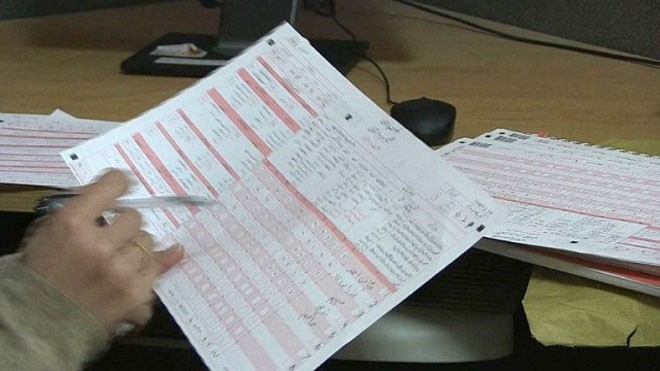
The census is underway at a cost of Rs18.5 billion. Being carried out after 19 years, a lot of people are quite apprehensive about the whole exercise. They are not comfortable with some questions and suspect there are some hidden motives behind collecting the information.
Similarly, enumerators also complain they are not welcomed by the member of houses they are visiting. There are other aspects as well that affect their working and the correctness of the data they collect.
Amjad, not his real name, is an enumerator in Sialkot. He complains that many residents, who are businessmen and don’t have to rush to the office early in the morning, do not welcome them as they are on duty at 8am. Because they are still in their bed, they send the elderly in the house to deal with them.
Amjad says, in a couple of cases, women have asked them to come when men are home. Many of the elderly at home do not remember details like CNIC numbers, age of inmates, educational qualification, etc. This causes delay in filling forms that should ideally take a couple of minutes. He says local government representatives must make people bound to receive census teams with all the information handy at a particular time.
Kashif Nawab, Team Leader at Social Action for Transformation of Humanity-Pakistan (SATH-Pakistan), objects to the lacunas in the census form, especially about counting members of minority communities.
Nawab, who belongs to the Christian community, says Christians have been mentioned as Isaais, instead of the desired Maseehis in the form. He says this objection is not out of place as former prime minister, Syed Yousaf Raza Gilani, had issued orders in response to a request moved by Christian leader, Shahbaz Bhatti.
He says, Sikhs are being counted under the column of "others". This will not help identify their exact or approximate number in the country, he says, adding," they will feel themselves to be least important. They should be given importance and respect so that they feel proud to be Pakistanis," he adds.
Read also: 19, 35, or 67 crores
Some of the common apprehensions are about the sharing of data collected for census with other non-related entities, branding of people without CNICs to be refugees or unregistered aliens, and imposition of taxes on properties. The most concerned are the ones who have commercial properties that are also being counted.
Habibullah Khattak, Member Census, Pakistan Bureau of Statistics, confirms that such apprehensions exist but says they are trying to convince people from day one that the information they are collecting will be highly confidential. He says they are showing the concerned section of the law governing census to the people that prohibits sharing and use of this for any purpose other than house and head counting.
He says complaints about people not opening their gates are quite common and it has been observed that the time between 8am to 10am is mostly wasted, especially in urban centres where people wake up late. He adds that the security cover is very much needed. "The incident in Charsadda where a census team was attacked and the attacker died in gunfire while a policeman was injured shows security is a major concern, he adds.
Zahid Hussain, a businessman from Lahore, is suspicious about the use of lead pencil to fill census forms. He says though there are clear cut instructions from chief census commissioner to use ball points for this purpose he has seen many enumerators using lead pencils. Who will ensure that the entries are not changed later on? he questions.
Hussain believes "the divisions on ethnic and linguistic grounds are getting sharper by the day and that is why people want to get their exact number recorded." He, however, objects to the inclusion of unnecessary questions in census form. "Had the purpose of such questions been defined, the apprehensions of the people would have been taken care of."
Saleem, (named changed on request), an enumerator in Lahore, says "some people do not disclose they have a disabled family member because it is a social stigma for them. On the other hand, there are others who are interested in sharing such details. They think the government may announce financial relief for the disabled."
He says, "though the army personnel were trained for months for census duty, enumerators who are mostly government teachers were given a four-day training and given Rs1,000 per day as training allowance." Because of this, he says, "they find it hard to sometimes handle the technical glitches coming their way."
He complains their duty times have recently been increased from 8 to 10 hours a day and there is no break for lunch. The apparent reason, he says, is that there were difficulties in meeting the daily target of houses to be counted. He admits that "they only ask for data about the inmates and their important particulars and leave other unimportant ones like toilets in the house. This helps save us time. We use common sense to fill these on our own afterwards."