

Print Story
X




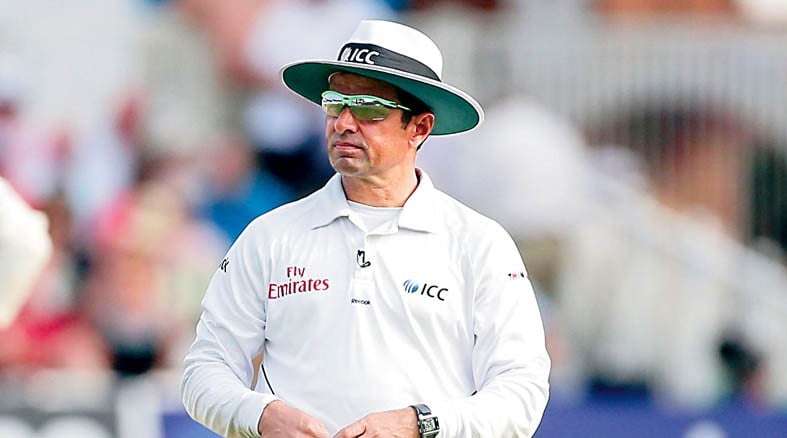
Pakistan’s Aleem Dar created history on January 2 when he stepped in at Newlands, Cape Town. He became cricket’s most experienced umpire with 332 international matches
Umpiring is one of the toughest tasks in international cricket. Batsmen are never satisfied with the umpire’s decision when they are declared out, particularly lbw. Similar is the case with bowlers and fielders. They apply a lot of pressure to get the umpire to declare a batsman out.
The television umpire watches slow-motion replays from several angles, often several times, before giving his judgment, but the umpire standing in the ground has to give a verdict from a distance of more than 22 yards and that too immediately after the ball has been delivered.
The ICC’s system of Elite Panel Umpires and Referees came into effect in April 2002. Elite Panel umpires now stand at both ends in all Test matches and there is one member standing with a home umpire for all One-day Internationals.
Pakistan’s Aleem Dar created history on January 2 when he stepped in at Newlands, Cape Town, to officiate the second Test between South Africa and Sri Lanka; he became cricket’s most experienced umpire with 332 international matches. He broke the record of South Africa’s Rudi Koertzen for officiating 331 international matches.
The 48-year-old Aleem Sarwar Dar, has supervised 109 Tests, 182 ODIs, and 41 T20Is so far.
Dar is only the third umpire of the ICC Elite Panel of umpires to complete 100 Tests. The first two were Steve Bucknor (128) and Rudi Koertzen (108).
In the One-day format, Dar is the third. New Zealand’s Billy Bowden with 200 ODIs and Koertzen with 209 matches are ahead of him.
Dar completed 100 ODIs in a record seven years. He is the first Pakistani to supervise 100 ODIs. Dar proved his accuracy at the 2011 Cricket World Cup in India, when all the 15 appeals against his judgments were turned down.
Dar, who played 17 first-class matches, made his umpiring debut on February 16, 2000, in a One-day International against Sri Lanka in Gujranwala.
After supervising ODIs for three years, he made his first appearance in Tests in a Bangladesh-England match in Dhaka in October 2003.
Interestingly, Dar has never umpired a Test in Pakistan, because his appointment in the ICC panel came after the introduction of neutral umpires for Test matches.
He was elected in the Elite Panel of ICC Umpires panel in 2004 and has become one of the most respected umpires in the world for his accurate decisions.
In recognition of his consistent outstanding performance, Dar was declared the Umpire of the Year for three consecutive years: in 2009, 2010 and 2011. He ended Simon Taufel’s run of five successive awards.
He was also nominated for the Award in 2005 and 2006, but on both occasions Taufel won the honour.
The government of Pakistan recognised his services by bestowing upon him the highest civil award, "Pride of Performance", in 2011. He also received "Sitara-e-Imtiaz" in 2013.
In October 2015, before BCCI president Shashank Manohar and PCB chairman Shaharyar Khan meeting in Mumbai, a group of Shiv Sena activists stormed into the BCCI headquarters, shouting anti-Pakistan slogans and demanding the cancellation of the proposed Pakistan-India series.
They also demanded that all Pakistani commentators and umpire Dar leave India.
Dar was scheduled to umpire in the fourth and fifth One-day Internationals between India and South Africa, in Chennai and Mumbai.
But Shiv Sena threatened to stop Dar from officiating in the Mumbai ODI. ICC withdrew Dar from the two ODIs and asked him to leave India to avoid any mishap.
He is also running two cricket academies in Lahore, one in Bahria Town and the other in Jauhar Town. He wants to set up a specialised academy for umpiring in Pakistan after his retirement.
In an interview last year, Dar lamented the fact that there were quality umpires coming out of India and Sri Lanka, but Pakistan and Bangladesh were far behind.
He says the biggest setback for Pakistan is that international teams are not visiting. Pakistan are playing their home series in the UAE. If teams visit Pakistan, new umpires will get a chance, he says.
The most important thing is that there are no umpiring institutions in the country. Our first class cricketers are not coming to this field of the game, he adds.
He has made some recommendations to the PCB to improve the standard of umpiring in Pakistan, including using television footage in domestic matches as a review-tool for the officials.