

Print Story
X




A new book provides insights into honour killings in Upper Sindh
Dear All,
‘Honour Unmasked’ is the title of a comprehensive -- and surprisingly accessible-- new study of the honour related violence in Sindh that is known as ‘karo-kari’. The term literally means ‘black man- black woman’ and refers to the social practice of ‘blackening’ the name and reputation of individuals for supposed romantic or sexual transgressions. The punishment is mostly death or, less frequently, social exclusion.
This book by Dr Nafisa Shah (most widely known these days for her role as a People’s Party legislator who as an articulate parliamentarian is also now a regular presence in Pakistani television talk shows) is packed with information as well as insight. I approached it with some trepidation because I assumed it would be a dense and scholarly tome full of social science jargon and obscure references. I assumed this to be the case because the bulk of the book is her Anthropology Ph.D thesis from Oxford. Fortunately my assumption proved incorrect: the book is actually very readable and is a very thorough examination of the factors that contribute to the continuation of this practice of so-called honour killing.
Although this subject -- honour related violence-- could potentially be quite overwhelming, the success of the book owes in large part to the way analysis is mixed with the actual stories and case studies of various killings and disappearances. In her role as District Nazim in Khairpur, Nafisa Shah had first hand experience of such cases, and the details, documents and photos included in the book make these stories very real --something which truly adds to the comprehension of the subject. An example is the case of Abida and Tehmina, two teenage cousins in a village outside Shikarpur who were killed by their male relatives; this story is narrated with so much detail and documentation that it makes compelling reading. The girls were suspected of having gone to Sukkur to meet two young men related to their mothers’ side of the family, and so were brought back to village and assumed to have been killed.
Due to a combination of factors the Abida and Tehmina case was actually investigated and the girls’ bodies were found, exhumed and put through forensic scrutiny. Yet despite this nobody was actually brought to book or punished because the original complainant (one girls’ brother) later reversed his own statement and despite all the police evidence, the court ruled that the accused men could not be connected to the crime. The author highlights "how the state justice system and informal systems of redress are mutually implicated in providing a space" for such honour related violence.
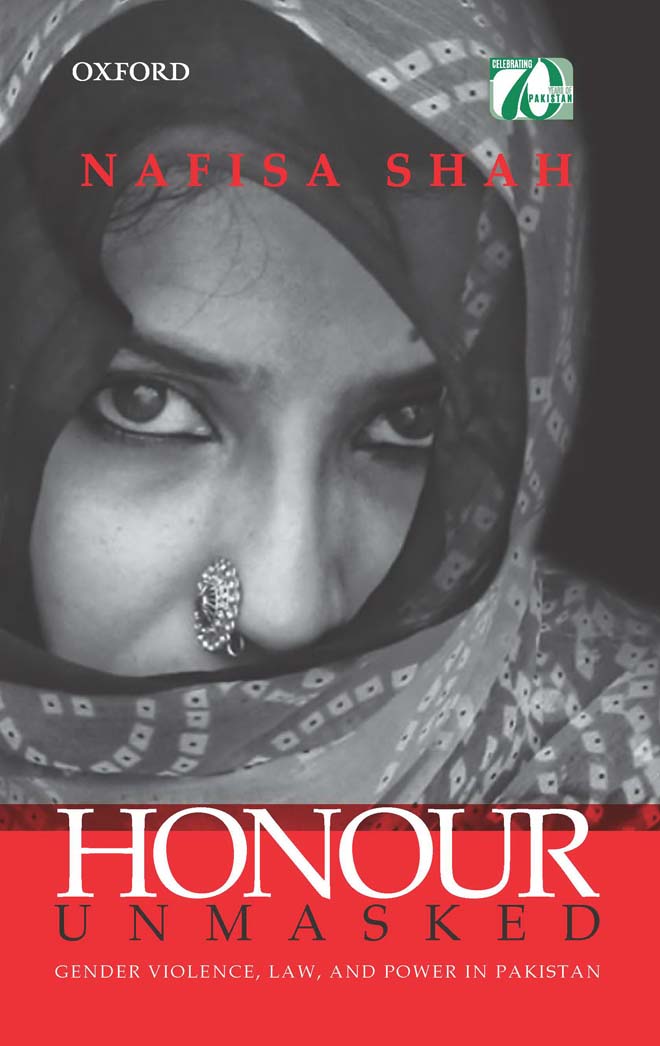
Through documenting the cases of women like Abida and Tehmina, Nafisa Shah manages to acknowledge their existence and their deaths (social and physical)-- itself a way to challenge their being disappeared and to overcome what she calls ‘the sound of silence.’ Although the book is written within an anthropological framework, it is the way stories and cases are re-told that makes it particularly interesting. Also, the volume (published by OUP) is quite user-friendly.
In October 1989, a young woman came to our magazine, Newsline and asked to join the team. She proved to be one of the most committed and hardworking reporters we ever had and one who was able to report stories with immense compassion and understanding., She was also the journalist who did perhaps the first ever extensive piece on Karo Kari in the mainstream press thus drawing widespread attention to the practice. That young woman was Nafisa Shah. And this book is a testament to her unceasing commitment to trying to understand the why and wherefore of a system of cruelty and oppression.
One hopes the book will also be translated into Urdu as well as Sindhi.
Best wishes