

Print Story
X




Pakistan Institute of Cardiology’s new emergency, built with the money of businessmen who call themselves 'friends', seems to present a good partnership model
Not quite long ago, visitors to the Punjab Institute of Cardiology (PIC) would routinely find, to their horror and shock, patients in serious condition lying about on the floor, waiting to be attended, or sitting on benches and wheelchairs while being treated. As if this wasn’t enough, more than one patient would be occupying a single bed inside the emergency ward.
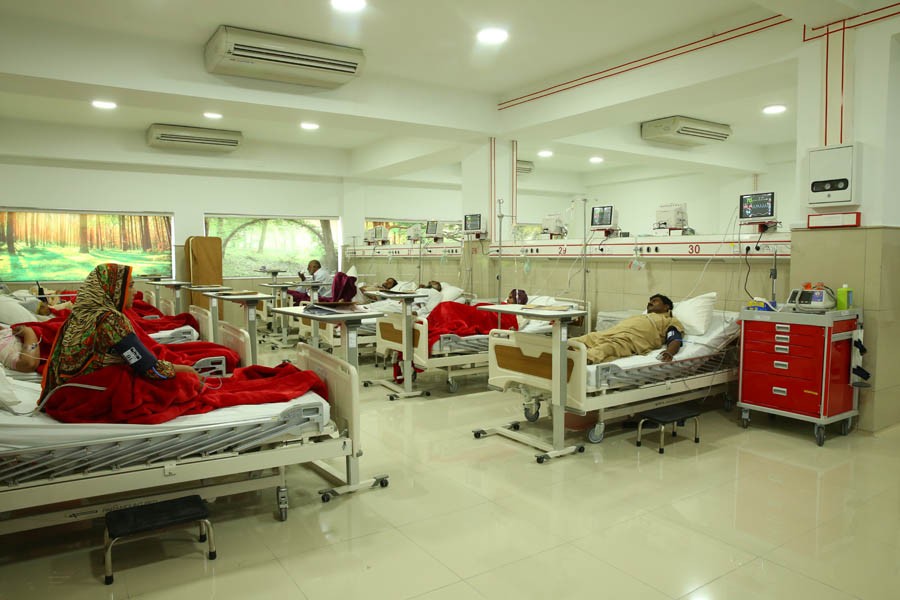
Fast forward to the present day, and you see a state-of-the art facility where the patients coming in with serious issues are immediately turned to and provided with proper bedding. The ward is clean and its look could compare to any private hospital there is in town. Of course, the advantage here is that the patients are treated free of cost.
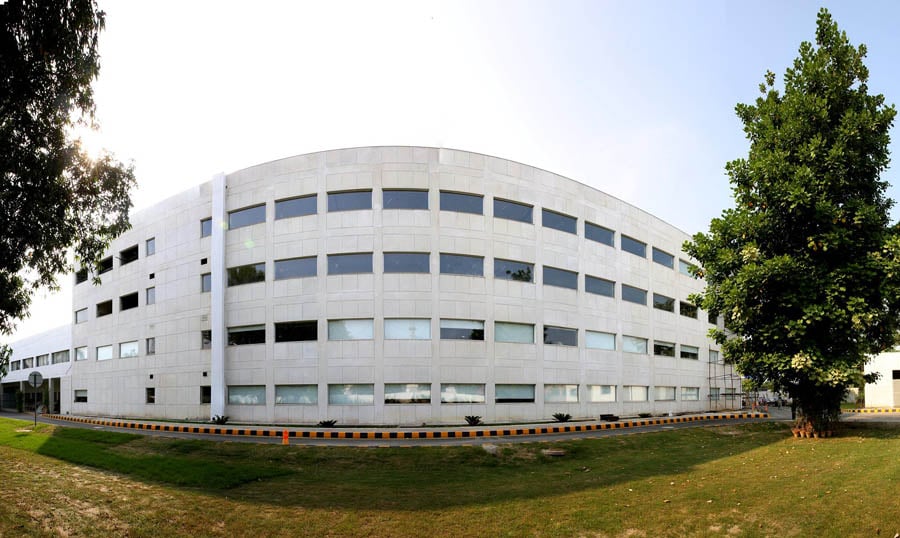
This is the new emergency building of the PIC which houses 100 beds. Once it becomes fully operational, the number is expected to go up to 200. (Till October 2016, the place had a mere 16-bed emergency.)
The old emergency has been shut now and converted to a screening unit where the patients with complications are taken. There are many who don’t have a cardiac problem but they come in to rule it out.
The four-storey emergency shall be completed at a cost of Rs500 million. This includes the price of the medical equipment. Besides, it shall have 50 beds on each floor, and two elevators.
What is most praise-worthy is the fact that the new emergency has been constructed purely with the donation money collected by businessmen and philanthropists. They are said to have taken inspiration from Amir Fayyaz of Kohinoor Textile Mills who was treated at the PIC, back in 2012, where he saw the misery of the poor patients at first hand.
"Once I went home, I met my friends in the business community and convinced them to contribute to this cause and they extended their support," Amir Fayyaz tells TNS.
"Initially, they faced resistance at the hands of the management board of the hospital that wanted them to build wards but not the emergency ward. So, they brought the issue to the notice of Chief Minister Shahbaz Sharif who made changes in the board and the plan was finalised."
Fayyaz further says the donors have come together under the umbrella of the Friends of PIC (FOPIC) whose members are constantly on the look-out for donations. "They have formed a trust that approaches the prospective donors and convinces them to contribute to the noble cause."
According to Fayyaz, there are around 30 major donors who have contributed Rs10 million or so for the construction of the facility. "A construction company, owned by a FOPIC member, was also involved in the project. It offered services at one-third of the cost estimated by the concerned government departments.
"The new emergency offers the facility of primary angioplasty, which is unheard of in Pakistan. It means that those [patients] whose condition requires insertion of stents shall get the due treatment in time. It is believed that if primary angioplasty is done within 90 minutes of a heart stroke, the blood flow is restored and the heart muscle is saved from damage."
Ahmed Altaf, Secretary, FOPIC, who has an office in the administrative ward of the hospital, coordinates with the management on a regular basis. "The people who have visited the old emergency in the past shall experience a world of difference.
"An additional 100 beds shall further improve the situation, and the patients shall be shifted to different floors according to the seriousness of their condition."
Altaf claims the hospital administration is "very cooperative with the FOPIC, and holds regular weekly meetings to share and address issues that may arise from time to time."
The meeting is attended every Friday by the CEO and the MS of the hospital, representatives of the Communications & Works Department, private contractors and equipment suppliers, Nespak officials, the executive engineer at the hospital and others.
The FOPIC committee comprises five members namely Amir Fayyaz (Kohinoor Textile Mills), Javed Iqbal (Mayfair Textile Mills), Syed Ali Ahsan (Ashiana Cotton), Sohail Kabir (Fazal Din & Sons), and Akbar Sheikh (Zaamin Group).
The fixed, one-time cost of the project has been borne by the FOPIC which ensured that high-end equipment should be bought and at the best possible price. Once the facility was ready, the operational and maintenance responsibilities were handed over to the hospital management. Copies of all the contracts with equipment suppliers etc have been handed over to them by FOPIC so that in case they want to get anything repaired or replaced they can directly contact them.
Appreciating the contribution of the private sector donors, Dr Dildar Ahmed Khan, Medical Superintendent (MS), PIC, says the capacity of hospital emergency has been extended by around 1400 per cent.
"The government that is bearing the operational cost of the hospital and the emergency could have constructed the facility itself. But the message that this initiative sends out is that people with love and care for humanity can help to do wonders."
Khan adds that extending the emergency has also led to the creation of jobs. Besides, there is an increased need of medicines etc that the government is providing to the patients for free.
Talking about the qualitative aspect of medical care, Amir Fayyaz says, "Although the operation control has been handed over to the hospital management, the CM has asked the FOPIC to nominate two of its committee members for induction in hospital’s management board. This means the donors shall have an advisory role in the management of the emergency as well as the hospital."