

Print Story
X




This fall, Lahore has witnessed an unprecedented smog cloud that hangs over the city, threatening the people with several health conditions
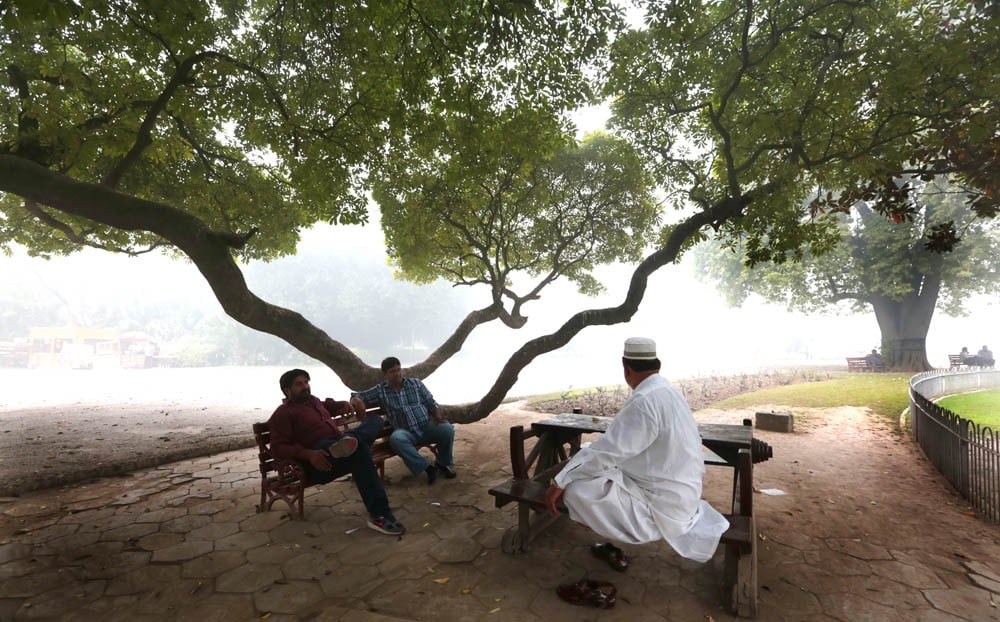
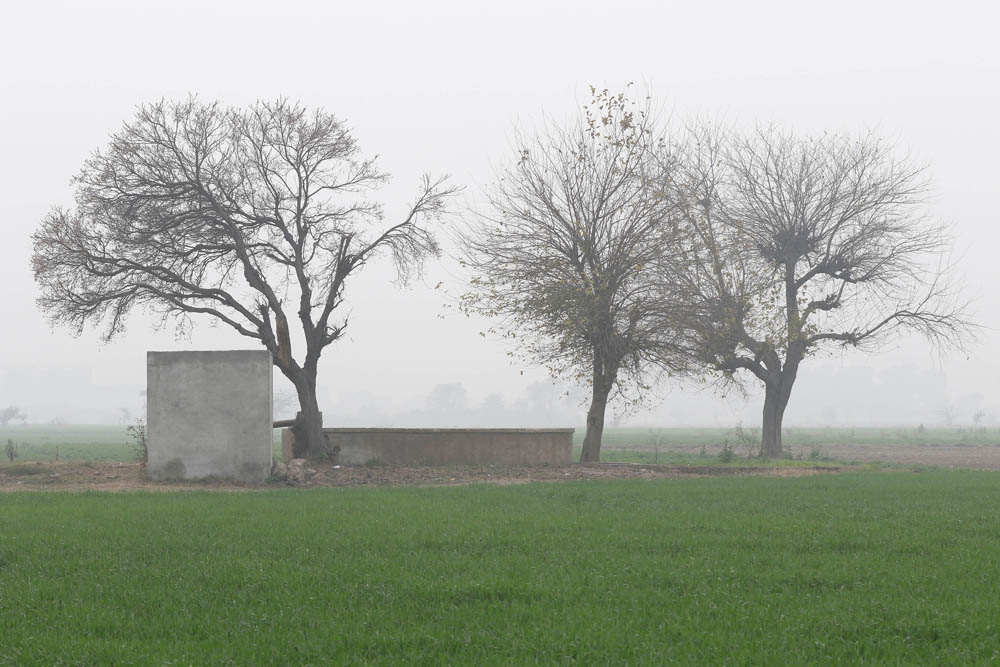
Every year, dense fog covers the plains of Punjab, especially Lahore, with the onset of winters but this time around a different phenomenon has been observed: The areas in and around the city were fully covered with smog -- a combination of smoke and fog --as early as in mid-October.
Exposure to this thick layer of smog caused itchiness in people’s eyes and made it hard for many to breathe properly. Road travel also became difficult, as visibility decreased to alarmingly low levels, prompting authorities to shut down the motorway for traffic. Thursday last saw a collision of 10 vehicles near Sukheki, which killed at least eight people right at the spot, while several others were injured and taken to the hospital.
It is usual with the environment department officials to blame the coal power plants on the Indian side for generating a thick layer of smoke and for providing the ingredients to create smog on this side of the border. But this time, they are actually stating it as a fact. They say India has admitted to a similarly created mess in New Delhi. Well, if Delhi can be affected by these factors, why not Lahore, they ask.
Media reports suggest that Delhi has seen one of the thickest smog in many years. India’s Meteorological Department has termed it to be the worst in 17 years. Visibility at the Indira Gandhi International Airport is recorded to be as low as 300-400 metres.
Scientists have an explanation. They say that lower level anticyclone -- a weather phenomenon which prevents the dispersion of smog -- developed where there was virtually no wind in the vertical column. The phenomenon could be observed in Lahore during this time.
Muhammad Arif, 44, a resident of Township, says how when he steps out of his house in the morning he can barely see anything in the distance. He also complains of an unpleasant odour and itching in his eyes that force him to go back in.
Little does he know that such conditions are caused by the presence of three ingredients -- namely, sulfur dioxide, nitrogen oxide and carbon monoxide -- that are trapped together and form a blanket.
Naseem-ur-Rehman, Director, Environment Protection Department (EPD), tells TNS that satellite images released by NASA have shown that incidences of paddy burning in Indian Punjab, Haryana and Uttar Pradesh increased after Diwali, which contributed to the creation of the smog in Delhi.
The same activity may have affected the neighbouring Lahore and added to the other domestic factors.
Rehman explains that modern machinery used to harvest paddy crop in Indian Punjab does not uproot the plant, so the farmers get rid of it by burning it. "The vehicular emissions, caused during endless traffic jams; the burning of harmful fuel like rubber tyres by factories; the use of substandard fuel by vehicles, and the burning of solid waste by individuals are chief reasons for smog.
"More than 100 steel furnaces are burning rubber tyres, plastic waste etc as cheap fuel," he adds.
Sardar Asif Ali Sial, an environmental lawyer based in Lahore, says it is unfortunate that there is no proper system or equipment at the government’s disposal whereby it could monitor air pollution. "Lahore ranks among the world’s top 10 cities for having the worst quality of air. Still, there is no sincere effort to bring the pollution levels down."
Sial suggests contacting the industrial sector and asking it to use wet scrubbers that cleanse the emissions of harmful impurities before releasing them in the air. "At the same time, the government must buy modern equipment to measure pollution levels in different areas of the city, and strive to bring it down to acceptable levels."
An official of the Punjab government, who does not want to be named, believes the situation is owing to the criminal neglect of environmental issues on the part of the government. "A large number of projects have been carried out without conducting proper Environmental Impact Assessments (EIAs), and countless trees have been cut for road expansion projects without thinking about the repercussions."
The official calls the environmentally unfriendly industries as the major culprit, and says the concerned officers are told not to "harass" them in the name of compliance as this is tantamount to discouraging investment and economic growth.
"There is hardly any concept of punishing the influential polluters and that is why a large number of industrial pollution cases are pending in tribunals," he reveals.
The health hazards in inhaling the smog are simply unmistakable. Dr Muneeb Razaq, who practises at Razzaq Hospital in Baghbanpura, insists that people must take the required precautionary measures which include staying indoors, if possible, wearing dust masks and zero-number glasses, so that they can prevent damage to their eyes, respiratory tract, lungs and skins.
"The risks are high all over the city as atmospheric pollution generated in one area does not remain there and can spread all around," he adds.