

Print Story
X




Moderately warm temperature, coupled with moisture in the air, creates the most conducive environment for dengue mosquito to breed. And that is precisely what’s happening in Lahore right now
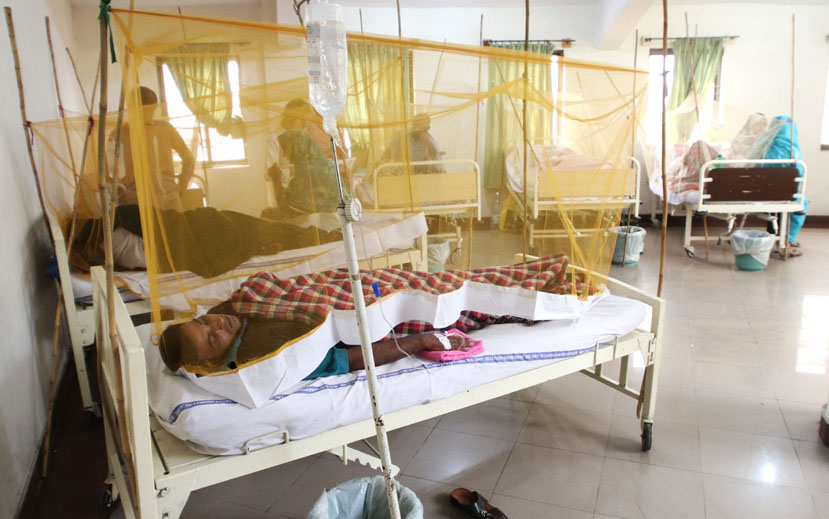
An official announcement about the likely continuation of the dengue ‘season’ till December this year has struck fear in the hearts of the people of Lahore who are still reeling from the devastation caused by this deadly illness in 2011. The Punjab health department officials attribute the phenomenon to the unabating warm weather.
Earlier, the season would be over by November, as the mercury would fall, thereby halting the growth of the dengue larvae. The moderately warm temperature, coupled with moisture, creates the most conducive environment for the mosquito to breed, and this is exactly what’s happening to the city right now.
Another striking revelation is that the highest number of dengue cases in the city have been detected in the Defence Housing Authority (DHA) and surrounding areas. According to an estimate, around 80 per cent of the confirmed cases have been reported in the region.
One reason cited for the high incidence of dengue in DHA is that a lot of construction work is going on there, and the debris is lying everywhere. The dengue larva grows in the debris as water accumulates in smaller spaces under it.
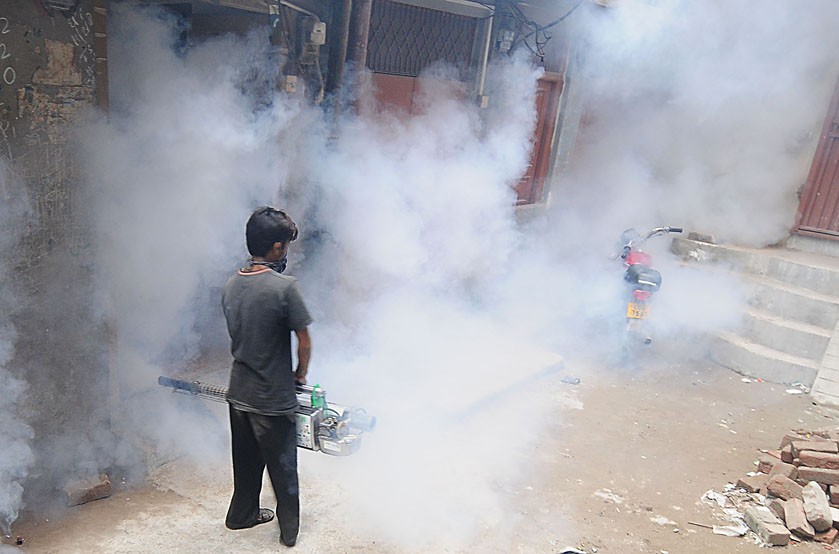
The spraying teams have also faced resistance in the area. In many cases, they have not been allowed to enter the DHA premises. Of late, the district management has taken a tough stance and issued warnings of strict action against those who create hurdles for the dengue surveillance teams.
The dengue cases are on the rise, which only speak for the government’s failed efforts. The number of patients brought to the hospitals this month has been the highest in the entire year. The people believe the government is under-reporting and hiding the real figures which may be even higher.
Dr Salman Kazmi, an office-bearer of the Young Doctors’ Association (YDA), rejects the popular belief. "No doubt, the number was high earlier this month, it is coming down now.
"Besides, it is difficult to under-report the issue as the data of suspected and confirmed cases is collected from different sources and entered into computerised systems developed by the Punjab Information Technology Board (PITB).
"We work in long shifts at night and know how many dengue patients are coming to the hospital. So there’s no way the government could bluff," he adds.
"Even though dengue is not fully eradicated, the biggest achievement of the government is that it has brought down the number of casualties considerably. This has happened due to the continuous trainings provided to the doctors on how to manage the disease. In 2011, when dengue was first reported, there was so much panic that the patients would die of trauma only."
The government departments involved in dengue control measures have their complaints as well, especially against the residents of the areas they visit. An officer in the City District Government Lahore (CDGL) says the people even stop the dengue surveillance teams from entering their houses on one pretext or the other.
"The issue with DHA is that the people there are not satisfied with the quality of sprays the government employs. They prefer to get their houses fumigated by private companies instead," he tells TNS.
"Some people even fear that criminals will enter their houses in the garb of dengue surveillance teams, as has happened in the past."
Dr Mohsin, Manager, Dengue Surveillance, at the Directorate General for Health Punjab, points out that one does need to panic as October has always been the peak season for dengue. "Last year, some 700-800 cases were reported in Punjab in the month of October, whereas the total number of the cases in the entire year was 1,400.
"In the year so far, 280-odd confirmed cases have been reported, from all over the province. Of these, about 80 per cent have been reported in the past two months."
According to Dr Mohsin, about 1100 cases have been detected in Islamabad alone, in the current year. "This is an alarming figure," he says. "No wonder, teams of doctors from Punjab have been packed off to the city.
"All the hospitals, labs, and district health officers have been directed to report the suspected as well as confirmed cases [of dengue] to the PITB through a dashboard created for the purpose."
Secondly, he says, the figures cannot be fudged as a cabinet committee meets regularly to discuss progress on dengue control and entities like the Institute of Public Health (IPH) and PITB issue reports routinely.
It has been learnt that there are instructions that all labs must send reports of positive dengue cases to the respective district officer health for online entry on dashboard within 24 hours. The areas from where the patients come are immediately visited and scanned along with the neighbouring houses for larva detection and fumigation.
An official in the Environment Protection Department (EPD), Punjab, believes the government efforts cannot be helpful until and unless people take care of things at home. He points out that most dengue cases are caused by the circumstances that exist indoors, "When the temperature increases, the dengue mosquitoes enter the houses and find cooler places to settle down. They can be found inside the room coolers, next to the refrigerators with small pools of water around, in flower pots etc."
The official also says that the fear created by the government makes people resist inspections of privately-owned properties including houses and shops. "When you start registering FIRs and arresting people just for the reason that you have found mosquito eggs or larva at their places, they shall not cooperate."
He says the government has lodged FIRs under sections 269 and 270 against many people. These clauses prescribe punishments for acts that are likely to spread infection of disease dangerous to life.
The section 269 says, "Whoever unlawfully or negligently does any act which is, and which he knows or has reason to believe to be, likely to spread the infection of any disease dangerous to life, shall be punished with imprisonment of either description for a term which may extend to six months, or with fine, or with both." The section 270 prescribes a two-year term for a person, or fine, or both, if he is guilty of committing the same act malignantly.