Print Story
X




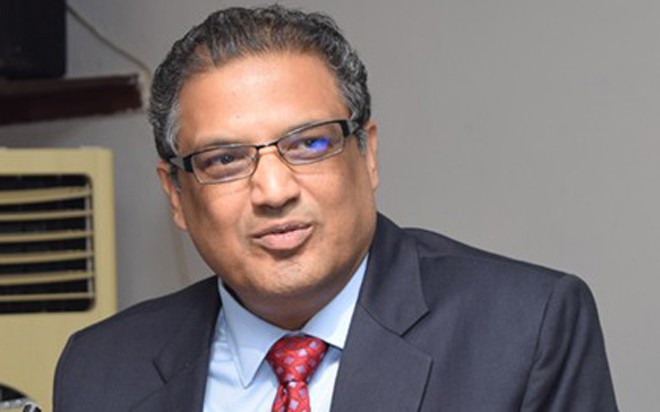
Interview with Suhail Warraich -- senior political analyst
The News on Sunday: Prime Minister Nawaz Sharif is facing pressure for alleged involvement in Panama Leaks scandal. Do you think his government will be able to survive in this situation?
Suhail Warraich: It is not necessary that one is assessed against such allegations at one particular time. It is quite possible that he survives at this point of time but gets assessed after so many years as had happened with Benazir Bhutto. The Swiss account case was always there but people let it go until Benazir was martyred. After this tragedy, they went to that moral high ground and started pursuing it afresh. I think the Panama Leaks issue will stay until and unless there is some redressal. Either that money is brought back or a commission that is independent, transparent and has strong credentials decides about it.
But at the moment, perhaps, majority of the people who want investigations into the Panama Leaks do not want the system to be disrupted. They still want development in the country and wait till the 2018 elections. For them, saving the democratic system is also imperative.
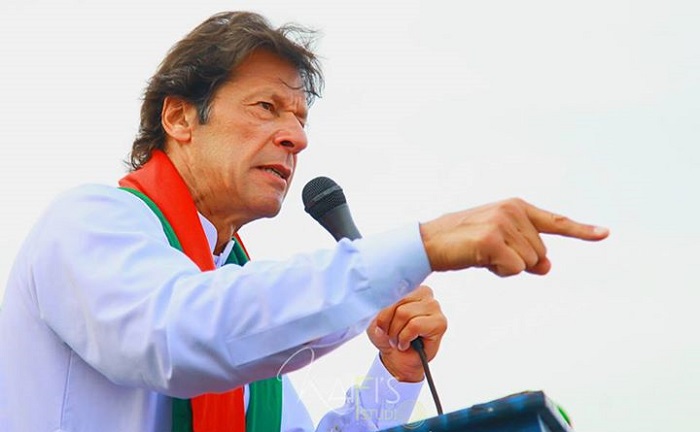
Imran Khan’s call for protest at this moment is going to be a bad omen. This is the final round by him and many think that if he gets a signal from somewhere, it will be a beginning of the end for democracy in the country. But if such an effort is made, Pakistan will have a position of isolation at a time when it is already facing allegations of promoting terrorism and supporting non-state intrusions in the world. We may not afford international opposition at this crucial time of country’s history.
TNS: What is your opinion on the existing state of civil-military relations in Pakistan?
SW: Perhaps, the civil-military relations in the country are at their worst. Prima facie meetings between the political and the military leaderships are taking place and DG ISI, army chief, and the prime minister are meeting on a regular basis. At the same time, some political and military circles are leaking different stories to show that things are not normal between the two.
No doubt, things have taken this shape due to a disagreement between the two on different issues. There is mutual distrust between the two. The civilian government thinks the military wants to dislodge it whereas the military has a feeling that the former is not sincere and looks at it with suspicion.
Whenever, in the past, we have come near the end of an army chief’s tenure, there has been uproar and the same is happening again.
TNS: There is a crackdown on militants going on in the country. Do you think the civilian government and the military are on the same page on this issue?
SW: Apparently they are on the same page but the leaked stories tell they are not. The military and the Rangers say there are dens of militants in settled areas of the country, set up with the support from the likes of Rana Sanaullah and an MNA of Gujrat. On the other side, the government says the military has supporters like Hafiz Saeed and Azhar Masood and it stops them from taking action against these elements. So, both have their own set of reservations.
TNS: Who in your opinion should control Pakistan’s foreign policy? Besides, what should the country do to avoid isolation on the diplomatic front?
SW: I strongly believe the foreign policy ought to be controlled by professionals belonging to the foreign office. But, unfortunately, it is not. China is definitely supporting Pakistan and the $46bn CPEC package is an example of this. But, in my view, the Chinese support will not be an alternative to the modern technological American support that we used to have. Infrastructure support is there but my question is who will give us the technological support? Who will give us F-16s for our defence needs?
Isolation is not only a challenge for Nawaz Sharif; it is a challenge for the state. If the state survives, the military and the government survive. In this uni-polar world you cannot live like North Korea and Libya. Either you have to surrender like Libya or make hydrogen bomb like North Korea. One has to decide which way to go.
Read also: A potent deadlock
Regarding expectations from Russia, I am not quite hopeful. We don’t see any evidence of substantial Russian support to any country of the world, except Syria. And just look at what has happened to it. So, before thinking about seeking Russian support, we must critically look at the case of Syria.
No doubt, Russia has a stake in this region. If we wanted to give it access to this region, we should have done that in 1979 and avoided all the damage done to mankind over these long years. Afghanistan was destroyed during this period and Pakistan became a hotbed of terrorism and suffered irreparable damage for being a frontline state in the war on terror.
I also stress that the country must come out of the isolation it faces. The way out in my opinion is that all the institutions must function within their domains though they can advise each other on issues of national security. The army can advise the government but the power to take the final decision must lie with the elected civilian government. They must work hand in hand as ending this isolation is their collective duty.
TNS: Nawaz Sharif faces criticism for being too soft with India and friendly with the media. What should be his policy viz a viz the Kashmir issue?
SW: Modi is absolutely wrong. His policies are against the founding principles of India that rest on the concept of secularism. All the time, he is fanning religious extremism. The recent spate of violence and atrocities in Kashmir is also a result of his policies.
In this situation, Nawaz Sharif must put his personal friendship with Modi aside and hold national aspirations close to his heart. He must talk to Modi and the world about the solution of outstanding issues between the two states and atrocities inflicted on the Kashmiri people. I still believe the Kashmir issue can be solved through a plebiscite carried out under the UN Resolution and Pakistan must raise this demand at every forum.