

Print Story
X




What is it that divides the two countries and what unites?
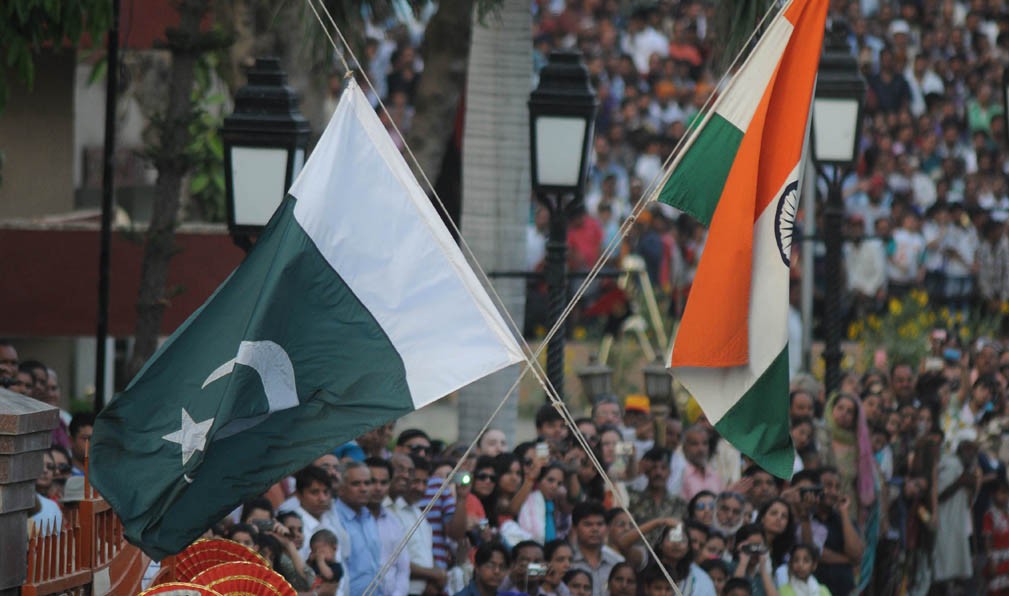
Pakistan India relationship is that of a feuding family. The causes of hatred could be many, like knowing the other rather too well, sharing the same genetic pool, and looking like each other -- the variations not going too far to make any difference in the primary scheme of things.
It could be a daughter-in-law mother-in-law living on the edge always, oversensitive to what the other is saying and doing. It is too much sharing of one person actually; it is sharing aplenty and wanting to share totally that blurs the lines of what qualifies to be incest and what not.
And like in families with multiple relationships there is always baggage that is too heavy to carry. One distant relationship of bliss can cancel the closer one of rancour. A good deed done by one closer is always shadowed by some grave injustice done a generation or generations earlier. It’s all complicated, complex and since it involves relationships and emotions it too defied objectivity.
It is the same bhaerveen that is sung and played there as well here -- the same sham kaliyan, the same shivranjani and jaupuri and hussaini kangra -- the same pancham and kharaj and dhevat and gandhaar -- more time has been spent in differentiating the symbiotics, rather than in creating music. It has all changed recently with the keyboards and guitars, the G majors and F minors.
Replacing the local terminology by something western or English is acceptable rather than repeating local terms and labels. It provides the distance from the wrenching familiarity, it gives an objective perspective to the sameness of historical experience -- the neighbourhod shared, the doors opening into each other’s houses, the speaking of the same language and besotted by a cousin next door.
Read also: View from the valley
Three generations living in one house, the continuous harassment of the girl gradually turning into love, the individual trying to assert himself against the extended family norms, marriage as the centre of human existence, the song and dance escape into imagined erotica with an underpinning of religiosity -- my god, so familiar and so stereotypical -- the cine experience resonates on both sides of the divide.
On a rational plane, of course, the two should live in peace, furthering their economic interests and the well-being of the teeming millions mired in poverty, want and illiteracy. But man was and is not meant to be a rational creature, an undine mixing of his being beyond the call of rationality and objective analysis. The bile has to come out as does the ardour in a more complex mesh of his emotions.
And then there is the baggage of the past -- the leaving of home like a flight. Independence came with migrations, murder, arson and above all, rape. Millions of people moved as never before in such a short period of time, stalked by fear of death and a hazy dream destination. There was the qualified contentment of killing their own sisters and daughters from fear of their being desecrated and there was shame at the sisters and daughters who they never met since those traumatic days and nights.
The bleeding wound of denial, of refusing to recognise, let alone accept, those daughters and sisters who reappeared with her children from a man demonised as enemy.
The price of freedom came at the cost of partition, the partition of assets, and physical, above all emotional and ideological superstructures. Physical was the home, the village, the streets, tree in the vehra, the maktabs that one went to, the graves of the ancestors, but the emotional division was more difficult and nerve-shattering -- how to separate the overload of likings, hatred, longing and desperation from the physical spaces and identities.
The battles that were fought and won, the shrines that were built and worshipped, the family landmarks that was valued and treasured. Migration was physical, brutal and bold but it was capsuled in time -- longing for the emotional space was without the constraint of time. The tales were told, retold and recounted, the childhood remembered, the grandfathers and grandmothers becoming haloed in memory. It became more gilded as the past became distant compounded by the attendant pain of not being able to go back even for a visit, shed a tear on the graves of the ancestors.
And this was further sharpened by the division of families. If one cousin brother was here, the other cousin sister was across the border; if one brother was here, the other just a few miles away but too distant to approach. Most who visited Pakistan from India found close relatives here or went in search of them. They lived in their respective countries and planned marriages across the divide between relatives, happiness lacerated by hassle of paying visits through the humiliating visas and travel procedures.