

Print Story
X

Dear All,
Since Britain now has a female Prime Minister, much is being written about her clothes and shoes, and even her cleavage.
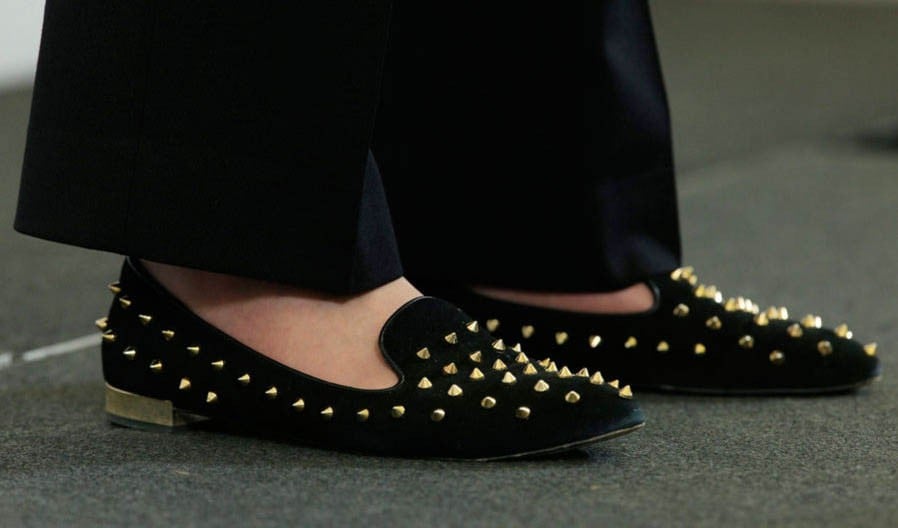
The media just cannot seem to get enough of Teresa May’s shoes. When she became Home Minister back in 2010, much was written about her penchant for stylish footwear. Many photographs of this footwear were published and much mention was made of her penchant for ‘kitten heels’ and leopard print shoes.
So one might think that that was all done and dusted, and there was now not much left to report on this particular story. But when May became PM after the eventful leadership election following David Cameron’s post referendum resignation, everybody seemed to be fascinated by her footwear all over again. And not just her footwear -- her clothes, hair, and neckline too, resulting in some petty awful coverage. The Times described a red fitted dress worn by the PM as ‘the boobinator’, while the Daily Mail published a photo of May’s décolletage with the words "It’s not just the economy that’s plunging".
So is this sort of coverage of a senior politician sexist? Yes of course it is. And though tired old columnists (yours truly) may continue time and again to point this out, the practice just carries on and on. Why is it okay to comment on a woman’s appearance and clothes but not on her male counterpart’s? Why is it okay to devote column inches and airtime to the style, colour and cost of Hillary Clinton’s clothes but not that of her male peers? Why would it be news what Clinton’s Armani jacket might have cost, while the Armani or other expensive suits of her male counterparts would go unremarked upon? (The only male politician to have suffered from such media coverage in recent years was John Kerry’s vice presidential candidate John Edwards a decade ago when he was criticised for his $400 haircuts).
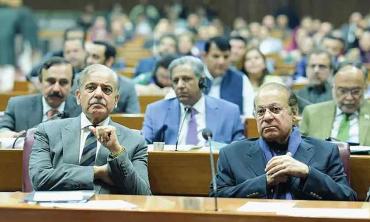
This tendency to regard women politicians’ appearance as fair game was also evident in the way Benazir Bhutto’s sartorial style was critiqued viciously and unnecessarily, particularly when she was in office. Yet the underlying criticism of her vanity-driven habits was completely absent from any mention of the Sharif brothers’ hair transplants -- which surely must have cost a pretty penny and must surely also have been driven by some element of vanity. Similarly, the cost of their expensive watches or the fine fabrics of their clothes continues to be as unremarked upon as their hair transplants -- or indeed the hair transplants or Botox treatments of other male aspirants to high office.
The non-tabloid media tries to dress the kitten heels and cleavage stories up as serious reflections on women, politics and power dressing, but really it’s just an excuse to print pictures of clothes and shoes, and focus on how a woman looks rather than what she does. It is okay to comment on the wardrobe or cosmetic choices of public figures as long as it’s not considered to be a news story or presented as such. It can be looked at in separate lifestyle slots -- not in the headlines.
But there’s one restriction I am in favour of: that of restricting holders of high office from wearing imported items. By wearing British designers, high profile British politicians can showcase British goods. And it’s the same for any other official from any other country.
When Pakistani foreign minister Hina Rabbani Khar visited India and France in 2011, her expensive Hermes Birkin handbag was much remarked upon. Not surprising really as she was rather channelling Marie Antoinette -- representing a poverty-stricken nation and carrying a bag costing thousands of dollars. Instead she and the prime minister should have kitted themselves out in Pakistani products: Pakistani fabric and tailoring (no Italian suits or shoes or French ties or Cavalli sunglasses), and Pakistani handbags and wallets and jewellery. Free advertising and effective commercial promotion of local industry on the world stage. What’s the harm in that?
Best wishes,