Print Story
X




The PSB does not have experts who know what steps are needed for sports development. Its leading officials don’t miss any foreign tour and claim that they visit abroad for learning but so far they haven’t brought any great idea from abroad
The Ministry of Inter-Provincial Coordination (IPC) has finally realised that Pakistan’s sports standard has gone very low.
The IPC minister Riaz Hussain Pirzada held a meeting with his ministry’s officers and Pakistan Sports Board (PSB) Director General Dr Akhtar Nawaz Ganjera at his office in Islamabad and a marathon debate was held on the decline of the country’s sports.
Pakistan cricket team’s humiliating 169-run loss against England in the third outing of the five-match One-day series at Nottingham on August 30 forced the minister to convene an emergency meeting.
Pirzada also directed the PSB to hold seminars in provincial headquarters and the federal capital later this month so that the experts could discuss the reasons behind the overall decline of sports and suggest remedial measures.
But this enthusiasm should not be short-lived. Pirzada should not take Pakistan cricket so serious as Pakistan Cricket Board (PCB) is a corporate body and if it gets the right management, things can easily be settled in that area. What Pirzada should do is take revolutionary steps for the development of other sports, particularly Olympic sports.
Pakistan’s participation in the recent Rio Olympics is a clear indication that the country’s sports need a huge investment. Pirzada should know that he has a herculean task and he will need the best brains to formulate a strategy and execute it by injecting huge money into the sector.
The prime minister of Pakistan is not only the patron-in-chief of the PCB and Pakistan Hockey Federation (PHF) but also the patron of the PSB. Although the PM gives his input when cricket or hockey is confronted with any crisis-like situation, he seems totally unaware of what is going on in the rest of the sports. The prime minister does not know how the PSB is operating and what the role of Pakistan Olympic Association (POA) is in sports development.
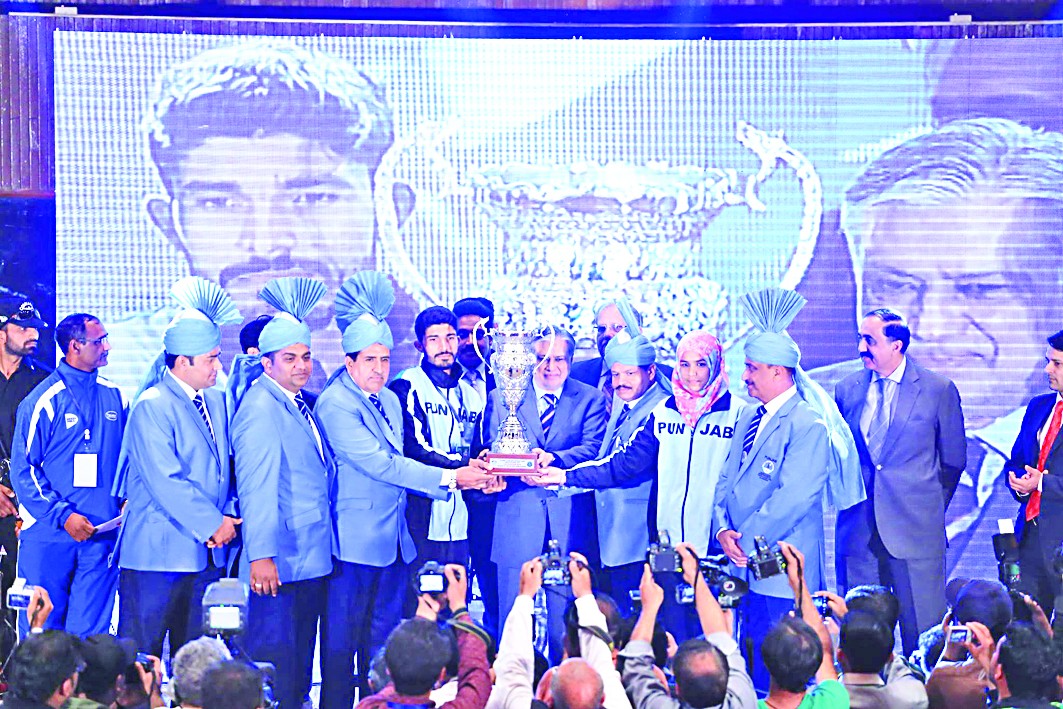
Ishaq Dar, a senior minister of the PML (N) regime, while addressing the closing ceremony of the First Quaid-e-Azam Inter-Provincial Games in Islamabad a few months back, did not mention even a single important factor which could help Pakistan’s sports. He used the platform not for sports promotion but for his government’s promotion.
On August 30, the PSB asked national federations to prepare training plan for youth, junior and senior athletes so that preparation could be made for the 2020 Tokyo Olympics. But it is ridiculous. How can they make a plan when they do not know what resources they can have?
The PSB does not have experts who know what steps are needed for sports development. Its leading officials don’t miss any foreign tour and claim that they visit abroad for learning but so far they haven’t brought any great idea.
Before taking any further step for sports promotion, there is a need to restructure the Board which was constituted in 1962 as a corporate body. The Board is not playing its due role. The 85-member Board of the PSB is the supreme body which makes policies and its 18-member executive committee implements them. But it is astonishing that the Board’s last meeting was held in 2013 when the battle between Pakistan Olympic Association (POA) and PSB was at its peak.
When I asked former Khyber Pakhtunkhwa Sports Minister and Vice-President of POA Syed Aqil Shah a few days ago about the issue, he said that the PSB does not hold its Board’s meeting because it is afraid of accountability.
The PSB basically is a subordinate body which is accountable to the IPC ministry whose minister is the president of the PSB. But the PSB DG has huge administrative and financial powers as per the rules of the Board. In the past, Brig Arif Siddiqui quite diligently and rightfully used both these powers as the PSB Director General, but Ganjera has not been able to work independently which is a major obstacle in the way of sports promotion.
There is a need for a strong Director General who could take bold decisions without any fear. The Board’s budget should be increased 100 times. The budget of shooting federation of India is more than the total budget of the PSB which is ridiculous.
For the last four years, the PSB has not provided foreign coaches to national federations and some federations have not even got their annual grants. Holding competitions is not the prerogative of the PSB but its officials always keep a margin for themselves in the area to make money.
The Quaid-e-Azam Inter-Provincial Games is a clear example. As much as Rs137 million was spent on an event which had no utility.
It should focus on infrastructure development and finance the federations heavily so that they can work effectively in their respective areas. A few days ago a Board official told me that he had learnt the spell of ju-jitsu in one month.
The POA should also wake up. Since taking charge for the fourth successive four-year tenure in January this year the current set-up of the POA has not disclosed what revolutionary steps it is going to take for sports development.
It should leave holding the PSB responsible for all the sports mess. It should work effectively for sports uplift by generating funds through various means. The POA should arrange a meeting with the Prime Minister and apprise him of the current situation of sports and seek his help.
National federations are the other major stakeholders which need to work professionally. It’s time for them to establish strong marketing wings and generate funds for themselves so that they do not have to rely on state funding. They should identify the level of the talent in their respective sports disciplines and start working on world, Asian and regional-level talent.
All players should not be treated equally as those with amazing talent need special care and we, no doubt, have several players in individual sports disciplines who can turn out to be world-beaters.
The provinces should also play their due role in sports promotion. They should increase their competitions, enhance infrastructure, provide exposure to their players and focus on coaches’ education.
After devolution, their responsibility has increased manifold. Former Olympians and world champions should also play their role by establishing academies and preparing top players for national duty. I would also request the corporate sector to contribute to sports which could turn out to be an industry if rightly managed.