Print Story
X




Experts might think that the NAP is a vision and not a strategy but its slow implementation is debated after every major attack
Pakistan’s fight against terrorism and extremism is also a subject of an ongoing debate within the country. The first consensus effort against terrorism was seen after the Army Public School Peshawar tragedy on December 16, 2014. A week after this terrible attack, the commitment to eliminate terrorists and destroy their hideouts and support bases was hastily translated into a 20-point National Action Plan (NAP).
Two years on, the slow implementation of NAP becomes a subject of official and societal discourse after every major terrorist attack. There is the usual political point-scoring and shifting of blame by different implementing partners.
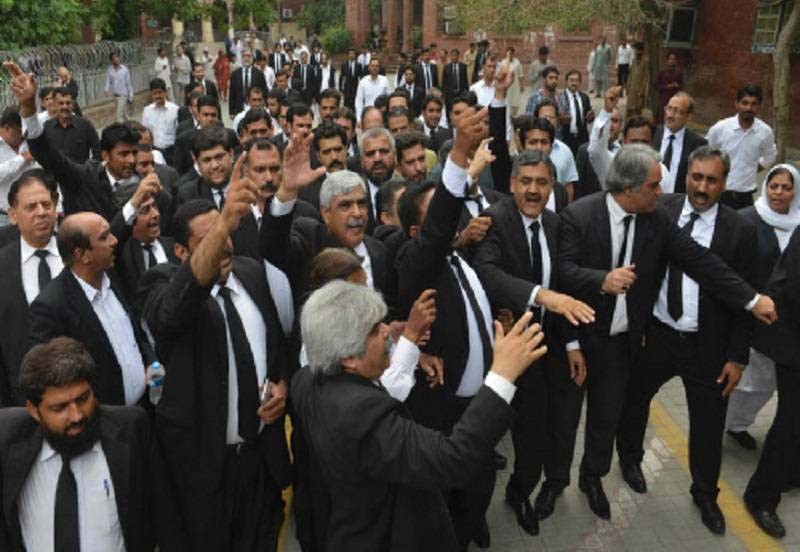
The latest example of claiming credits and blame shifting was witnessed after the planned target killing of scores of lawyers in Quetta in a suicide attack.
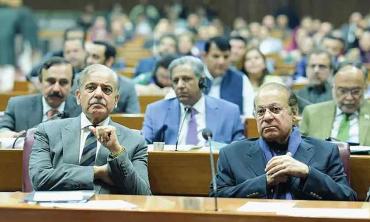
Four days after the Quetta carnage, Prime Minister Nawaz Sharif lamented the partial implementation of the NAP and set up a high-level task force to monitor its implementation. The task force comprises senior official of various relevant departments and agencies of the federal and the provincial governments. National Security Adviser Lt-Gen (r) Nasir Khan Janjua is appointed the head of a new NAP implementation and monitoring committee.
"Actually, this suddenly-derived NAP after the APS attack is not a plan or strategy but a quick laundry list of 20 things that has been considered a benchmark of measuring action against terrorism," says security analyst Moeed Yusuf.
"NAP is a vision not a strategy; it has wrongly been declared as a plan. The state has to monitor that vision. These twenty points are not achievable in a particular time period and media should debate this vision rather than making these points a benchmark," says Yusuf.
He cites one particular point in the NAP that calls for repatriating Afghan refugees. "This action is not possible in a timeframe and the state should evolve a long term policy about it rather than forcing these refugees to leave the country immediately."
A report presented to PM Sharif after the Quetta attack highlighted that as many as eight of the 20 points of the NAP showed "less implementation" including measures to stop terror financing and public activism of banned outfits and extremists group with new names. These points relate to banned groups, including sectarian outfits, terror financing, reemergence of banned organisations under changed names, coordination between security and law enforcement agencies at the centre and provinces, anti-terrorism laws, creation of counterterrorism forces at the provincial level, etc.
A similar hue and cry over the non-implementation of NAP was witnessed after a Gulshan-i-Iqbal Park attack in Lahore on March 27, Easter Sunday that left 80 people dead. This was the first major attack in 2016 followed by the Quetta blast in August. Up until August, there have been seven blasts with more than a dozen casualties in Quetta, Peshawar, Lahore, Charsadda, and Khyber Agency. At least 300 people have died and more than 1,000 were injured in these blasts.
Muhammad Amir Rana, who runs a thinktank Pakistan Institute of Peace Studies (PIPS), says a major issue is that of enhancing the capacity of organisations involved in the implementation of NAP. "The police are contributing in a major way to the NAP, even more than their capacity sometimes. They have conducted thousands of search operations. However, there is some ambiguity on the issue of banned militant and extremist outfits. The implementation has issues because of various reasons -- like the Interior Ministry is responsible for implementing many points and the minister does chair the related committees but it is difficult for the burdened ministry to operate this way."
In 2015, official statistics showed that major terrorist attacks had substantially declined. Official figures of federal government tell that more than 300 death row prisoners have been hanged so far since the government lifted a six-year moratorium on death penalty on December 17, 2014. Those who have been hanged were involved in the killing of both civilians as well as personnel of law enforcement agencies. According to the same figures, security forces have carried out as many as 54,376 combing operations so far under NAP and as results of these 60,420 arrests were made. The figures also talk about sealing madrassas, freezing funds of proscribed militant groups etc.
Yusuf thinks this numbers game is merely a political gimmick. "Along with this vision [NAP], there is a need to enhance the capacity of the organisations on a regular basis. Civil society and media should build a narrative and ask authorities about the strategy and progress on a regular basis."
In 2009, the federal government had formed a National Counterterrorism Authority (Nacta) for monitoring and coordinating a strategy against terrorism. Nacta was primarily tasked with coordinating counter-terror information. However, in all these years, no prime minister has ever chaired a Nacta board meeting and the authority has remained undermined.
According to sources, military agencies were not happy to report to and share information with Nacta. The federal government also failed to allocate any funds for the authority during the fiscal year 2015-16. However, later in November 2015, the government released Rs1.06 billion for it. In the 2016-17, the budget allocation was Rs109.42 million only. Capacity remains a big issue and, after years, a coordination cell for information-sharing is going to start functioning fully.
"Actually, NAP is a counterterrorism format which has different steps," says Rana. "The immediate actions required are capacity building, controlling hate speech and intelligence-based action against hate literature. Other mid-term strategies include controlling terror financing and deciding about banned organisations and their active role."
The long term strategies, according to Rana, are preventive measures like registering and reforming seminaries and introducing effective policies. "We should realise that counterterrorism is not possible without a joint effort of all."