Print Story
X




The government aims to increase revenue and document the real estate sector. Will it succeed?
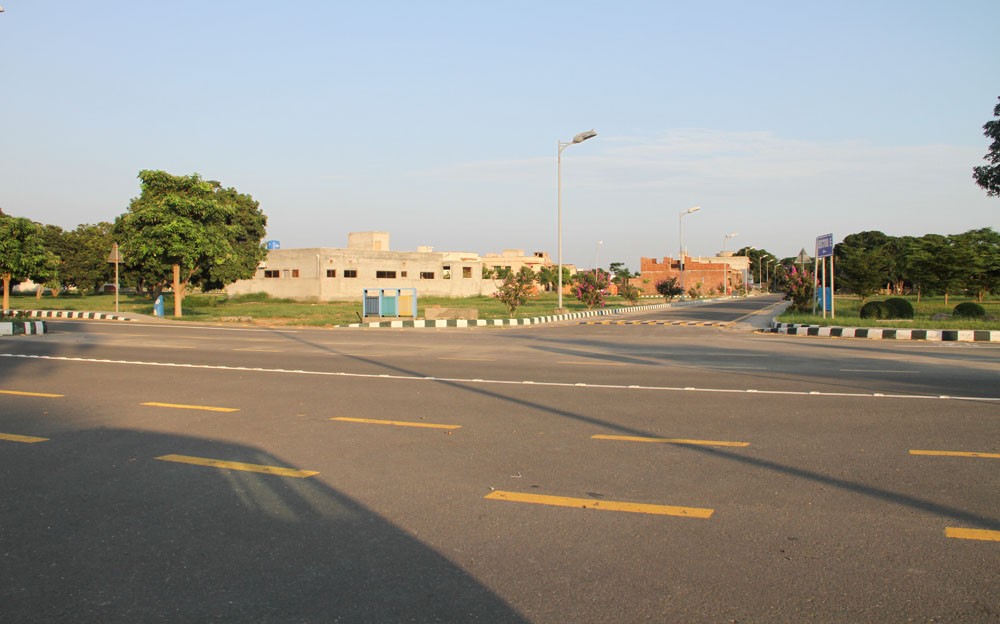
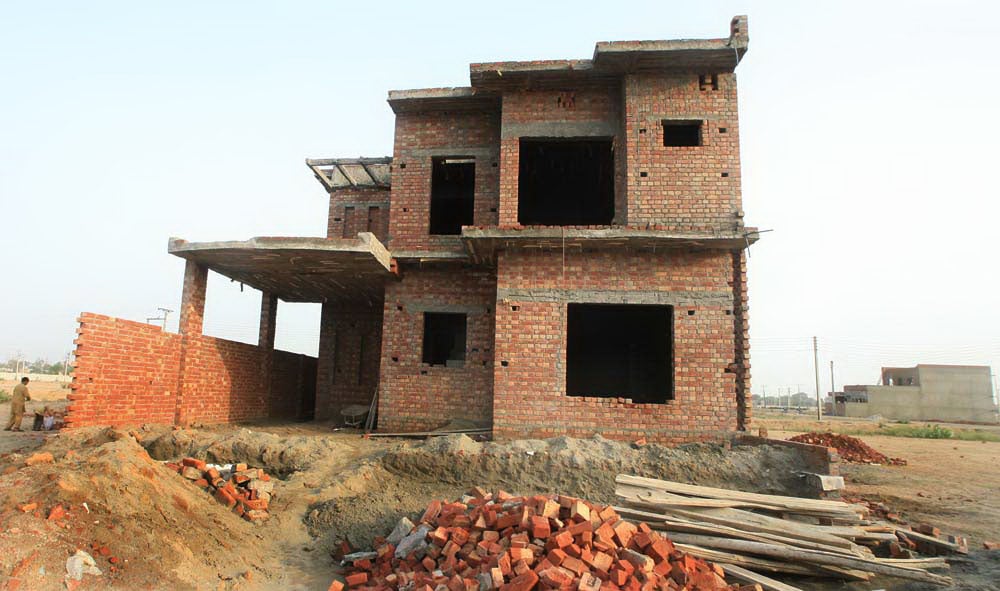
Over the last few years, the real estate sector has received huge investments and seen prices of property skyrocket. The situation has reversed over the last few months. There are hardly any transactions taking place.
As the sellers walk away with the sale proceeds, it would be the purchasers who are going to be responsible for clearing any liabilities whatsoever.
The federal government has announced fair market values of real estate prices in 18 districts reached at through an exhaustive exercise carried out by the Federal Board of Revenue (FBR) and on the basis of estimated property values submitted by representative bodies in the real estate sector.
From now on, the value of properties mentioned in sale and purchase deeds would not be less than those mentioned in the value tables issued by FBR for different areas. The federal taxes, such as Capital Gains Tax (CGT) and withholding tax would also be applicable on these values. The FBR will revise the valuation tables every year.
Earlier, the deeds and registries would mention the deputy commissioner-approved rates called DC rates. These were on the lower side and different for different areas and provincial stamp duties and transfer charges were applicable on valuations based on these rates. So, it was quite common that the taxable value of a property having a market value around Rs10 million was mentioned as Rs2 million or so, according to the DC rates.
Though the purpose of announcing DC rates was to fix minimum prices for taxation purposes, these looked unrealistic as revisions were not as common as they should have been.
According to the Association of Builders and Developers (ABAD), the FBR rates are in many cases many times the DC rates but mostly less than the actual market rates. "However, in some cases, these fair market value rates are higher than the actual market price, something the FBR has promised to look into," says Arif Yousaf Jeewa, Senior Vice Chairman, ABAD.
Read also: Inside the market
An anomaly, however, is that the stamp duty and registry charges will still be collected by the provincial governments according to the DC rates and FBR rates will be for application of federal taxes. "In many areas, property registrars are insisting on charging stamp duties based on FBR rates instead of DC rates. This shows the level of confusion that prevails everywhere, even among the government servants," he adds.
The general perception is that the government wants to increase revenue, document the sector, stop speculation, check dumping of black money or undeclared money into the real estate and direct investment to performing sectors of economy, such as medium and large-scale industry.
"Stakeholders in this sector want the change to come through a gradual process and participatory approach," says Haji Zahid, former general secretary of real estate agents association, DHA Lahore.
"It would have been better if it had set up a regulatory body for this sector and engaged stakeholders on board. Though the demand for scrapping the decision about employing the State Bank of Pakistan evaluators was met by the government, the new FBR role has caused uneasiness among investors," he says, adding, "earlier, the documentation was just for the purpose of stamp duty but now the FBR will have the data and will be in a position to ask investors about the source of their income and the taxed paid on it."
Zahid says the cost of transaction will increase considerably as the federal government has decided to charge withholding tax on the sale and purchase of property and CGT made over the time.
Gohar Majeed, director, Trust Deals, a real estate development company, says the government is following the IMF agenda of shifting investment from a non-performing sectors to the performing sectors of economy. The real estate sector is non-performing one as it does not create jobs in large number.
But the problem, he says, is that the government has simultaneously taken restrictive measures that have done a major damage to the sector. For example, he says, "upward revision of applicable taxes and property values, proposed action against benami properties, imposition of tax on vacant plots in Punjab, etc, have all come at the same time."
The rate of CGT is 10 per cent on the disposal of immovable property within one year, 7.5 per cent on disposal with one to two years and 5 per cent on disposal during the third year. The buyers holding a property for more than five years would be exempt from CGT.
Read also: Editorial
Besides, in the Finance Bill 2016, withholding tax on the purchase and sale of immovable properties for tax filers and non-filers has also been increased to 2 per cent and 4 per cent respectively.
The basic threshold for application of withholding tax on purchase of immovable property has been increased to Rs4 million from Rs3 million meaning properties lesser in value than Rs4 million will be exempt from this tax.
Zahid believes the remittances from the Gulf region have plummeted not just due to the slump in oil prices. "There is a clear link between home remittances and real estate business in Pakistan and the volume of the former has come down as expatriates are wary about investing in the real estate sector," he adds.
The new valuation tables have been issued for 18 cities namely: Lahore, Rawalpindi, Jhelum, Gujranwala, Gujrat, Sialkot, Faisalabad, Multan, Rahim Yar Khan and Bahawalpur in Punjab, Karachi, Hyderabad and Sukkur in Sindh, Peshawar and Abbotabad in KP, Quetta and Gawadar in Balochistan and Islamabad. DC rates will be valid in areas other than these.
Dr Muhammad Iqbal, Member, Strategic Planning, Reforms and Statistics (SPR&S), FBR and spokesman of the department says the purpose of the whole exercise is to document the real estate sector, though revenue generation is also a priority. "Now it will be easy for the FBR to ask people about the source of income that they have invested in the real estate sector as all the transaction records will be available."
Iqbal also points out that new evaluations are an attempt at announcing reasonable rates of properties that had remained ridiculously under-valued. He hopes the confusion will soon be over as things have been put in black and white.