

Print Story
X




Ibn Khaldun’s Muqaddimah is by far more valuable than any other historical tome
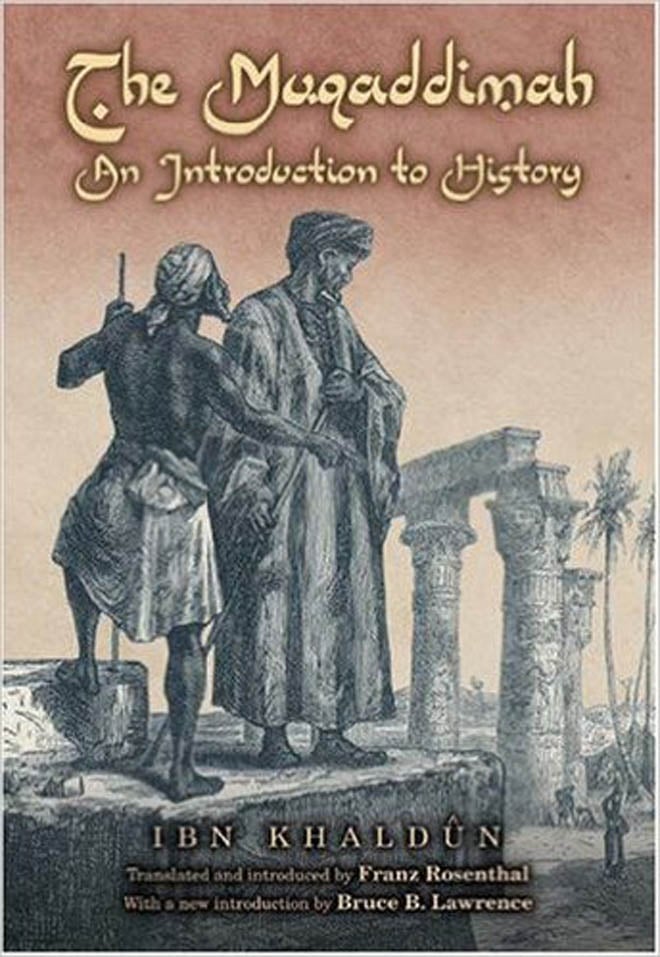
Muqaddimah, authored in 1377, has continued to mesmerise social scientists, historians and laymen alike to this day. The book describes how the discipline of history evolved over the centuries, and the fact that Muqaddimah possesses the rudimentary skeleton of sociology or ‘ilmul Imran’, which the writer termed himself, makes it more valuable than any other historical tome. The writer of this magnum opus is Ibn Khaldun, a famous philosopher of history who was acclaimed in his own time as well as by later-day historians and scholars such as A.J Toynbee and Phillip K. Hitti.
Muqaddimah, a history of the Arabs and Berbers, was produced after Ibn Khaldun spent four years in seclusion having retired to an Algerian town called Frenda. Muqaddimah was the voluminous introduction in which he set about to construct the edifice of history brick-by-brick. Before proceeding further, it is important to mention the life and times in which Ibn Khaldun was born and bred.
He was born in Tunis in 1332 and his family has served under the Ummayad, Almoravid and Almohad dynasties. After a formal education, Ibn Khaldun worked in a number of administrative positions under various ruling dynasties. Despite having travelled far and wide, he maintained good relations with all those who ruled the lands he lived on. These relations often aroused jealousy and suspicion from his peers, which upon occasion led him behind bars. Ibn Khaldun also served as the chief judge under the Mamluk ruler Barquq, hence proving his acumen as a jurist.
Muqaddimah is divided into six detailed chapters in which Ibn Khaldun has enlightened us on human civilizations and the variables that influence their rise and fall. He starts off discussing the basic tenets of history and the essential rules all historians must remember to produce knowledge. He takes to task the historians who he believed had fabricated stories and thus propagated only ‘untruth’. "Prejudice and partisanship obscure the critical faculty and preclude critical investigation. The result is that falsehoods are accepted and transmitted." (p.35)
Khaldun’s extensive travels and his experiences of living with Bedouins gave him firsthand knowledge of various tribes living in different areas. He closely observed how tribesmen conducted their day-to-day activities and what intangible concepts held the tribes together. The author must also be credited with highlighting the importance of climate and geography in human history. The conclusion he drew is that extremely hostile climates help produce specific qualities of survival in people braving those conditions.
One of the most striking notions in Ibn Khaldun’s classic is his concept of Asbiya, which Franz Rosenthal chose to translate as ‘group feeling’. Khaldun believed that tribal solidarity or cohesiveness is created under hostile climates where people are unable to fend for themselves alone. He elaborates that this cohesive group feeling or asbiya -- which proves very beneficial in subjugating territories -- is further cemented due to blood ties and religious fervour. But he also says religious unity or fervour can’t yield results without asbiya.
Ibn Khaldun relies on the concept of Asbiya to document the rise and fall of empires and explain how tribes from deserts overpowered sedentary people who over the years had grown accustomed to more luxurious lifestyles. The city-dwellers were unable to prepare against the invading desert marauders because there was a lack of functioning Asbiya in urban areas as people were not dependent on each other. These people were swiftly defeated and replaced by those born and bred under harsh conditions. A cycle then sets in; the victors establish cities and institutions and start adopting the same opulent lifestyle that they so recently overthrew. Eventually they too meet the same fate when another tribe overthrows them.
Through Muqaddimah, we can ascertain that Ibn Khaldun believed in cyclic patterns of history and was deterministic about the pace of human history. Khaldun has a deep understanding of what drives human nature and how that, in turn, deeply affected human history. Throughout the lengthy book, Ibn Khaldun has maintained an excellent analytical approach by using a plethora of examples from history. Muqaddimah has a literary flavour of its own since Ibn Khaldun was also known for his inclination to compose verse. Rosenthal’s attempt at translating the book into English is commendable since the book is now available to a wider audience. It must, however, be pointed out that Rosenthal’s translation of asbiya to ‘group feeling’ is not up to the mark -- a better translation would be ‘group cohesion’.
Muqaddimah is a mandatory read for anyone interested in exploring the philosophical evolution of history and Khaldun deserves all praise for this mammoth contribution.