

Print Story
X

Dear all,
I’m sure many film buffs among us will have watched the Oscar winning films 12 Years a Slave and Lincoln and then expressed laments and horror over the inhuman treatment meted out to slaves in centuries gone by.
Alas, slavery is not a thing of the past; it is with us still. So many years after the American Civil War and the end of slavery in the American south, and so many years after William Wilberforce and his campaign for the abolition of slavery, it sill thrives, unchecked and mostly unremarked upon all over the world.
The latest Global Slavery Index "estimates that that 45.8 million people are subject to some form of modern slavery in the world today". The findings are based on a survey by the Walk Free Foundation conducted in 167 countries. But even if one quibbles about the methodology of the survey (as Open Democracy points out "the Global Slavery Index is a great publicity tool, but it is not very good at offering the type of nuanced analysis required to guide either understanding or policy. A trade-off between the political and analytical has taken place here, and this needs to be publicly recognized"), the results can still be considered as broadly representative of an existing situation.
According to the Index, more than half of modern day slavery (58 per cent) is found in just five countries: India, Pakistan, Bangladesh, China and Uzbekistan.
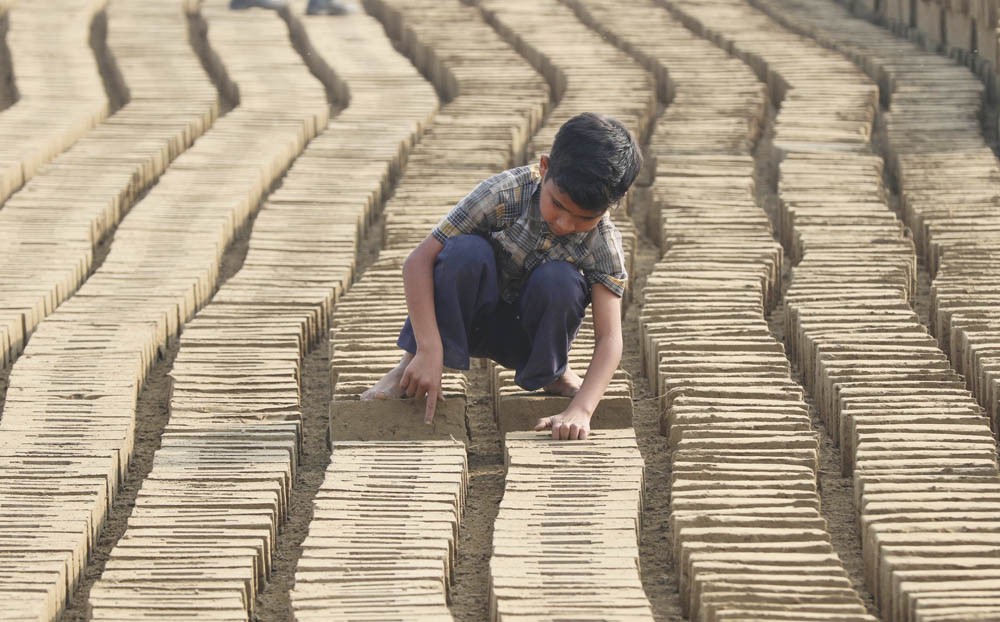
In Pakistan, perhaps the most shocking stories about modern day slavery still concern the brick kiln workers. A lucrative industry producing bricks feeds the thriving construction market, and its practice of bonded labour appears immune to prosecution or regulation. So, really, most of our edifices are built on the blood and sweat of slaves.
Mainly illiterate workers are trapped into a spiral of ‘debt’ and abuse. A worker might take out a loan which after years of toil instead of decreasing will have multiplied threefold. Families will be trapped into a lifetime of bondage by de facto slave owners, and will be completely at these owners’ mercy (This practice is replicated on a smaller scale in the case of domestic servants where employers advance money to their servants and then use this as leverage to threaten and intimidate).
Despite the commitment and ongoing work of organisations like the Bonded Labour Liberation Front (BLLF), and despite the excellent reports and exposes on this in so many publications through the 1980s and ’90s, the situation of bonded labour is still terrible -- from the brick kilns of the Punjab to the feudal owned prisons (labour camps) in Sindh.
Every so often, we hear of some shocking story where some fearless law enforcer raids such setups, registers cases, publicises the plight of the slaves… But then it’s all soon forgotten. Instead of kiln-owners being prosecuted and disgraced, it is often the human rights activists who suffer persecution and character assassination and are forced into exile or ignominy.
Why have we allowed this to happen in what we like to call an age of enlightenment and progress, in this the 21st century? Is it because slavery suits the capitalism of the globalised economy or is it because we don’t really care about injustices or can’t be bothered to tackle a system that regards human beings as property, and treats them as worse than animals? Or is it both of these factors?
Wake up everyone, let’s fight for emancipation…
Best wishes,