

Print Story
X




Local governments are functioning in KPK and Balochistan. So, what’s stopping Punjab and Sindh?
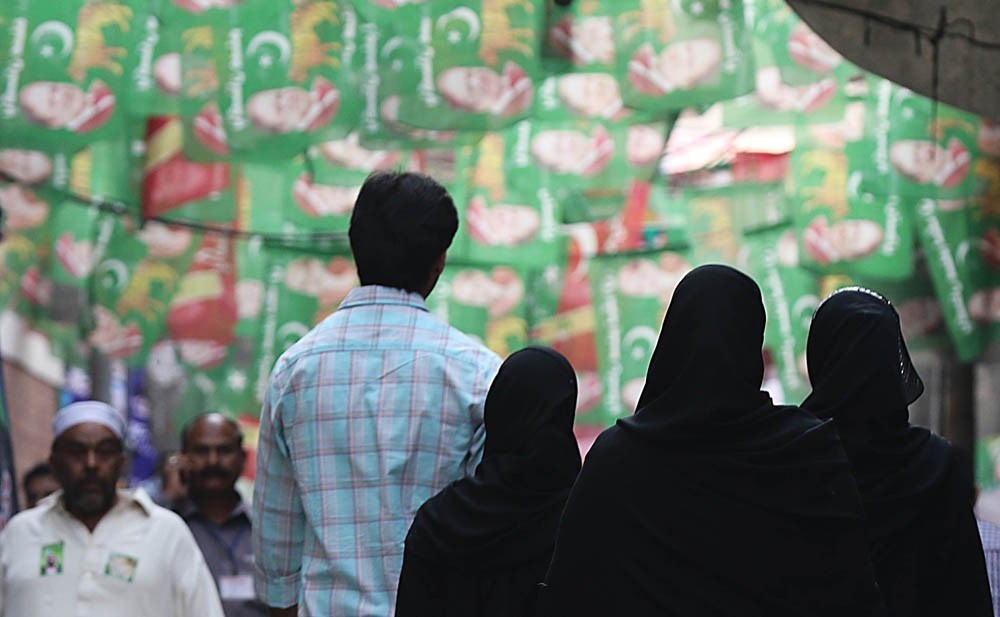
After much dilly-dallying the local government elections were held in the country in phases last year. Security, requisite legislation, litigation over election schemes and many more such obstacles delayed the process.
Presently, the local governments are functional in KPK and Balochistan whereas Punjab and Sindh are yet to elect the top tier and members on reserved seats. Whether the election for reserved seats should be direct or indirect is also a matter of concern.
Though weak, the Balochistan local government system is working. That’s indeed a good development. Though the local governments in KPK are functioning, they are currently pitched against the provincial government for failing to fulfill the promise of giving 30 per cent share of the provincial development funds to them. The local government representatives in KPK have given a protest call for June 5 for release of less than promised share by the provincial government.
The Punjab province is being discussed and criticised for intentionally delaying the formation of the local governments. It is said its case is different from Sindh where matters were facing delay due to litigation. The delay, it is alleged, is for the reason that there is no political will to part with administrative and financial powers especially during the run-up to the next general elections. The term for local governments is from 2016 to 2020 whereas the year for general elections is 2018, which is more important for the ruling PML-N.
Local government expert and founding member of Civil Society Forum on Local Governance Salman Abid is of the opinion that the Punjab government is delaying the formation of local governments as it has always been against them. The local government elections were held on the pressure of the Supreme Court of Pakistan and even the legislation was done for this very reason. "Now this pressure is not there, so they are delaying this exercise," he adds.
He adds that some outstanding issues are also hampering progress on this count - "The Punjab government wants to elect local government representatives on reserved seats through indirect election whereas the opposition and civil society wants these elections to be held directly. The minorities, labour representatives etc. are also wary and want direct elections."
The Punjab government, he says, is uncomfortable with the idea of all Muslim councilors in a union council electing a Christian member. "A minority representative will only be elected by the members of their own community," says Abid.
Another major reason for the delay, he says, is that the Punjab government wants to make the local governments functional after the budget and let the MPAs spend the development funds. "Both the federal government and the provincial government of Punjab have released development funds to their members of the house and have not given anything to those from the opposition."
Ejaz Chaudhry, former President Punjab Pakistan Tehreek-e-Insaf (PTI) and advisor to the party chairman, says it is strange that the Punjab government has not made local governments functional even eight months after the elections. "The PML-N leadership is dictatorial. That is a major reason why the elected representatives, most of whom belong to the ruling party in the province, cannot register their concerns about delay in forming local governments. They are answerable to people who elected them and now want to get their issues resolved".
On why the opposition led by the PTI is not pressing the Punjab government to make local governments functional without further delay, Chaudhry says it is not their priority. "We are the opposition. Why would we spend our energies on getting these governments formed when the returned candidates are mostly from the PML-N? Why will we speak for those who are not demanding their rights?"
Chaudhry is convinced that the mid-term elections are round the corner. "That is exactly why the Punjab government is giving funds to its MPAs and asking them to spend these in their constituencies. They want to win the next elections. If these funds go to the local governments, then how will MPAs appease their voters?"
According to him, though there is a dispute on the share of development funds that the KPK government is due to release to the local governments, they are working very well in certain areas. "Such issues arise in democracy and it is quite a normal phenomenon. The real issue is in Punjab where there are no local governments at all."
On the issue of show of hands or secret ballot, Chaudhry says, "In my personal opinion the better choice is the show of hands to elect the top tier leadership of local governments. In secret ballot, one can get bribed or influenced and may vote for one person and claim loyalty for the other."
Local Councils Association of Pakistan (LCAP) Executive Director Anwar Husain stresses that the provincial governments must realise that the country’s progress is not possible without giving financial and administrative autonomy to local governments -- "Without equitable distribution of funds at the local level it is impossible to achieve holistic growth targets. At the moment growth is being observed in pockets and especially in mega cities".
Fomer district nazim Lahore and now district nazim hopeful Khawaja Ahmed Hassaan says it is not true that there is no litigation in the way of formation of local governments in Punjab. "The PTI challenged the proposed process of selection of chairmen, vice chairmen etc in the court which has issued a short order. We cannot go ahead till we have the complete order with us. And we have no idea how long will it take," he adds.